Qobuz
February 4, 2019 Comments Off on Qobuz
“Roon’s Radio Mode includes the Qobuz library and, of course, your own library (and Tidal’s if you also have a subscription). When Radio Mode is turned on, Roon continues to reach out on its own accord (an example of ‘machine learning’) to consecutively choose and play other tracks of music for you from among all libraries it has access to. One major way I took advantage of Radio Mode (in addition to personal selection and comparisons not using Radio Mode) was to have only the Qobuz library turned on for it; that way I was able to listen to an enormous sampling of Qobuz music—by just keeping Radio Mode on for hours at a time. If I wanted to change genre or another attribute, I could simply intervene and insert a chosen track to cause the music to drift in a new direction. As a reviewer, this was golden.”

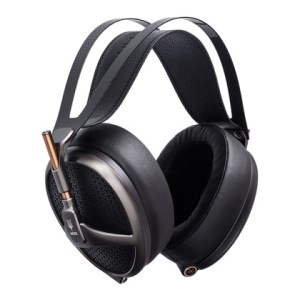
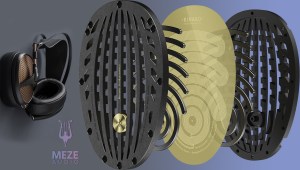
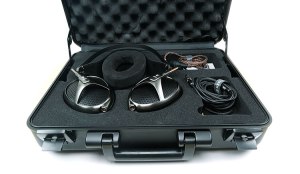
Meze Empyrean $2999 Review
February 4, 2019 Comments Off on Meze Empyrean $2999 Review
“On initial impressions, the leather pads feel a bit more reference in their presentation and the detail is indeed excellent. I don’t honestly find the leather pad tonal alterations to produce a cold or clinical sound, an HD800 it is most certainly not.
However, With the leather pads, you get quite a neutral sound with a little more upper mid and lower treble emphasis which seems to jive with the perception of the Empyrean having a very linear and flat low-end to 1k frequency response. It sounds incredibly coherent but may lack a little warmth and body compared to the Alcantara pads juicier and more expansive presentation.”
Devialet Expert 220 Pro Integrated Amplifier Review
February 3, 2019 Comments Off on Devialet Expert 220 Pro Integrated Amplifier Review
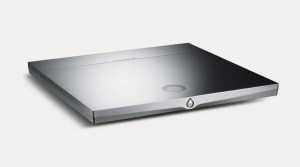
“This is an exceptionally quiet amplifier whatever source is selected. Only when using the phono-stage did I ever hear any noise, though that is to be expected. All sources go through a choice of 24bit/96kHz or 24bit/192kHz digital stage, the heart or “intelligence” of the Pro as they refer to it, though at no time in my listening did I even consider this could degrade the sound. First listening was digital via the excellent Krell KPS20i CD player. Vincent Belanger “Pure Cello” is a beautiful CD, produced by Audio Note. This was an engaging performance. The solo cello playing was a positive and forceful performance without being over-powering or tiring. Indeed, all analogue sources I connected into the line input gave a positive performance in terms of accuracy of sound and covering all frequencies with a flat response. Listening to ‘Live at the Citadel’ from my friends The Enid was deep in bass yet top frequencies were equally detailed and clean, with a good sense of being there in the audience. I originally heard the band in the 1970’s and fell in love with the references to Rachmaninov in much of the music as well as the use of synthesiser. The soundstage was large and detailed, without sounding clinical. Listening to sources via USB and SPDif was equally detailed and spacious giving some of the best performances whether FLAC, WAV or DSD. Pat Metheny ‘The Way Up’ and the second track confusingly named “Part One” had a great top end and bass that was relaxed but authoritative. Similarly, Muse Resistance album and “Uprising” has a deep bass at the start which was clean and clinical, though no less enjoyable. Listening to Supertramp ‘Breakfast in America’ on CD the sound was noticeably digitised than when I play my vinyl version of the album. Interestingly, playing it from vinyl, which still goes through a 24/192 ADC, sounded superior. The Devialet performed well in all I played, whether analogue or digital, though vocals and mid-frequencies were more forward in the presentation. Indeed, whilst the Expert 220 Pro worked great with all types of music and instrumentation my only slight concerns as a critical reviewer was a very slight sibilance with some vocals (mainly female), and the sound lacking some warmth in performance.
Sonarworks Creates Headphone Correction App for Mobile Devices
February 3, 2019 Comments Off on Sonarworks Creates Headphone Correction App for Mobile Devices
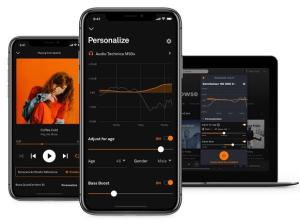
“A few technical details: The True-Fi mobile app supports a range of file formats including MP3, WAV, AIFF, ALAC (for iOS) and MP3, WAV, Ogg Vorbis, and ACC (for Android); these encompass iTunes and Android content libraries. The highest supported sampling frequency depends on the processing power of the host hardware; iOS users can expect 96 kHz and higher, and Android can expect sampling frequencies up to 48 kHz. FLAC files, as well as higher sampling rates, will be supported in the future.
Customization and personalization of audio files is a new and growing market. It will be interesting to see how Sonarworks develops its technology to respond to this market’s needs.”
AUDIOQUEST NIAGARA 1000 POWER CONDITIONER
February 2, 2019 Comments Off on AUDIOQUEST NIAGARA 1000 POWER CONDITIONER
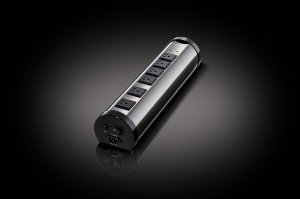
“When I switched the big ATC P2 power amp from the wall to the high power output on the Niagara, I got a very worthwhile increase in soundstage depth and width, with increased separation between instruments and no sense of dynamic compression; the former was expected, the latter a relief. It also seemed worthwhile to contrast the NRG Y3 with the Isotek EVO3 Premier I usually use on the amp. This did something very similar to the Niagara by calming and adding weight without undermining timing, a perceived reduction in volume level suggesting that distortion and noise had dropped.
The Innuos Zenith SE server should benefit from this sort of power conditioning and the Niagara did not disappoint. A veil was lifted from low level detail which opened up the room and further enhanced musicality, turning a good piece of music into an inspiring one. As a vinyl lover, it was necessary to see if the AudioQuest would improve the sound of my Rega RP8 turntable and Tom Evans Microgroove phono stage. Here the change was more subtle, and it mainly consisted of a slight darkening of the balance alongside a slight calming with quieter backgrounds. There was an improvement but not one that matched the price. ”
AMG • Giro Turntable and 9W2 Tonearm Review
February 2, 2019 Comments Off on AMG • Giro Turntable and 9W2 Tonearm Review
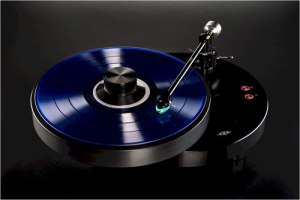
“The complex, frenetic rhythms and dense, undulating mix of Talking Heads’ Remain In Light [Sire SRKC 6095] are suitably insistent, but also beautifully layered, the propulsive mobility of the Frantz/Weymouth rhythm section surging powerfully beneath the chopped guitars and stabbing keys. This is always a great record, and the AMG ‘table lets you really appreciate the multi-faceted production and Byrne’s ability to harness it to the music rather than let it swamp proceedings. There’s ample evidence that Eno could over-egg almost any pudding, but the Giro manages to combine clarity of purpose with the almost physical density. That ability to find forward traction when everything else seems to get bogged down, to find clarity amidst congestion and life in the laziest groove, are what make the Giro such an entertaining and engaging record player. Its lack of really deep bass weight and the sense of scale that goes with it might prevent it from competing with the very best — but then the very best cost considerably more than AMG’s junior offering. Besides which, in the sort of systems where the Giro is likely to find itself, those sudden dynamics and the sense of pace that go with them are going to be musically far more important. The pairing with the similarly fleet-of-foot and bass-linear DS Audio DS-W1 might be altogether too much of a good thing, except that these partners seemingly encourage each other to ever-greater heights. The results are impressive, occasionally spectacular but never, ever less than fun.”
First Watt SIT-3 power amplifier $4000 Review
February 2, 2019 Comments Off on First Watt SIT-3 power amplifier $4000 Review
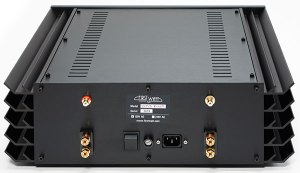
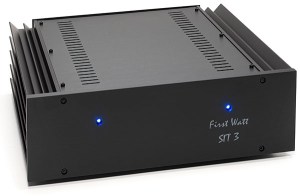
“Nelson Pass is that rare type of audio-engineering maverick who measures and listens with equal facility. He’s not wasting his time and your money trying to cram a thousand crap watts into a marketing department’s bling box. He does not believe that all measurable “distortions” are, willy-nilly, enemies of high-fidelity sound. Instead, he focuses his considerable intelligence and resources not only on reducing various types of distortion, but also on studying the essential natures of those distortions. He uses blind listening and ABX testing to understand how experienced listeners perceive distortion, and the role that distortion might play in helping our brains reconstruct the original musical event. In the SIT-3, Pass has allowed a carefully prescribed dose of negative-phase second-harmonic distortion to appear at low levels, with a tiny touch of third-harmonic distortion at higher powers. The second harmonic, he says, “fosters an illusion of expanded space and image specificity; the third appears to improve dynamics.”
Sound Lab Ultimate U-4iA electrostatic speaker Review $21,300 Review
February 1, 2019 Comments Off on Sound Lab Ultimate U-4iA electrostatic speaker Review $21,300 Review
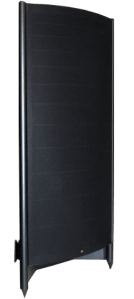
“Depending on the music, the amount of bottom-end energy could be excessive and would call for tonal adjustments to the speaker. Hootie and the Blowfish’s “Use Me” continued the impressive demonstration of the U-4iA’s bottom-end capacity, but was so overtly present in the lower frequencies that it was in danger of overrunning the upper half of the spectrum. I adjusted the midrange and treble to +3dB to compensate and an acceptable balance was restored. To my ear, leaving the tonal controls flat brings a more “tube like” character from the Sound Lab, versus adjustment upward of them bringing out a touch of solid-state forwardness. Note that this effect can also be further increased or decreased to one’s satisfaction by proper selection of cables.
Another word about the Poem of the Chinese Drums; the U-4iA exquisitely renders the nuances of the mallet and drum skin interaction. With quite a large number of speakers, mostly dynamic or hybrid dynamic, the thump of the mallet whacking the drum comes off as a shuddering burst, an LF punch that has little character of other instruments such as piano and saxophone. To my delight, a splendid amount of the subtleties of the drum were retrieved by the U-4iA. Usually at that frequency, an electrostatic speaker coughs out a stressed throb, but the musical integrity of the LF created by the U-4iA was exemplary. This gave me the sense that it was more powerful than the rated 32Hz.”
Ayon Spirit III Integrated Amplifier Review
February 1, 2019 Comments Off on Ayon Spirit III Integrated Amplifier Review
”
The Spirit III makes music in a manner that makes it impossible to listen to passively. All Ayon products that I have heard so far sound dynamic and lively first and foremost and the Spirit fits right into this description. It sounds solid and full-bodied, but also rich in texture and emotionally involving yet without the round and creamy-rich presentation, that for some people is synonymous with typical tube sound. Indeed, amazingly, the Spirit III’s bass performance is on par with some of the best transistor amps that I have heard. Its performance is much like a live act: not obviously super-refined or very polished but highly energetic, dynamic and powerful, with articulate, fast and very solid bass to make for a delivery that is instantly infectious.”

 Audiophilepure
You must be logged in to post a comment.