Burmester 232 Integrated Amplifier $40,000 Review
October 26, 2026 § Leave a comment
https://pt.audio/2026/09/13/pt-audio-burmester-232
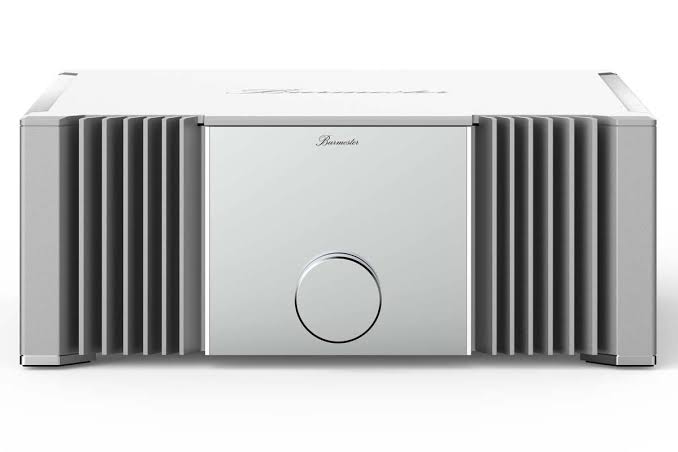
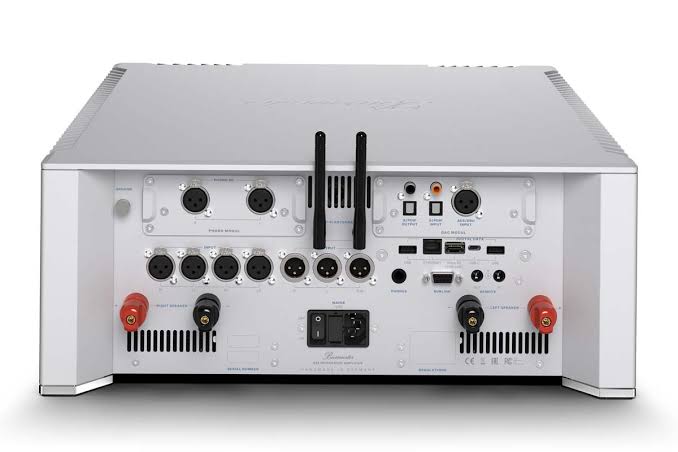
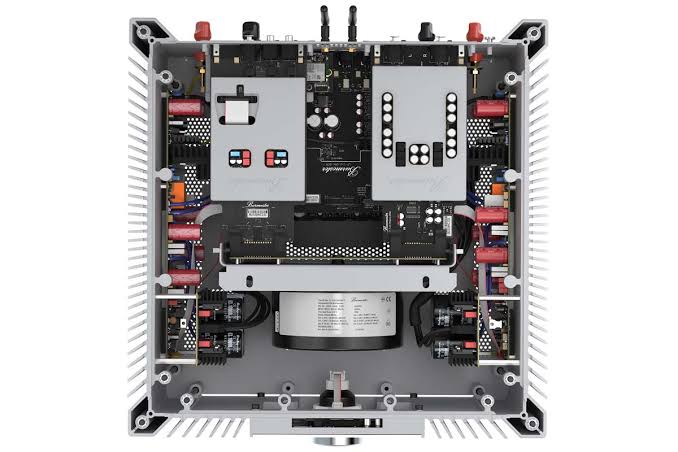
I started off this review of the Burmester 232 discussing the spectrum of minimalism and maximalism, and where I fall into line. I’m still a minimalist at heart, which is why I occasionally enjoy simple integrated amps such as the Konus Audio Integrale 2000 and any product LFD has ever made. At the same time, I’ve been surprised by the steady and increasing quality of all-in-one control centers, “Integrated Amp Plus” so to speak, because the industry has learned so much about noise reduction and galvanized isolation and external power supplies and that’s why we’re seeing so many “state-of-the-art” integrated amplifiers these days. (Once again, a pair of interconnects between a preamp and an amp can be a greater sonic compromise than a shared power supply.)
The Burmester 232, however, might be the most accomplished all-in-one I’ve reviewed because it offers so many features that are so well-executed that $40,000 seems like a small price to pay for having it all, and having it sound this amazing. The 232 is the type of integrated amplifier that you should purchase first, and then build everything around it with confidence because it’s unlikely you’ll need to buy anything else for years to come. Highly recommended.
Jennifer Warnes Famous Blue Raincoat Review
October 26, 2026 § Leave a comment
The obvious question was whether returning to 33⅓rpm would come at a sonic cost. Remarkably, it gives up very little to the Cisco. The same sense of scale and dimensionality remains, but the Impex shifts the balance slightly toward a fuller, rounder and more relaxed presentation. Bass is deep and richly weighted, while the upper frequencies retain plenty of life without the harder edge of the Cypress.
What distinguishes the Impex most is how naturally all of these qualities come together. Drums have greater body and presence, piano and strings carry more warmth and weight, and the mournful saxophone on the title track hangs naturally within the acoustic space. On “Joan of Arc,” the music seems to advance and withdraw almost like waves, surging into the room and then pulling back toward the speakers. It is a wonderfully natural expression of the recording’s dynamics.

The BEST Hi-Fi Isolation Platform I’ve Ever Heard? Stack Audio AUVA Review
October 26, 2026 § Leave a comment
Technics SL-1200GME Turntable $6599 Review
October 25, 2026 § Leave a comment
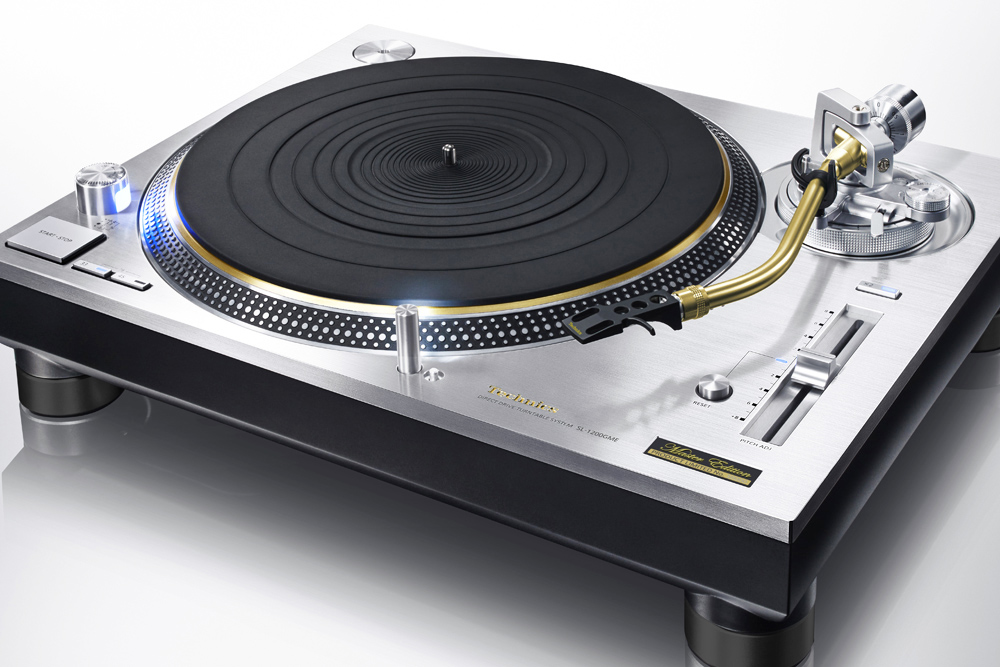
Yet those quibbles did little to temper his final assessment. Jonathan stated plainly that he believes “the Technics SL‑1200GME is the finest turntable one can buy for £5000, including tonearm,” though his praise went further, with him declaring that “it is an astonishing performer that can compete with turntables in the £10,000–£15,000 class” and, when properly isolated, “will match or better some very exotic hardware.”
That combination of high value and high performance earned the Technics SL‑1200GME a Reviewers’ Choice award when the review was published. But it’s the SL‑1200 GME’s benchmark-level performance—particularly its speed stability, rhythmic precision, engineering sophistication, ease of use, and overall sound quality—that makes it a standard against which other turntables should be judged and now earns it a Recommended Reference Component award.
Spec RSA-EX1000 Integrated Amplifier Review
October 25, 2026 § Leave a comment
https://www.soundstageultra.com/index.php/equipment-menu/1319-spec-rsa-ex1000-integrated-amplifier
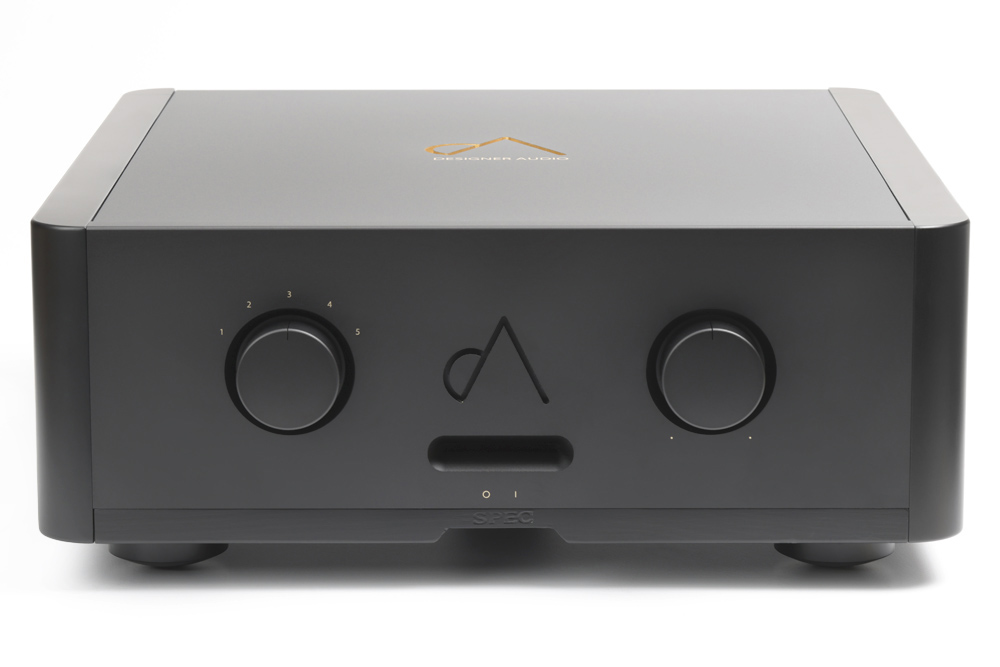
These are three wildly different amplifiers, so they are obviously aimed at different prospective audiophiles. The most alike—or least different—are the Brama and the RSA‑EX1000. Both feature solid-state output stages, but that’s where the similarities end. The Brama is fronted by two 300B tubes in the input stage, whereas the Spec is solid-state throughout. Their amplifier topologies are mirror images of each other. The Spec has a class‑D output stage and a linear power supply, whereas the Brama sports a switch-mode power supply and a class‑AB output stage. The Brama is an exceptionally neutral-sounding amplifier, more so than the Spec, which is surprising given the presence of two plump, juicy triodes in the Brama’s low-profile chassis. But the RSA-EX1000 sounds more forward, engaging, and, well, exciting. The Spec is not shy. If I had to personally choose which flavor I’d prefer to live with, I think I’d end up with the VinnieRossi, if only because its neutrality would serve me better as a reviewing tool.
If I were freed from my reviewing chores, it’d be a much closer race. The Spec is a thrill to listen to. From the moment when it loosened up and settled in, it grabbed me by the hair and thrust the music at me. I could easily live with this amp.
And then there’s the Arne, which in the context of this review is the anti-Spec. They’re not even the same type of component—even just calling them both integrated amplifiers is a stretch. The Arne’s rated output of 30Wpc (downhill, with a tailwind) and the RSA‑EX1000’s solid-state armored fist work and sound wildly different. They look wildly different also, but you can see that for yourself.
Rockport Technologies Lynx loudspeaker Review
October 24, 2026 § Leave a comment
https://www.stereophile.com/content/rockport-technologies-lynx-loudspeaker
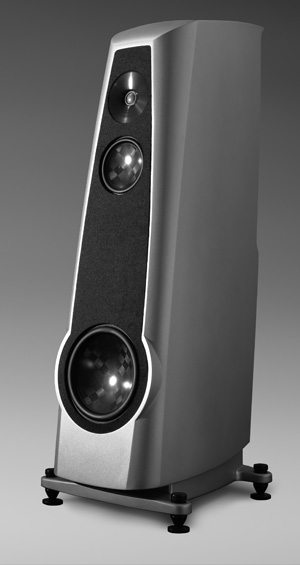
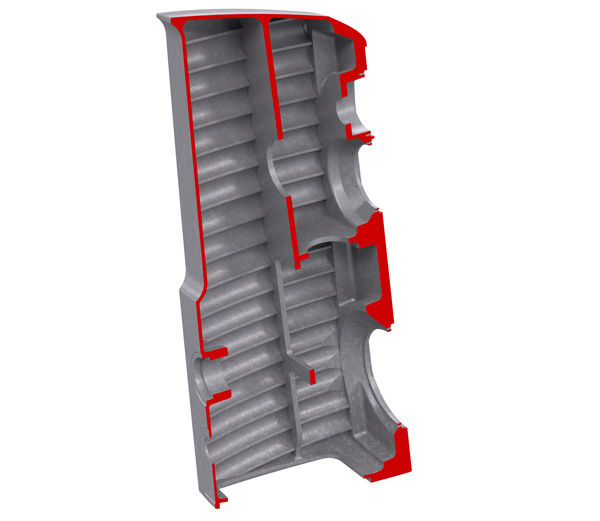
For the Lynx, Rockport wanted a full-range speaker capable of handling wide dynamic swings without requiring an enormous cabinet. “Hands-down, the chief arbiter of a clean wave launch from a loudspeaker is enclosure shape,” Payor said. On a conventional flat baffle, sound traveling across the cabinet front reaches a sharp edge and diffracts. That edge behaves like a second source, interfering with the drivers’ direct output and producing comb filtering and phase irregularities that can make the speaker easier to identify as the source of the sound. Rockport counters this with broad chamfers and by varying the distances from each driver to the cabinet edges. Payor considers that control essential to convincing imaging: A speaker that fails to manage diffraction, he said, “never gets entirely out of the way sonically.”The Lynx’s 10″ woofer is derived from, though not identical to, the 10” drivers used in the Lyra. Its 4-ohm motor, suspension, cone, surround, and spider are optimized for low mass, low friction, and high sensitivity. The company says the woofer remains pistonic to about 1.8kHz, far above its 150Hz crossover point; by then, the crossover has reduced its output by more than 72dB. The Lynx uses a rear-firing port, which, when I listened, called no attention to itself. The single woofer reaches a claimed 23Hz, and in my room the bass had the scale and pressure of a much larger speaker without the chuffing or one-note bloom that sometimes betrays a ported design.
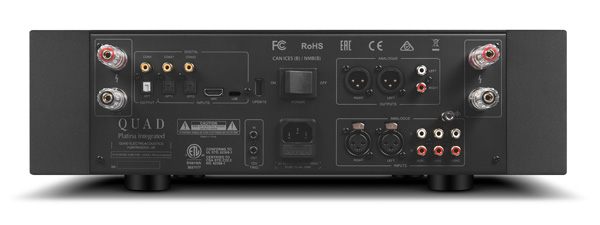
Quad Platina integrated amplifier $5495 Review
October 24, 2026 § Leave a comment
https://www.stereophile.com/content/quad-platina-integrated-amplifier
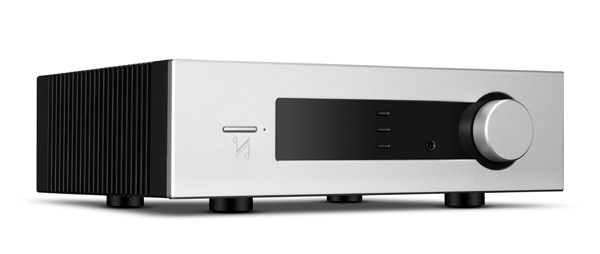
To get a better read on the Platina headphone amp’s ability to deliver current and voltage, I tried one more headphone: the 250 ohm Beyerdynamic DT 880 Pro. My 880 is dirty and worn because I’ve put a lot of hours on it. I’ve used it more than other headphones in my herd because it plays smooth, tonally neutral, and supremely well-sorted. You really could mix a record with these.With the Quad Platina, the Beyer transduced Lana Del Rey’s Born to Die the way her engineers probably heard it. It made their track-to-track production choices seem more obvious, wiser, and more effective than I had previously found them. But what I heard lacked sparkle and immediacy; it was a little soft on the edges.The Platina’s headphone amp responded poorly to challenging loads but gloriously to easy loads.


You must be logged in to post a comment.