Bowers & Wilkins Formation Duo review
July 21, 2019 Comments Off on Bowers & Wilkins Formation Duo review
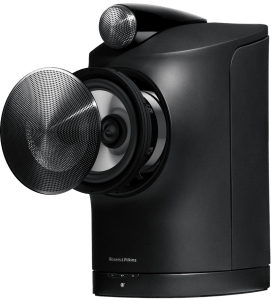
“Grippy and with the kind of authority and punch you’d expect in high-quality floorstanders, it’s the ideal backdrop to the artful lead guitar and vocal detail every time Simon and his backing singers kick in. Each movement of his fingers up and down the fretboard, each sound as he changes chords takes you right into the studio.
There’s an even tonal balance as the song skips from gentle verse to upbeat chorus. With little audible sound from the speaker cabinets, there’s incredible clarity to the notes and a transparency that quickly makes us fussy about the quality of what we choose to listen to, with the 24-bit/96Khz wireless transmission more than enough to deliver the goods.”
64 AUDIO FOURTÉ NOIR $3,799 REVIEW
July 21, 2019 Comments Off on 64 AUDIO FOURTÉ NOIR $3,799 REVIEW
”
I’ve heard that there were prototypes floating around before the official release of the tia Fourté that had a warmer, more analogue sound. Could it be that Noir presents that tuning? Is it what the tia Fourté could’ve been if it wasn’t changed to a hyper detailed and brighter sound? Whatever the answer is to those questions, it’s awesome to have a choice now. Those who want the head-scratching clarity of the original are as much taken care of, as those that want a fuller and slightly warmer sounding Fourté.”

Mytek Brooklyn DAC+ DAC-Preamplifier-Headphone Amplifier $2195 Review
July 20, 2019 Comments Off on Mytek Brooklyn DAC+ DAC-Preamplifier-Headphone Amplifier $2195 Review
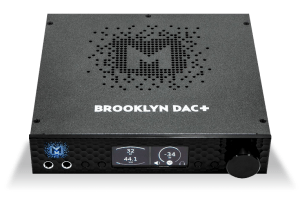
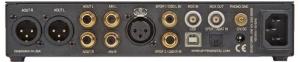
“With its DAC stage bypassed, the Brooklyn DAC+ can also function as only a preamplifier through the use of its single-ended RCA inputs. Having already run my computer into the Brooklyn’s digital USB input, I tested its analog input using my Benchmark DAC2 HGC as a source, and found its sound less engaging than when I’d used it as a combination DAC-preamp plugged directly into my ARC D300 power amp. Used as a preamp only, the Mytek still produced wide soundstages on which voices and instruments were located clearly but those stages were shallower than when its DAC stage was in circuit. “Always On My Mind,” from the Pet Shop Boys’ live album Inner Sanctum (16/44.1 FLAC, Sony Japan/Tidal), was flatter from front to back. Nonetheless, bass slam remained solid, and the Mytek continued to impress me with the evenhandedness of its reproduction of the midrange and upper octaves — nothing was glaring or too forward. My reference preamplifier, a Hegel Music Systems P20, presented deeper soundstages and a more fleshed-out personality to Neil Tennant’s voice, and overall this live recording had a more open sound than through the Mytek.”
Valve Amplification Company Master Preamplifier
July 20, 2019 Comments Off on Valve Amplification Company Master Preamplifier
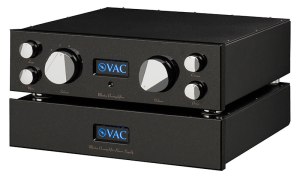
“To compare the sounds of the Signature Mk.IIa SE and Master, I listened to the Roy Hargrove Quintet’s Earfood again and with particular care to “I’m Not So Sure,” the track that had been so gorgeous through the Master. Overall, it sounded similar in terms of tones, soundstage depth and breadth, and air around instruments. The timbres of the trumpet and alto sax were also similar in character and sensuousness. But I could tell that the impacts of drumstrokes and bass plucks were softer, not as crisp or explosive. Hargrove’s trumpet was certainly as clear as through the Master, but not as dimensional in terms of its metallic sheen or blattiness. Finally, although Justin Robinson’s alto sax still sounded fluid and expressive, it wasn’t as piercing in the highs or dynamic peaks. There was a marked difference in extension, resolution, snap, and punch.
Listening again to Florilegium’s recording of Bach’s Brandenburg Concerto No.3 confirmed all of this. Though string tone was fine and the separation of sections impressive, microdetails were not quite as refined. I couldn’t pick out single instruments as easily — something I’d very much enjoyed doing with the Master. Pace, rhythm, and timing were good with the Signature Mk.IIa SE — the attacks of instruments were precisely together in this performance’s myriad tight entrances — but I couldn’t “see” as deeply into and among the aural images of the violins and viola da gamba. Yet with the Signature Mk.IIa SE, the strings were expressive and open, tutti energetic and thrilling, and harmonies bountiful.


New Sony WF-1000XM3 vs. Klipsch T5 vs. Sennheiser Momentum | Wireless sound showdown
July 20, 2019 Comments Off on New Sony WF-1000XM3 vs. Klipsch T5 vs. Sennheiser Momentum | Wireless sound showdown
Focal Kanta No1 Loudspeakers Review
July 18, 2019 Comments Off on Focal Kanta No1 Loudspeakers Review
“Where the Kanta No1s came up short was put in bold relief when I compared them with GoldenEar Technology’s super-large Triton One.R floorstanders ($5999.98/pair), which were in my room because I was reviewing them at about the same time. I played Bublé! again. Even driven by the powerhouse Revelation Taurus Monos, the Focals couldn’t come close to the bass depth and power of the Triton One.Rs. No surprise there — built into each One.R is a 1600W amplifier that drives the speaker’s three woofers, assisted by four passive radiators. This results in bass that extends with power down to 20Hz, the very bottom of the audioband. The Kanta No1, tiny by comparison, stops at 40Hz, a full octave above that, and with a bit of a whimper. And when I drove the Focals from the 8 or 4-ohm taps of the JE Audio VM60s, the bass got a touch lighter. That told me that most people will likely be best served by the No1s if they drive them with a powerful amplifier — probably a solid-state model that can put out at least 100Wpc into 8 ohms, and handle an impedance that drops below 4 ohms without blinking.
But above the deep bass, with either the Revelation Taurus Monos or the VM60s, the Kanta No1s charged ahead of the Triton One.Rs by sounding a little more open, more free of their enclosures. The No1s also sounded a touch cleaner in the midrange and highs, which I particularly noticed with the Carpenters’ With the Royal Philharmonic Orchestra (24/48 FLAC unfolded to 24/96 MQA, A&M/Tidal). The plucked guitar notes that begin “For All We Know” sprang more freely and cleanly from the No1s than from the Triton One.Rs — but it was the voice of Karen Carpenter, who enters at 0:38, that sealed the deal: its tightly focused aural image at the frontmost part of the stage sounded slightly clearer and more open through the Kanta No1s.”

dCS Bartók Network DAC/Headphone Amp Review
July 18, 2019 Comments Off on dCS Bartók Network DAC/Headphone Amp Review
“The track’s low-end enjoyed excellent control, with a bouncy and propulsive bass guitar sound that pushed the song along with heady abandon. Indeed, the normally quite matter-of-fact PM-1s actually appeared to be enjoying themselves, turning in a vibrant and tactile sound. The midband sound mimicked the line outputs, with a bright light pushing through the mix, illuminating everything without dazzling you back. The signature Rickenbacker guitar was instantly recognisable, and Mark Knopfler’s vocals had their correct ‘sawdusty’ texture, adding so much to the feel of the track.
The Bartók’s preamp also has serious reserves of grunt to convey musical crescendos. With a tenacious grip and no hint of breathlessness as the levels increased, Kraftwerk’s ‘Tour De France Étape 3’ [Tour De France Soundtracks; EMI 72435 91710 2 9] developed with shocking force as its closing dynamic peak was reached.”

audiophile heaven
July 18, 2019 Comments Off on audiophile heaven
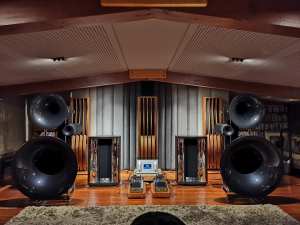
“We all enjoy the upper echelon ultra high-end audio systems. So, here is another setup with Avantgarde Acoustic Trio Luxury Edition 26 (no5 of 26), Kronos Audio Pro turntable , Jadis power amplifiers, Trafomatic Audio Luna, dCS etc.”
HIFIMAN JADE II REVIEW
July 17, 2019 Comments Off on HIFIMAN JADE II REVIEW
”
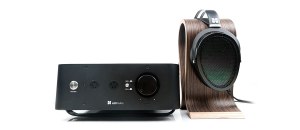
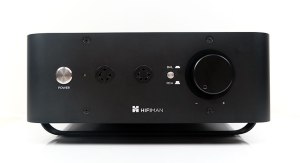
There is far less to go on regarding the amplifier and what is happening on the inside. What we do know is that it uses a cascode differential circuit of transistors and MOFSETs with an 80W transformer outputting around 1.2W at 1kHz. I would class this as a medium output level solid state amp on par with the 1W into 32Ω Auris HA-2SE for output but much lower than my own e-stats VE Enterprise E Lite at just over 3W per channel.
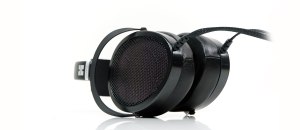
The amp is also set up with a Pro Bias 540V output so it is compatible not only with Hifiman’s Jade II headphones but also pretty much any electrostatic headphone with a 5-pin pro bias connector.
This is also a single-ended design rather than a balanced amp configuration despite it having a balanced XLR 3-pin input on the rear. It will allow two inputs (dual RCA/XLR) with a switch control and two e-stats headphones can connect to the front at the same time. As a reviewer, being able to compare to headphones from the same amp at the same time without disconnecting and switching is gold.”
Focal • Stellia $3,000 Review
July 17, 2019 Comments Off on Focal • Stellia $3,000 Review
“This kind of music has always been the stumbling block for closed-back designs, collapsing that beehive to a scaled-down image no wider than your eye sockets. The best mass-produced designs, familiar to a wide audience for air travel, don’t even come close to expanding this space limitation. The Sony WH-1000XM3, one of today’s most popular travel headphones (it includes active noise cancellation) is most non-audiophiles’ idea of a high-end headset, and at $350, it packs a lot performance into a very small, portable and lightweight package. But it highlights the limitations of closed-back headphones. A quick comparison of the Sony with Focal’s “budget” closed-back model highlights that the Elegias are serious headphones for music lovers who demand fine reproduction. The Sonys’ relatively thin and lightweight sound is exposed, making it easy to affirmatively answer the typical non-audiophile question — “But is it really three times as good?” The tradeoffs in added weight and size bring a dramatic increase in musical authenticity — depth of musical texture and dimension that make the listening experience more than shutting out the outside world.
The Elegia packs up in its handsome carrying case, and the short cable is perfect for portable listening. I plugged it into an AudioQuest DragonFly DAC and iPhone full of music copied from CDs. Alisa Wailerstein playing Shostakovich’s Cello Concerto with the Symphonieorchester des Bayerischen Rundfunks [Decca 483 0835] transported me back to hearing her perform the piece live in the Concertgebouw a few years ago. Bass, high-frequency extension, gorgeous tonal accuracy and explosive dynamics were all in abundance, needing only about half of the iPhone’s volume range. The Elegia’s 105dB sensitivity makes it easy to run with an iPhone (the Stellia, at 106dB, is just as sensitive). The hard-shell case is the size of a small man-purse and is covered in the same fabric as my preferred carry-on luggage, a small backpack from Peak Design.”

 Audiophilepure
You must be logged in to post a comment.