LSA HP-1 Headphones $1399 Review
August 15, 2020 Comments Off on LSA HP-1 Headphones $1399 Review
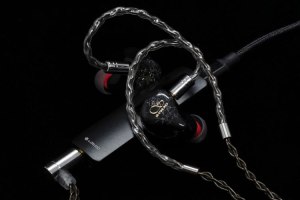
“Listening to Melody Gardot’s “Mira,” one of my go-to test tracks, the HP-1 captured the essence of the performance in a textbook manner. The dynamics were conveyed incredibly well, vocals were clear, and the overall frequency range was represented very well. My memory of headphones that I have had at the price point of the HP-1, put the HP-1 far ahead of like priced competition, and in my opinion makes it simply a no brainer at its retail price.”

PMC Fact.8 Signature Loudspeakers Review $12,000
August 15, 2020 Comments Off on PMC Fact.8 Signature Loudspeakers Review $12,000
“As I whiled away my COVID-19 isolation, I had plenty of time to reflect on PMC’s origins as makers of recording-studio monitors. Accurate reproduction of the source material is obviously the primary goal of all audio components, a goal whose fulfillment is often diluted by any number of design choices. From nonlinear speakers to tube amps to LPs, designers and audiophiles often choose euphony over accuracy. Just so you know where I stand: I’ll choose an easy-to-listen-to, euphonic-sounding system over a ruler-flat, dead-nuts-accurate system every time.
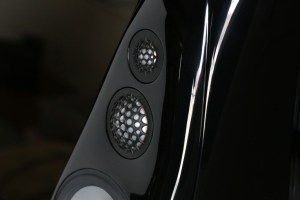
Over the years, I’ve tuned my reference system to nip off many of the sharp corners, installing tubes and vinyl to make soft pillows for my ears. I was at first extremely nervous about replacing my aging, no-longer-reliable, all-tube Audio Research VT100 power amp with the solid-state, pro-audio Bryston 4B³. But I took the plunge, and I’m thrilled with how well the Bryston has slid into my system. So with this toe dipped in pro audio, I felt comfortable — heck, even a bit tingly — as I inserted the banana plugs of my Nordost Tyr speaker cables into the Fact.8 Signatures.”

Pass Laboratories XA200.8 pure Class A monoblock amplifiers $42,000 per pairReview
August 15, 2020 Comments Off on Pass Laboratories XA200.8 pure Class A monoblock amplifiers $42,000 per pairReview
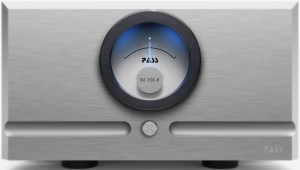
“Finally, regarding the power supply, the smaller amps have one third more storage capacitance. All .8 models still use very large Plitron toroidal transformers, and have new On/Off switching and high current delay, allowing conformance with the stand-by draw of 1 Watt. The front-end circuits have larger power supply decoupling, “This coupled with interleaved layout techniques has reduced the output noise of the amplifiers by another 10 dB. The range between peak output and average noise floor is greater than 130 dB.”
Even in the vault-like room, the noise level of the XA200.8 through even higher efficiency speakers is to my ear nonexistent. Note that 130dB is in the range of Class D amps! The only time I heard a peep from these monoblock amps was sometimes, when warming up or cooling, a tine of the heatsink fins might ping once or twice, but not continuously. The quietness set the stage for music played at a moderately high listening level to explode from the coveted “black background”— an exciting experience!”
KINERA FREYA $249 REVIEW
August 14, 2020 Comments Off on KINERA FREYA $249 REVIEW
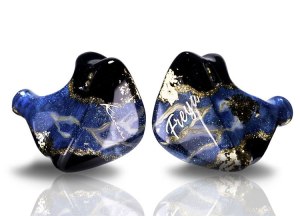
“The highs never get harsh or piercing even though the highs seem to extend very well and are not recessed. The highs here are present and well and are not hidden away in the background. There is no ringing or graininess. No sibilance either. I did detect a touch of hiss at certain times but I am unsure if it was a character of the recording or the Balanced Armature hissing away.
Perhaps even my amp was the culprit but I did use more than one amp. If you do some research you will find that hiss occurs at around 8khz and these have a spike at that frequency. The high frequencies on the Kinera Freyas have good air, a medium amount of sparkle, and can handle complexity fairly well.”
dCS Bartók Digital-to-Analog Converter $14,500 Review
August 14, 2020 Comments Off on dCS Bartók Digital-to-Analog Converter $14,500 Review
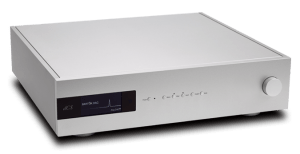
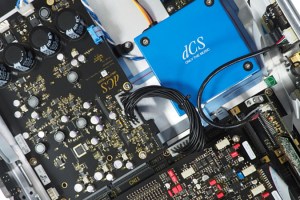
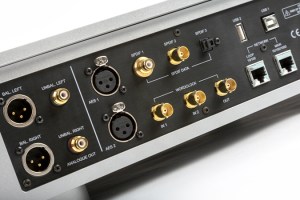
“These days, $2000-$2500 buys most audiophiles a near-state-of-the-art DAC. Whether an FPGA design from PS Audio or Chord Electronics, a multibit model from Schiit Audio, or a delta-sigma from Benchmark or Mytek, to name just a few, there’s no shortage of excellent options. In fact, you could buy a Mytek Brooklyn DAC+ ($2195) just like mine, plug it into your high-dollar system, and I’m confident you’d be shocked at how clean and resolving its sound is. And you’d be right. My extensive praise for the dCS Bartók might have given the impression that a substantial chasm in sound quality yawns between it and, say, the more proletarian Mytek that hails from Poland. That chasm is narrower than you might think.
With the Bach Partita, Viktoria Mullova’s delicious violin sounded about as transparent through the Mytek as it had through the more-than-six-times-as-costly dCS. That alone is a huge achievement. Still, the Bartók’s re-creation of the Allemanda was distinct in some subtle ways. The soundstage was a touch more compressed through the Mytek — Mullova’s instrument sounded slightly more two-dimensional. Gone was the dCS’s analog-like ease and liquidity, replaced by a more urgent and vivid sound with a more mechanical, stereotypically “digital” feel. I actually enjoy that sort of well-articulated sound, but it’s inherently unnatural, and ultimately, I preferred the Bartók’s version.”
Plinius Reference A-150 Stereo/Mono Amplifier $13,000 Review
August 14, 2020 Comments Off on Plinius Reference A-150 Stereo/Mono Amplifier $13,000 Review
“Next I went all old-school audiophile — I had a feeling the Plinius would have a field day. I loaded up “Only Time,” from The Very Best of Enya (16/44.1 FLAC, Reprise/Qobuz), and raised the volume on the Hegel until the SPL meter on my phone measured 85dB at the listening position. The sound was fully enveloping, the Plinius melding with the Vimbergs to produce dense images on a vast soundstage. The bass was strong but more round than square, and the feathery highs were miles from harsh. “Caribbean Blue” was next, from Enya’s Shepherd Moons (16/44.1 FLAC, Reprise/Qobuz), and the sound was just right. Her lead and overdubbed backing vocals were clear and just a touch upfront, but the characteristic that set the A-150 apart from most other solid-state amps I’ve heard was the density of tonal color. This amp gave me the gestalt of what music should be — full, rich, dense — without primarily focusing on detail retrieval and transparency.”
Vivid Audio Giya G2 Series 2 Loudspeakers $50,000 Review
August 13, 2020 Comments Off on Vivid Audio Giya G2 Series 2 Loudspeakers $50,000 Review
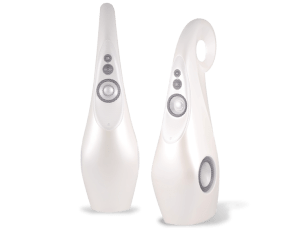
Toward the end of my listening sessions I swapped out the EMM preamp and DAC for Anthem’s STR preamplifier-DAC. The sound didn’t change drastically, though the total price of the system did: the Anthem costs $3999, the two EMMs $50,000. But with the STR, the soundstages of the tracks mentioned above were consistently just a bit shallower, and the sound wasn’t quite as refined. However, the width of those stages, and the way the sound floated so free of the speakers, were unchanged, as was the ability to play every musical genre with aplomb. Perhaps most important was that the sound was still top-drawer — don’t think the $50,000/pair Vivid Giya G2 Series 2s require ancillary gear as crazy-costly as themselves. The Anthem and Hegel taught me that, if you spring for a pair of G2S2s, it might be wise to experiment with upstream gear of all sizes, types, and prices.”
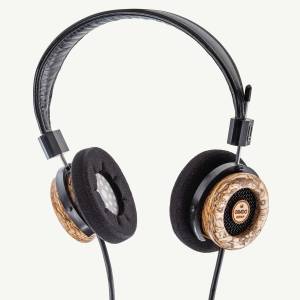
GRADO THE HEMP HEADPHONE REVIEW
August 13, 2020 Comments Off on GRADO THE HEMP HEADPHONE REVIEW
“Grado headphones all fall very much on the sensitive side when it comes to power requirements, and The Hemp Headphone with its 38 ohm 98 dB/mW drivers is no different. It’s an easy pair of headphones to power and will deliver excellent performance from modest sources such as your garden variety smartphone. This should be welcome news for readers who are considering getting into the hobby and might be balking at the prospect of having to spend additional money on source gear and amplifiers. While my Samsung S9+ gets them happily singing at around 60% volume, a quality discrete headphone amplifier will yield nominal audible benefits when fed with decently-recorded and mastered source material.”
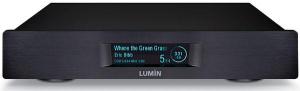
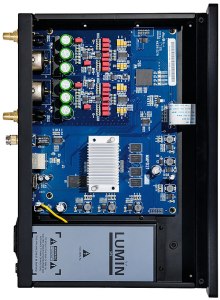
Lumin D2 Music Server/DAC £1845 Review
August 13, 2020 Comments Off on Lumin D2 Music Server/DAC £1845 Review
“But in case you were thinking this player was all about delicate voices and minimal recordings, play the ‘1941 March’ from the Jerry Junkin/Dallas Wind Symphony on John Williams At The Movies [Reference Recordings RR142SACD; DSD64], and you’ll hear just how well the Lumin D2 lets the track build from almost inaudible woodwind all the way through to full band and drums bombasts, while at the same time keeping the rhythms tight and crisp.
Rhythms are also to the fore in the Philip Glass score for the opera-ballet The Witches Of Venice [Orange Mountain Music 0031], and the clarity of the Lumin D2 enables it to keep the various instrumental and vocal lines easy to follow, while delivering fine low-end extension of the synths to room-filling effect.”
Weiss Engineering DAC502 D/A processor Review
August 12, 2020 Comments Off on Weiss Engineering DAC502 D/A processor Review
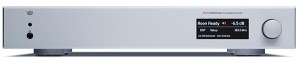
“The DAC502’s Room Equalizer comprises five filters that can be set to peak/cut or high shelf for left and right speakers individually or together. To make use of this function, you download a FLAC or WAV file from the Weiss website that sweeps down from 200Hz to 20Hz. While playing this file, you note the time when the loudness is at a maximum. The Weiss processor’s manual includes a table that correlates the time with the frequency of the sinewave. You then manually create up to five correction filters, a complex process that would be more user-friendly if integrated with an app like Room Equalization Wizard.”
 Audiophilepure
You must be logged in to post a comment.