SPL Phonitor E – Review and Comparison
January 7, 2021 Comments Off on SPL Phonitor E – Review and Comparison
KEF LS50 Meta Loudspeakers $1499 Review
January 5, 2021 Comments Off on KEF LS50 Meta Loudspeakers $1499 Review
https://www.soundstagehifi.com/index.php/equipment-reviews/1502-kef-ls50-meta-loudspeakers
The KEFs and GoldenEars sounded more similar than different. With “Feelin’ the Same Way,” also from Norah Jones’s Come Away with Me, their bass extension was roughly the same, as were the tightness of and detail in the bass. However, the BRXes’ slightly greater upper-bass energy translated into a bit more punch with kick drum, as in Lou Reed’s “Dirty Blvd.,” though still not up to the level of the Diablo Utopias.
With “Feelin’ the Same Way,” the BRXes were able to cast just as wide and deep a soundstage as the LS50 Metas, though the specificity of aural images on those stages wasn’t as precise as through the Metas. But unlike the Focals’ highs, which were brighter than the Metas’, the BRXes’ highs were slightly duller. The Metas’ highs also sounded cleaner than the BRXes’, which were slightly ragged by comparison.
The biggest difference was in Jones’s voice, which was very tightly focused at center stage through the LS50 Metas, and through the BRXes was just as centered but more diffuse, and without as much detail and clarity. The Metas sounded more crisp through the midrange and highs than the BRXes, which made the latter sound slightly laid-back. I heard the same when I listened through both speakers to “Don’t Know Why,” the big hit from Jones’s

Nordost QRT QPoint and QRT QSource Resonance Synchronizer $2499 Review
January 5, 2021 Comments Off on Nordost QRT QPoint and QRT QSource Resonance Synchronizer $2499 Review
Nordost QRT QPoint and QRT QSource Resonance Synchronizer
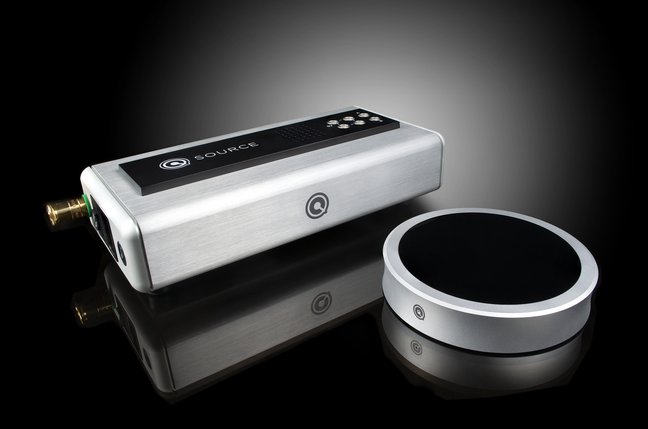
If I was sold on the QPoints, it was also intriguing to explore the capabilities of the QSource. Thanks to the importunings of the North American dCS representative John Quick, I finally dipped a toe into the digital streaming waters by procuring a Roon Labs server. It turns out that you can jettison the flimsy wall wart that accompanies it and substitute the QSource, which in essence allows you to run the Roon off a linear power supply. This turned out to be a nifty upgrade. While I enjoyed opening the portal to a wealth of music by entering the streaming world, it never really sounded all that competitive with the dCS transport. I don’t think that the QSource can completely cover the gap, but it offered a substantial improvement in image density, resolution, and hall ambience. There really was no comparison between it and the wall wart, something that was immediately apparent on a Martha Argerich recording of a live performance at the Lugano Festival or Cat Stevens’ classic Tea For the Tillerman. Argerich’s piano just sounded so much more formidable and the hall more spacious with the QSource powering the Roon.
D’Agostino Progression Integrated Integrated Amplifier £18,500 Review
January 4, 2021 Comments Off on D’Agostino Progression Integrated Integrated Amplifier £18,500 Review
https://www.hifinews.com/content/dagostino-progression-integrated-integrated-amplifier
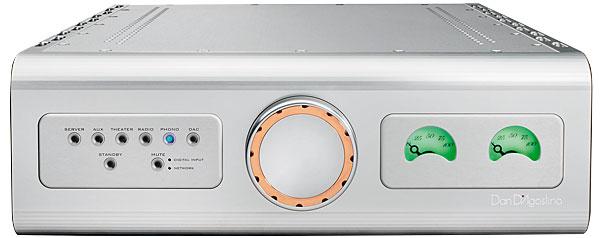
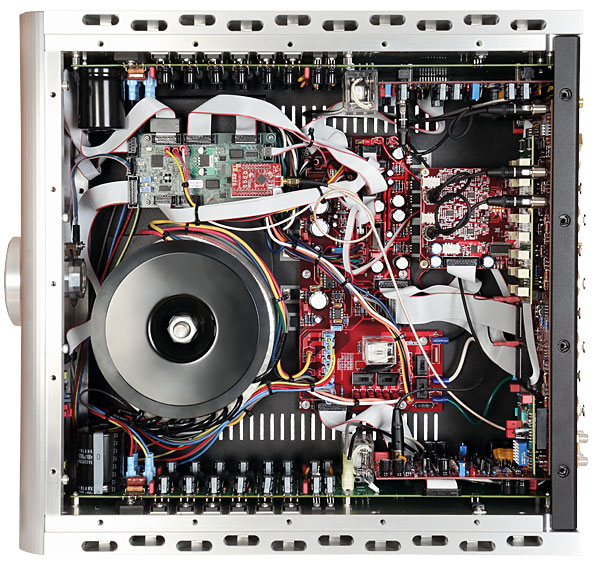
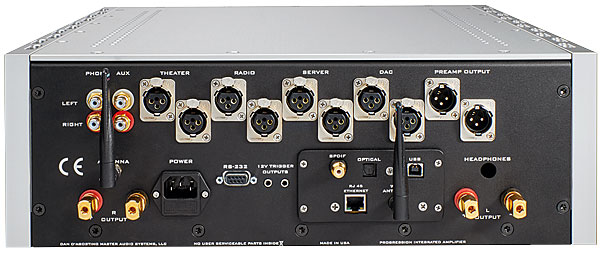
Running them side by side, the Progression Integrated’s amplifier section is undoubtedly less bold, less forceful than the costlier Momentum Stereo. But the differences were so minute as to cause a bit of head scratching. I had to keep reminding myself of the Law of Diminishing Returns, acknowledging that the Progression customer is not the same as the Momentum client.
It was the subtlety of George Benson’s guitar work on The Other Side Of Abbey Road [A&M Records 82839 3028 2] that showed how two amplifiers from the same designer can sound different, yet share common ground.
Sorry about this, folks, but an analogy from the world of wine best illustrates this: the Progression Integrated is to the Momentum what ‘second growth’ wines are to Premier Cru. For someone like me, who can’t afford £800-a-bottle reds, there are, blessedly, plenty of astounding second growths. So, for you teetotallers: the Progression Integrated is to the Momentum what Le Volte is to Ornellaia. And that spells ‘Bargain’.
Helius Omega Tonearm and Alexia Turntable Review
January 4, 2021 Comments Off on Helius Omega Tonearm and Alexia Turntable Review
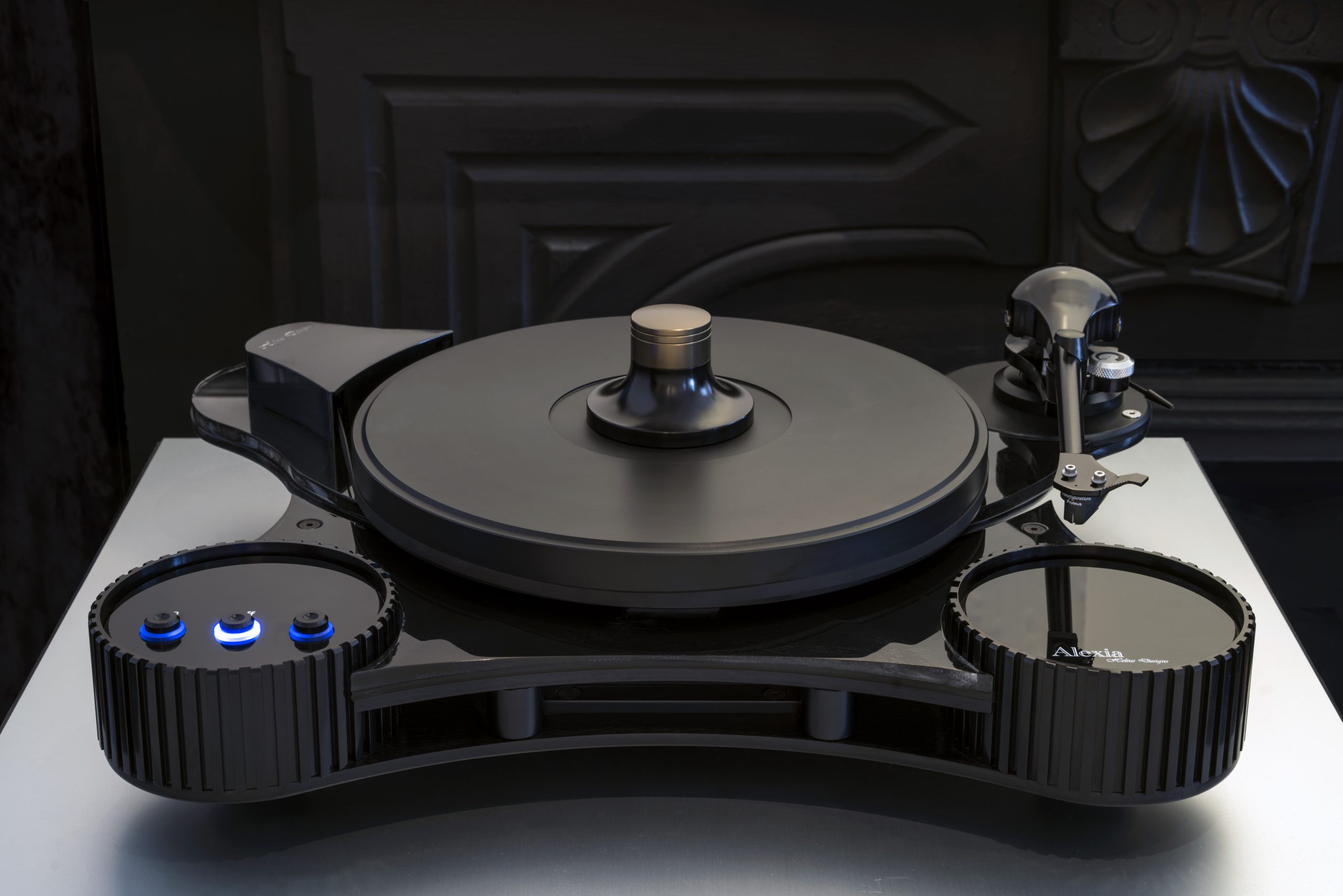
When it comes to matching phono pickups he has some decidedly unusual (and rather confusingly explained) ideas regarding effective mass, but the bottom line is that the Omega is “best suited to medium-to-stiff cantilevers” typical of moving coils. Downward force is applied by the main counterweight, designed to be as close to the bearing housing as possible, with three minor weights for fine tuning (you’ll need to supply the gauge). Height adjustment is via the usual collar-clamp and set-screw in the base plate; uncalibrated antiskating adjustment is provided, which means you set it by ear or with test records. Dan Meinwald, whose EAR-USA imports Helius products, prefers to leave antiskating unengaged; I tried it both ways with equally good results, which is to say I heard no mistracking that I could attribute to bias issues. The Omega’s cueing is among the most accurate I’ve come across. The captive cables are very short, terminating in a pair of enclosed RCA jacks that can be attached to the base, after which the user supplies his own interconnects to the preamplifier. The Omega is offered in four versions: Standard, under review here, with Tungsten bearings and copper wiring, retailing for $3695; Standard with silver wire for $3895; Silver Ruby with ruby bearings for $5225; and a 12-inch Silver Ruby for $5295.
iFi Neo iDSD – The new headphone DAC/amp from iFi
January 4, 2021 Comments Off on iFi Neo iDSD – The new headphone DAC/amp from iFi
VPI HW-40 40th Anniversary Edition turntable
January 3, 2021 Comments Off on VPI HW-40 40th Anniversary Edition turntable
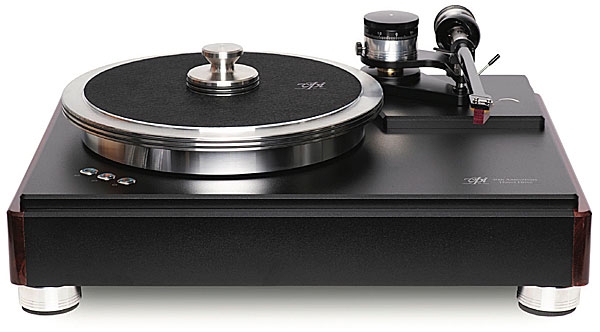
This is the first VPI turntable I’ve reviewed that provides a high degree of isolation from the surface upon which it rests. Despite the cones, feet, inserts, bladders, and what have you that VPI has used over the years, this is the first one where, if you tap (or bang!) on the platform, nothing gets through to the stylus. According to VPI, two years of work went into producing this level of performance using a combination of mass loading, mechanical stiffening, selective damping, and a combination of elastomers.
In and of itself, the top plate is still somewhat lively, but compared to my memory of the Classic Direct, the HW-40 is better damped, letting through only a subdued, quick-to-settle “pop” when the top plate is struck. Bettinger told me that the outer frame is well-isolated, too. I was able to corroborate that: Tapping on it produces nothing through the speakers.
Volti Audio Razz Loudspeaker $4999 Review
January 3, 2021 Comments Off on Volti Audio Razz Loudspeaker $4999 Review
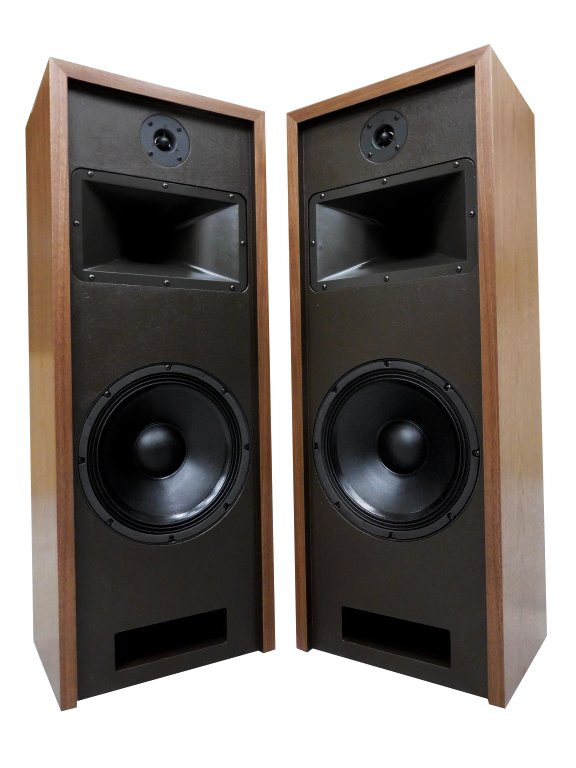
It is one thing to spotlight all the technical wonders of a high-end loudspeaker, and quite another to lose oneself for hours on end listening to it for the pure pleasure of doing so. In the last week of my review audition, Razz showed me its truest sonic intentions: forget the reviewer-speak, just play music!
Greg Roberts has succeeded in building a smaller, less expensive speaker for the Volti Audio product line. Razz does indeed carry the Volti sonic signature, and that is a very good thing. Audiophiles looking for a speaker in the $5k price range—especially those with small to medium sized rooms—should definitely investigate this lively, lovable, and livable, loudspeaker.
 Audiophilepure
You must be logged in to post a comment.