NAD Masters M66 BluOS Streaming DAC-Preamplifier
February 13, 2024 Comments Off on NAD Masters M66 BluOS Streaming DAC-Preamplifier
Børresen X2 Floorstanding Loudspeakers $8,800 Review
February 12, 2024 Comments Off on Børresen X2 Floorstanding Loudspeakers $8,800 Review
The Børresen X2 brought back memories of the sound of the very pricey Raidho TD4.2 speakers I reviewed in July 2020, although in miniature. It was in miniature only because the Raidho speakers were seven driver speakers that stood more than five feet tall and were two feet deep. But the X2’s treble response was awe-inspiring, enabling Tony Williams’ snare drum and cymbals on many tracks to float about halfway between both speakers but mainly toward the right speaker.
After listening to many sides of this Miles Davis box set, I could have easily filled Enjoy The Music.com’s server space by describing the many album tracks, alternative takes, and outtakes from the sessions during the four years of this ensemble’s lifespan. But it bears repeating that the midrange of these speakers was extremely lifelike sounding, with a transient response to match. The micro- and macrodynamics of these speakers were one of the primary reasons I think they are worth their asking price. This, along with their very tight mid-bass, made listening to the various sessions recorded throughout the band’s history come to life in my listening room.

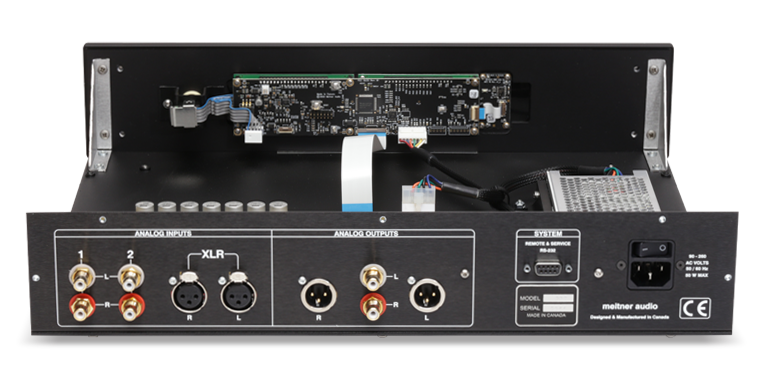
Meitner Audio PRE Preamplifier Review
February 12, 2024 Comments Off on Meitner Audio PRE Preamplifier Review
https://www.soundstagehifi.com/index.php/equipment-reviews/1846-meitner-audio-pre-preamplifier
My final listening session was the most intense. I recently heard the Danish Quartet playing in Toronto’s Koerner Hall, an exceptional venue in both architecture and acoustics, so I have a good idea of the quartet’s live sound. Fortunately, the Danish Quartet records for ECM, which maintains high recording standards and serves the quartet admirably. This was particularly evident on the five-album Prism series, which features, among other works, Beethoven’s String Quartets Nos. 12–16 (the “late quartets”). I listened to the Adagio and Allegro from Quartet No. 14 in C-sharp Minor, op. 131 (24/96 FLAC, ECM Records / Qobuz). While the EMM Labs PRE2 exhibited magnificent power against a black background in this recording, the Meitner PRE was more detailed and more relaxed. The EMM Labs DV2 DAC’s variable output, feeding the amp directly, combined the best parts of the two presentations and proved to be the clear winner, if only by a nose.
What about the EMM Labs PRE?
At the time of this audition, I didn’t have the EMM Labs PRE, Ed Meitner’s statement analog preamp, on hand. But I do have my listening notes from a couple of years ago. At that time I compared the EMM Labs PRE to the EMM Labs DV2 DAC with a direct connection to the amp. My preference was for the latter: aside from not needing analog inputs, I preferred its sound—it was a touch more resolved in the deep bass—and felt it threw a more spacious image. This setup also saves a pair of interconnects and a power cord for the separate preamp and takes up less space in the rack. Quite possibly, the small differences I detected might have disappeared had I used Nordost’s top-of-the-line Odin 2 interconnects and power cable to feed the EMM Labs PRE instead of the Valhalla 2 cables

Theoretica Applied Physics BACCH4Mac Stereo Purifier Review
February 12, 2024 Comments Off on Theoretica Applied Physics BACCH4Mac Stereo Purifier Review
Audio Hungary Qualiton A75 Integrated Amplifier REVIEW
February 11, 2024 Comments Off on Audio Hungary Qualiton A75 Integrated Amplifier REVIEW
I know I resumed test recordings through my system, but became so immersed, I forgot to take notes. Ultimately, I found myself again hunting through my collection for musical pleasure. I spent a lot more time focused on pleasure than testing. Pleasure here, wasn’t just tipped to beautiful sounding music, but going back to “new wave” style music I listened to in college. This time, through the Squeeze App on my newly acquired Antipodes CX streamer/renderer. I alighted on “SoCal Sound,” 88.5FM Los Angeles and the following songs sucked me in:

SILENT ANGEL BONN NX ETHERNET SWITCH AND GENESIS GX WORD CLOCK REVIEW
February 11, 2024 Comments Off on SILENT ANGEL BONN NX ETHERNET SWITCH AND GENESIS GX WORD CLOCK REVIEW
The Genesis GX has four individual word clocks: two 10 MHz and two 25 MHz units. While 10MHz is the most commonly used frequency for word clocks, this frequency was initially chosen for GPS applications and Silent Angel claims this frequency is not optimal for audio applications. After exhaustive testing, Silent Angel’s R&D team discovered that the ideal frequency for audio networking devices is 25MHz. The Genesis GX features both 10MHz and 25MHz clock outputs for use with Silent Angel products, such as the Bonn NX Ethernet switch, as well as providing compatibility with other Ethernet switches. Using four discrete word clocks in a single optimized enclosure provides flexibility for networking audio configurations, as the increased performance Silent Angel claims is obtainable from the 25 MHz clock rate. The clock units are spaced and electrically isolated to minimize interference and noise. Each clock unit has its own temperature-controlled crystal oscillator clock (TCXO) clock and circuitry to eliminate potential signal interference.

Avid Volvere Turntable & Altus Tonearm Review
February 11, 2024 Comments Off on Avid Volvere Turntable & Altus Tonearm Review
Technics SL-1200GR2 $2199 Review
February 10, 2024 Comments Off on Technics SL-1200GR2 $2199 Review
https://www.whathifi.com/reviews/technics-sl-1200gr2
There’s a good level of detail throughout, but it could sound more insightful. We wish the Technics deck had more willingness to dig deeper into subtleties and deliver more dynamic contrast between the levels of instruments. The rhythmic cohesion between the polyrhythms in the Four Tet album is more apparent in rival decks we’ve heard from the likes of Rega; the SL-1200GR2 has a slightly over-damped feel that can rob certain tracks of that liveliness. Alice In Chain’s Down In a Hole is a stunning, emotional track and while all the cards are laid out in perfect order, we think the Technics could convey that lightning-in-a-bottle quality of that singular live performance with more gusto.

Matrix Audio Element X2 Pure Network-Attached DAC
February 10, 2024 Comments Off on Matrix Audio Element X2 Pure Network-Attached DAC
https://www.hifinews.com/content/matrix-audio-element-x2-pure-network-attached-dac
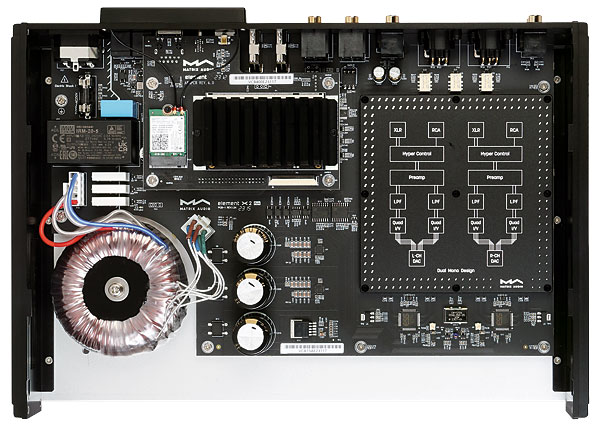
The precision of this DAC’s delivery and focus of its soundstaging made clear the differences in production between ZZ Top’s Tres Hombres album from 1973 [Warner Bros; 96kHz/24-bit], and their best-selling 1981 set Eliminator [Warner Bros; 44.1kHz/16-bit]. The former shines a light on the guitars with a forward, open sound, while the latter – which saw the Texan trio add synthesisers and drum machines – puts Billy Gibbons’ six-string further back, aiming for a thicker, more atmospheric feel. Different approaches, but both thrilling.

 Audiophilepure
You must be logged in to post a comment.