Electrocompaniet ECI 6 MKII Integrated Amplifier $6200 Review
March 31, 2025 Comments Off on Electrocompaniet ECI 6 MKII Integrated Amplifier $6200 Review
https://www.audiophilia.com/reviews/2024/12/11/electrocompaniet-eci-6-mkii-integrated-amplifier
Yes, the Electrocompaniet is a Norwegian star component. It is a sexy-looking, fatigue-free integrated that plays well above its $6200 price. Its voicing is admirable and will be loved by those who want accurate instrumental and vocal timbre sounding present in real spaces and compatible with a wide range of loudspeakers. In this, the Tau designers have succeeded admirably and receives my warmest recommendation.

Cayin N6III $1,299 Review
March 31, 2025 Comments Off on Cayin N6III $1,299 Review
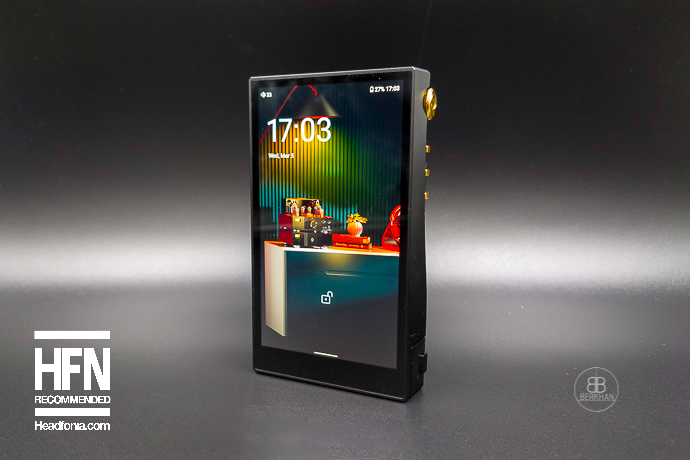
The DAP is built from aluminium alloy and feels fantastic in hand. None of the buttons or sockets feel cheap, and the back glass looks nice. The modular motherboard sits tightly in the DAP, and there’s no wobble. The overall design and build quality are evident when you first handle the player.
The screen looks sharp and has good pixel density, which is enough for a Hi-Fi player. The album covers and videos look good. The screen-to-body ratio is more admirable than the N6II since the screen is enlarged and looks very aesthetic.
I don’t think you’ll have trouble using the player in that respect. The market has more larger players, even more so than in the past, but I liked the N6III for its form factor.
HUMMINGURU NOVA ULTRASONIC VINYL CLEANER REVIEW
March 31, 2025 Comments Off on HUMMINGURU NOVA ULTRASONIC VINYL CLEANER REVIEW
World Premiere Review! Dan D’Agostino Master Audio Integrated Amplifier $50,000
March 30, 2025 Comments Off on World Premiere Review! Dan D’Agostino Master Audio Integrated Amplifier $50,000
My concentration changes focus throughout the piece, in sort of a meditative way as it ebbs and flows throughout the piece. I found this happening when listening to the MLife play my favorite power orchestral pieces. Regardless of how boisterous the music might become, my focus changes throughout the piece, focusing on different instruments, different sections of the orchestra, and to its soloists. As it does in real life. The dynamic distance the MLife can create with this large group of instrument is second to none in my experience, regardless of whether I’m listening to the internal DAC fed by the Ethernet connection or a source connected through an interconnect, digital or analog. The internal DAC of the MLife was the best at conveying the characteristics inherent to the MLife itself. And sounded the best out of all the sources. Yes, there will always be something special about playing LPs, and the MLife did not diminish this pleasure. But to have digital playback sound as good as the MLife could was new to me. And quite a pleasure.
One of the pleasures of a high-end system is being to step back in time, and thus come as close as humanly possible to what bewildered audiences heard in the very early 19th Century when Beethoven’s 3rd Symphony, or Eroica, was premiered. We’re hearing modern instruments, of course, but that’s not my point. At the time of its premier it was thought as too “structurally rigorous”, and at nearly 45 minutes, much too long. It was quite a ground-breaking piece of music. Now it is regarded as one of his most celebrated works, and for good reason. It probably surprises no one that my favorite movement is the Adagio, the second movement, which Beethoven titled “Marcia funebre”, or “Funeral March”. The DSD file of the Gewandhausorchester Leipzig, conducted by: Kurt Masur Symphony is not only well read, it is a great recording. Via the MLife’s internal DAC it is amazing to hear how it enables the sections of the orchestra to occupy distinct areas within the huge soundstage, projecting itself between, behind and to the sides of the speakers, making the speakers very difficult to locate when closing my eyes


TIDAL Audio Piano G3 Speakers System
March 30, 2025 Comments Off on TIDAL Audio Piano G3 Speakers System
TIDAL Audio Piano G3 speakers paired with a Dan D’Agostino Momentum S250 MxV power amplifier and HD preamplifier, interconnected with a Siltech Classic 35th Anniversary cable loom.

HiFi Rose RS150B Overview & Features Review
March 30, 2025 Comments Off on HiFi Rose RS150B Overview & Features Review
Accuphase E-800S Integrated Amplifier Review
March 30, 2025 Comments Off on Accuphase E-800S Integrated Amplifier Review
Focal Theva N°2 Loudspeaker $899 each Review
March 29, 2025 Comments Off on Focal Theva N°2 Loudspeaker $899 each Review
https://www.soundstagehifi.com/index.php/equipment-reviews/1937-focal-theva-no2-loudspeaker
I was keen to compare the Theva N°2s against my DIY Amigas. The radiating area of the Amiga’s single 7″ Dayton midwoofer is almost exactly the same as that of the two 5″ Slatefiber woofers in the Theva N°2. The two speakers are also similar in their cabinet dimensions. Yet the Amiga manages to have far deeper bass extension. This may be due to a lower resonant frequency of the larger Amiga’s Dayton cone, which allows for a lower port tuning. Doubling up on the woofers gives the Theva N°2 a clear advantage in low-frequency efficiency, but the Amiga can play deeper. This was clearly audible.
The Theva N°2’s more limited bass extension is amply compensated by its warm, pleasant midbass. On “Gold Dust Woman,” the Amigas reached a bit deeper in their rendering of the lowest bass-guitar notes and had greater leg-shaking power in that register. But the Theva N°2s’ bass was warmer and had a bit more punch and texture.

Amphion Krypton3X Floor-Standing Loudspeaker $24,000 Review
March 29, 2025 Comments Off on Amphion Krypton3X Floor-Standing Loudspeaker $24,000 Review
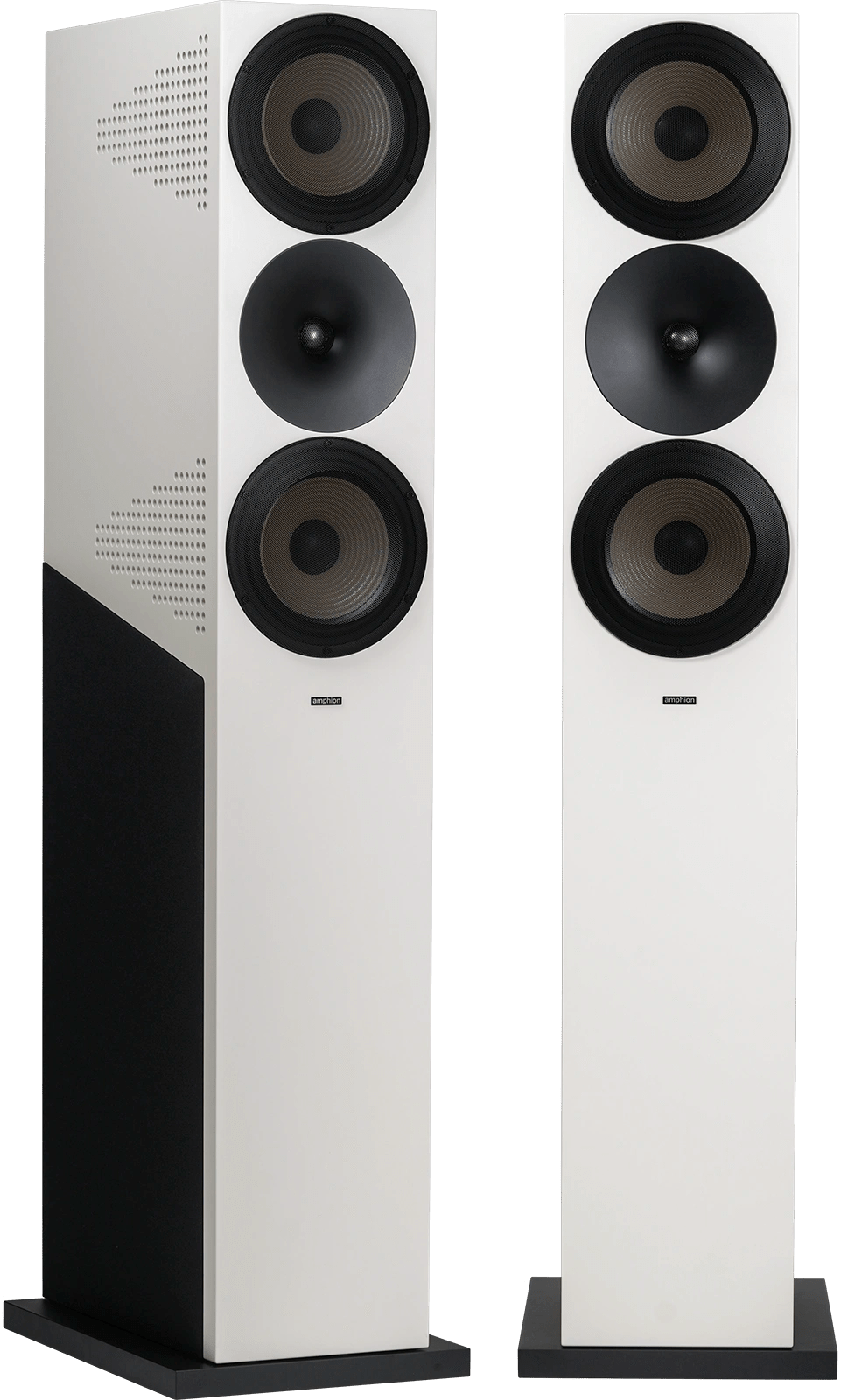
One of the reasons piano sounded so good with the Krypton3X was how seamlessly the notes transitioned from the middle ranges down through the lower registers. At every point in a well- recorded piano track, the notes had a convincing weight and dimension to their tone. The upper midrange transitioning into the treble region was also very smooth to the ear with plenty of detail and resolution on horns, brass, and strings while not venturing into sounding jarring or overcooked. As relatively big as the Amphions are, they sounded like they played even bigger. While they didn’t have an overly large soundstage, they ran with more of a narrower and more focused presentation, the speakers did have a large dynamic capacity. They loved to be pushed, so when the volume went higher, they scaled really well. For me, these speakers were best enjoyed when sitting in the sweet spot. Sitting well off-axis or listening casually while doing other things in the room didn’t quite grab me as some other speakers might. But sitting in my listening chair, things like massed strings played back at volume over the Krypton3X had a scale and dimension to them that was impressive and memorable.
 Audiophilepure
You must be logged in to post a comment.