Aequo Audio Ensium Review
May 26, 2026 Comments Off on Aequo Audio Ensium Review
When designing a speaker with a strong focus on coherence, the assumption might be that the best position for the woofer would be as close to the midrange as possible. However, as Ivo explained, the speakers behave much more predictably across a wide range of rooms when the woofer is positioned near the floor. This is because room modes become twice as severe with equal wall distances, and if a woofer is placed at the top (where the midrange and treble need to be to produce the proper stage height), it’s also almost halfway up the room’s height. Thus, it would excite far more severe room modes in that position than if it were vertically asymmetrical. Careful attention was paid to the crossover and the speaker’s phase behavior. To time-align the drivers relative to the listening position, the midrange and tweeter are positioned farther back than the woofer. To accommodate various seating heights and listening distances, the rear spike is height-adjustable.
According to Aequo Audio, the Ensium’s maximum linear output is higher than that of a typical dual-10-inch closed-cabinet speaker or even a triple-9-inch ported speaker, and in practice, more comparable to a closed-cabinet speaker with three 10-inch bass drivers. While it’s tempting to take such claims with a grain of salt, I can confirm that the bass does actually dive right down into what’s normally considered subwoofer territory with utter authority. The Ensium is specified at an absolutely ludicrous 16 Hz – 45 kHz (-3 dB in-room response), with a nominal impedance of 8 ohms.


Heaven 11 Billie Amp Mk3 tube/class D hybrid integrated amplifier Review
May 26, 2026 Comments Off on Heaven 11 Billie Amp Mk3 tube/class D hybrid integrated amplifier Review
In my review of the Mk2, I suggested that Heaven 11 upgrade the RCA input jacks, but it appears for the sake of affordability they are unchanged. The company might have to retool the chassis for such a change, so I can see why they have not done so. Still, I hope that in the future with new designs such an improvement is employed. Does that issue put me off from using the Mk2 or Mk3? Absolutely not! I have had other components with similar RCA jacks. The firmness of the connection is not confidence inspiring, but it never seems to affect the operation. Thankfully, the company is putting the money into serious speaker posts, and the ones used in the Mk2 and Mk3 are exemplary! The heavy posts inspire confidence when heavier cords with spades are cinched down. Far better the speaker posts are strong than the other way around.
As it appears a similar chassis was used for the Mk3, there is still quite close spacing of the output posts, and larger spades are closely anchored. Thus, I continue my precautionary practice of slipping a piece of leather (any non-conducting material will do) between the posts and spades to ensure that if one is loosened it does not contact the other. We know what would happen then, and I take no chances with a class D amp’s output channels shorting. The spades have never come loose previously; the posts are very good. But I am not about to chance it. It may seem odd, then, that I go about system building by splitting digital signals out from sources and horizontally wiring pairs of integrated amplifiers to speakers! While these are odd methods, I have not found them to pose serious risk to components. If they did, I wouldn’t use such methods. As usual, such activities are “do at your own risk”.
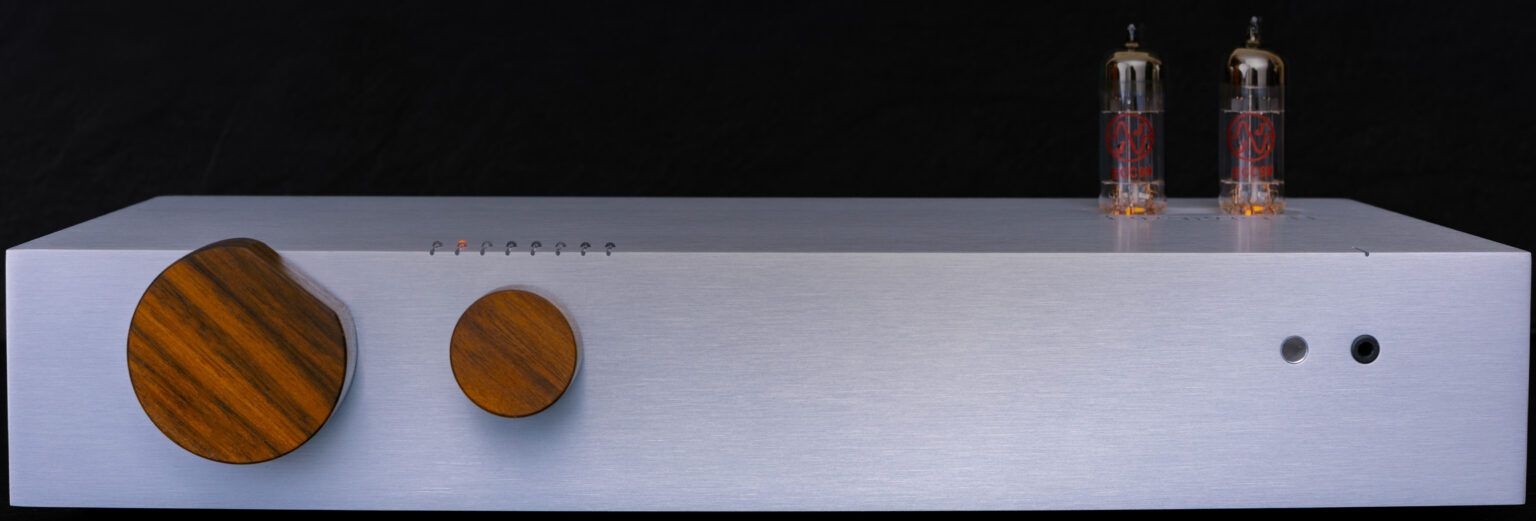
Pass Labs INT-250 Integrated Amplifier Review
May 26, 2026 Comments Off on Pass Labs INT-250 Integrated Amplifier Review


You must be logged in to post a comment.