Kenrick Sound Piano Polish JBL 4343
July 22, 2026 Comments Off on Kenrick Sound Piano Polish JBL 4343
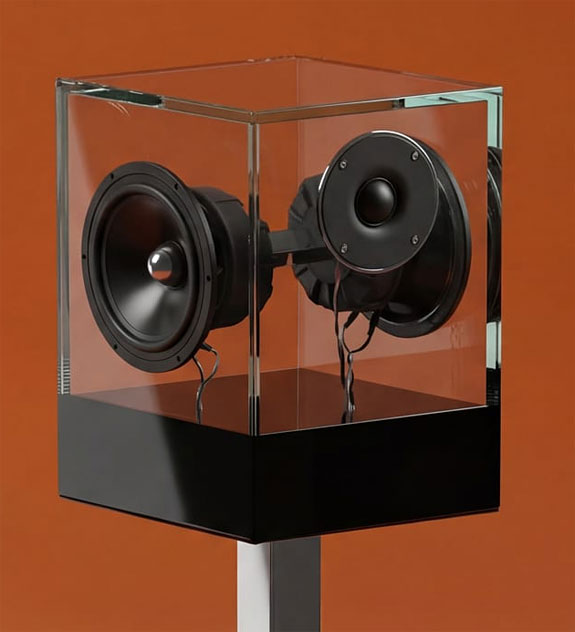
PERFECT8 Cube-S With Sub $28,500 Review
July 21, 2026 Comments Off on PERFECT8 Cube-S With Sub $28,500 Review
If that’s who you are, and you have the financial means of entry, then I suggest going as high in the PERFECT8 Technologies AB model line-up as you can afford. They just keep getting better and better the higher you go. Email or call Jonas and figure out how to hear them, because you need to hear them. Eventually, I know I will own a pair!
I have to touch on the price. Yes, $50,000 is quite a bit for loudspeakers. Keep in mind that PERFECT8 currently sells direct — not by philosophy, but because building the right dealer relationships takes time. They are actively looking for dealers in the U.S., and distribution in Europe appears to be close. They do not aggressively advertise other than shows, and continue to successfully develop a truly grass-roots following (or would that be glass-roots?). As such, their loudspeaker prices are more about manufacturing cost than profit, especially when compared to a brand that sells through distributors and dealers. Also consider that a nice gold Rolex or Audemars Piguet timepiece can cost between $40,000 to $100,000 easily — that (and higher) are the clientele they are selling to.
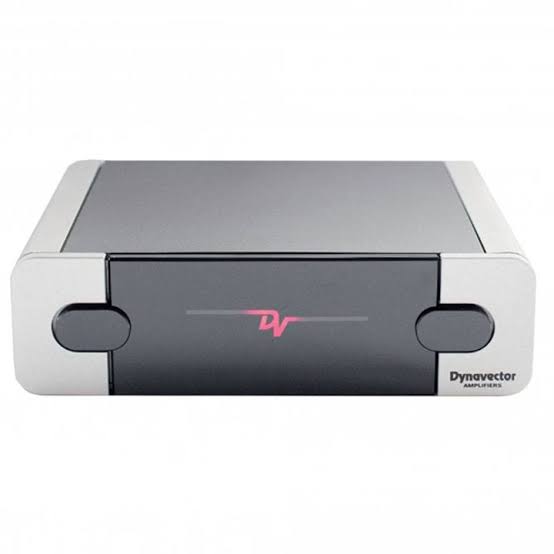
Dynavector P75 Mk4.1 phono preamplifier $980 Review
July 21, 2026 Comments Off on Dynavector P75 Mk4.1 phono preamplifier $980 Review
That’s not to say that some trial and error isn’t still worthwhile. PE mode tends to work best with lower‑impedance cartridges, and not every design will be an ideal match. With the 33Ω Denon DL-301 II, set to PE high as the manual recommends based on its specs, I detected a higher noise floor and what felt like too much gain with an in-your-face sound. Dynavector suggested backing it off to the medium setting (which entails moving just one jumper per channel, a ten-second operation) and the noise floor not only dropped but music had a much greater sense of ease and refinement at the expense of some dynamic impact. But some higher frequencies now seemed oddly set back spatially, with cymbals seemingly ten feet behind the drum kit. So I reverted to standard mode: in this case, 470Ω with 60dB gain. The sound wasn’t quite as ripe but it was more balanced and accurate. Bingo.
The bottom line is, guidelines are guidelines, and the Phono Enhancer setting that sounds best to you is the right one, even if that means not using it. Still, it feels like getting a second phono stage for free. It even makes me wonder if there might be a market for a simpler, MC-only P75 that runs strictly in PE mode; users would only need to connect the cables and ground wires, then perhaps use a toggle switch on the front panel to select high, medium or low. Sounds dreamy to me – especially considering Sutherland’s TZ Vibe, the most affordable name-brand transimpedance preamp I can think of, sells for $1,600. I can’t speak to how the two compare sonically, but in purely practical terms, you could buy the P75 Mk4.1 for $980, treat it as a dedicated transimpedance unit, and still keep $620 in your pocket.
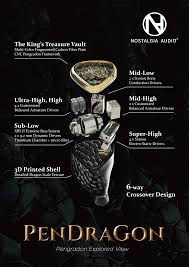
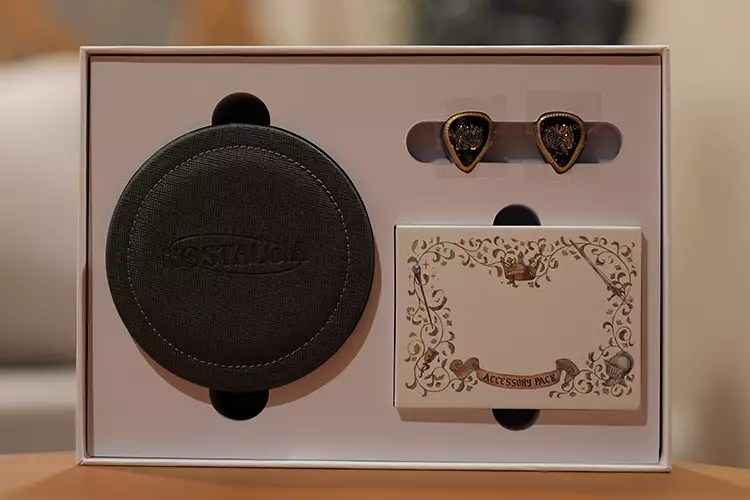
Nostalgia Audio Pendragon $3799 Review
July 20, 2026 Comments Off on Nostalgia Audio Pendragon $3799 Review
All of this is finished in a two-tone gunmetal and silver color with a smoky coffee brown colored braided custom SoftFlex PVC jacket protecting the wire.
There is a fairly noticeable block of silicone memory wire coating near the 0.78mm 2-pin connector barrels, though it’s relatively pliant and not too rigid.
I can also see a small sliver of silicone wrap for tension relief at the main jack barrel head, which is a sight I prefer to be internalized in the barrel rather than peaking its head outside.
Inside the jacket, the wire is a coaxial shielding structure with a 21.5AWG 4N OFC copper core in a Litz Type 4S four-wire configuration with a 5N silver-plated OFC copper inner shielding mesh.
It has a dense feel to the handling, though by no means a heavy cable. I have tested much heavier, such as Effect Audio’s 16AWG Code 24 monsters. Memory retention is low, as is microphonics, so it’s well behaved and nicely insulated.
My one nitpick is the choice of 2-pin enclosures at the base of the connector barrels. They are the type typically used for recessed sockets, giving them a fairly lengthy profile when connected in a flush socket.
Octave Jubilee Class A monoblock power amplifier $85,000 Review
July 20, 2026 Comments Off on Octave Jubilee Class A monoblock power amplifier $85,000 Review
https://www.stereophile.com/content/octave-jubilee-class-monoblock-power-amplifier
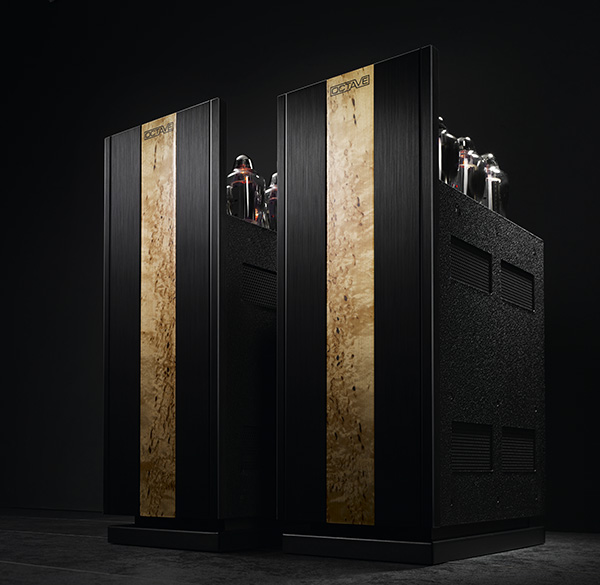
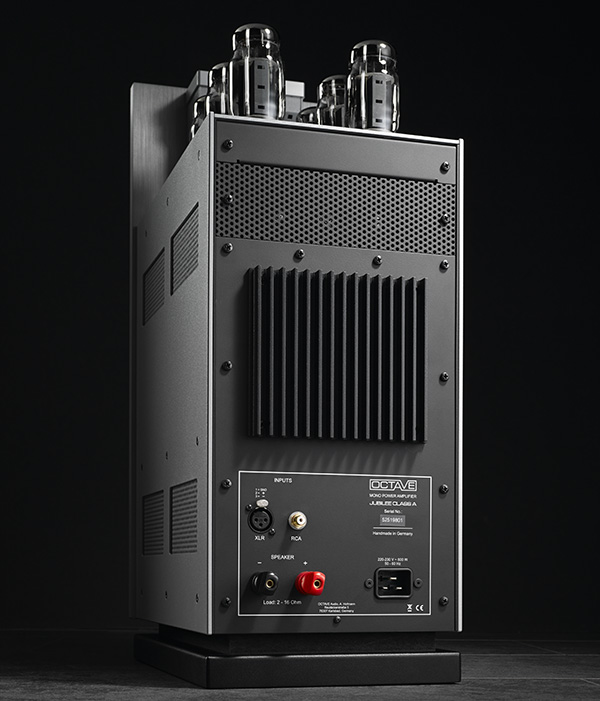
If asked to condense my thoughts about the Octave Jubilee Class A monoblock into a few words, they would be: Natural. Neutral. Open. Honest to the source. Precisely because a pair of these amplifiers does not editorialize, it sounds as beautiful, moving, and impactful as the music it helps reproduce.Other tube amps may sound more tube-like, in the stereotypical sense, but few I’ve heard are as direct-sounding and musical as the Octave Jubilee Class A. I loved how music sounded honest through it. If you love music as an end in itself—if you love music for the music’s own sake—I can’t imagine that you won’t take to the Octave Jubilee Class A monoblocks as a dog takes to its favorite bone. Few that hear them will be willing to let them go.
Aavik I-188 integrated amplifier Review
July 19, 2026 Comments Off on Aavik I-188 integrated amplifier Review
https://www.hifinews.com/content/aavik-i-188-integrated-amplifier
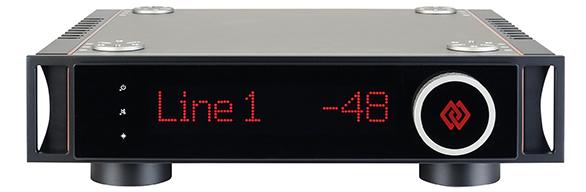
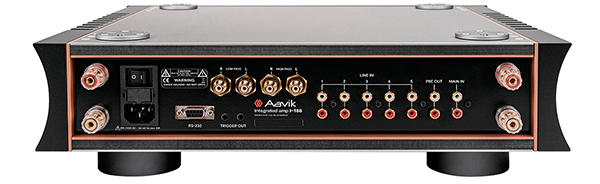
Though a beguiling example of an ultra-modern, high-end integrated, Aavik’s I-188 defies convention not just in its left-field circuitry, but in eschewing an onboard DAC, balanced inputs, etc. Instead, it’s a lean, mean machine with immense power, bank-vault construction and gorgeous looks where minimalism meets the future – a product poised in the vanguard of the ‘integrated amplifier renaissance’.


You must be logged in to post a comment.