RAAL-requisite HSA-1b headphone Review
October 26, 2021 Comments Off on RAAL-requisite HSA-1b headphone Review
As a reviewer-prattler, I endeavor to discover and advocate only those products I believe advance the cause of deep listening. Whenever I discover a “deep listening” product that sounds a lot better than its competition, I am obliged to stand up, applaud loudly, and declare its excellence. To that end:
In my 100-year-old-Herb view, RAAL-requisite’s SR1a pure ribbon Earfield Monitors, connected with RAAL’s optional SR728 silver cable to RAAL’s new HSA-1b headphone and speaker amplifier, represent the cutting edge of what is currently possible in high-resolution audio reproduction. And, in case you hadn’t noticed: RAAL-requisite’s style and coolosity factors are off the charts.

Audes ST3000 Review
October 26, 2021 Comments Off on Audes ST3000 Review
https://stereo-magazine.com/review/audes-st3000-review
In conjunction with the setup found in our small STEREO listening room, using the Audes „Isolator“ paid off immediately. While a stoic silence was being built up in the background, the actual sound stage seemed bigger, more spacious, more open and airy. Quite interestingly – and I had not necessarily expected this – it was also more dynamic, even in the bass! This even stayed true when a very powerful amp like the Musical Fidelity M8xi was in play; or even a 2 x 1000 watt THX power amp like the QSC USA 1310, sitting in the editor‘s home theater. Here, I would have expected overdamping, but Audes is actually even equipped for such an extreme task. While being ideal for sources, it is thus also suitable for larger voltage-consumers. Mastering very large Class A mono power amplifiers – or two QSC mono in a bridged setup (2620 watts sine into 8 ohms) – is something I would not have necessarily expect of it, but that also applies to other “power conditioners”.
This toroidal, balanced isolation transformer thus seems to be the uncompromising one-way solution that can help a system have more legroom thanks to interference decoupling. Taking it away from your setup is even more severe than the sonic progress achieved when implementing it; because you actually don‘t want to do without the Audes anymore – and the step back really hurts. It‘s not a cheap device, but should absolutely be recommended for excellent hi-fi chains!


Susvara vs. SR-009 – Battle of the Aging Flagships
October 26, 2021 Comments Off on Susvara vs. SR-009 – Battle of the Aging Flagships
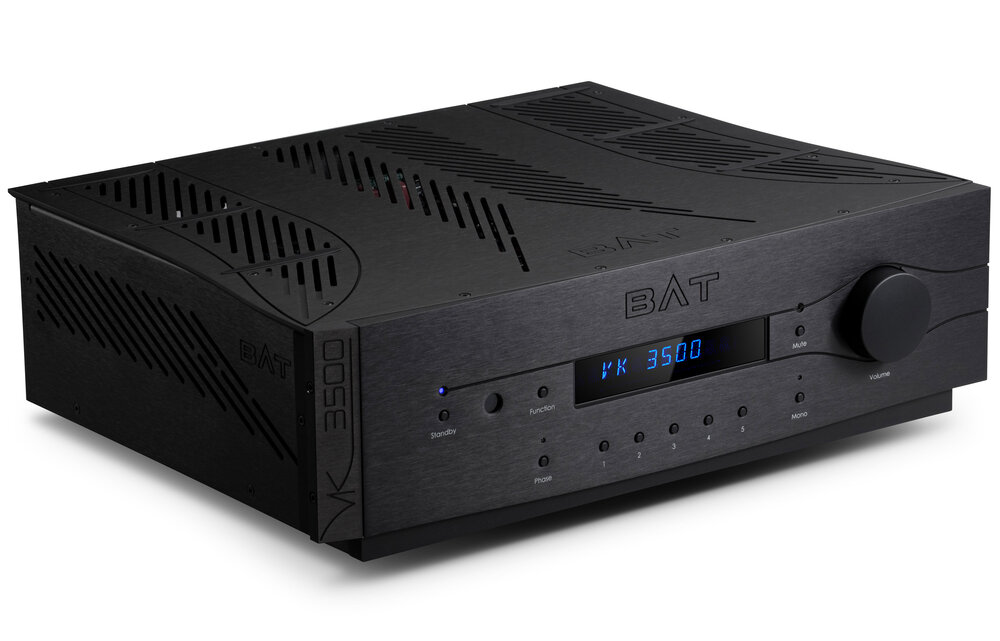
Balanced Audio Technology VK-3500 Integrated Amplifier REVIEW
October 25, 2021 Comments Off on Balanced Audio Technology VK-3500 Integrated Amplifier REVIEW
It can be difficult to stand in out in the crowd when it comes to full-featured integrated amplifiers from well-known high-end audio manufacturers, high-performance units that claim to offer the sound quality of most separates at any given price point. It becomes more difficult once we cross the five-figure threshold like the Balanced Audio Technology VK-3500. You want more than a box with lots of lights and knobs for that kind of money. You want great sound.
Even the marketing copy on the BAT website suggests that you try finding separates for the same price as the VK-3500—we’re talking $6000 preamps and $6000 power amps—that can out-perform it. I’d accept that challenge, but my enthusiasm would immediately wane once you bring that phono stage into the contest. I’m not sure how much I would pay for this phono stage in an outboard version, with a presumably nice chassis and a separate power supply and perhaps with more access to gain and loading options, but it would be enough to qualify the VK-3500 as a superb value.
I’ll probably look back on my experience with the Balanced Audio Technology VK-3500 integrated amplifier and first remember the quirky phono stage, and how it qualifies as one of the finest inboard phono stages I’ve heard. But I’ll also remember how the BAT handled everything else, with extraordinary poise and just a shade of velvet.

Fidata HFAS1-XS20U Music Server Review
October 25, 2021 Comments Off on Fidata HFAS1-XS20U Music Server Review
TheAtrium de Musicae de Madrid’s Tarentule-Tarantelle (aka The Tarantula) [Harmonia Mundi, HMA 190379], is a collection of tarantellas that take you right back to the 15th and 16th centuries on a veritable carousel ride of bells, violin, recorder, guitar, hurdy-gurdy, drums, lute, and harpsichord, to name but a few instruments. The harmonies and melodies on The Tarantula are complex, musically dense, and layered, and the XS20U’s superb tonal exactness and timbral definition kept this sonic palette of instrumental voices finely resolved and accurately reproduced. The Atrium’s director, Gregorio Paniagua, always infuses these recordings with a real sense of fun and frolic, and this playfulness shone through with the Fidata. On La Tarantella, you could hear the “vapor trail” from the castanets as they decayed softly into the background of the recording studio, right before the definitive flamenco handclap that ends the song. This quality of reproducing the decay of notes into space is a particularly noteworthy attribute of the XS20U that really enhances the spatial and three-dimensional quality of the presentation.
The XS20U doesn’t just shine on longhair music, either. Bryan Ferry’s Boys and Girls [Warner Bros. EG 9 25082-1] sounds every bit as sophisticated as The Tarantula, but here it’s a blast from the past, a heavily multi-mic’d studio recording from the mid-80s. “Don’t Stop The Dance” is enthusiastically kicky and energetic, and with the XS20U’s ability to resolve fine detail and reveal all the voices and complex instrumental layers, it was all I could do to keep from getting up and dancing while Ferry’s sultry voice floated ephemerally above the driving background of synth, guitars, drums, and brasses.


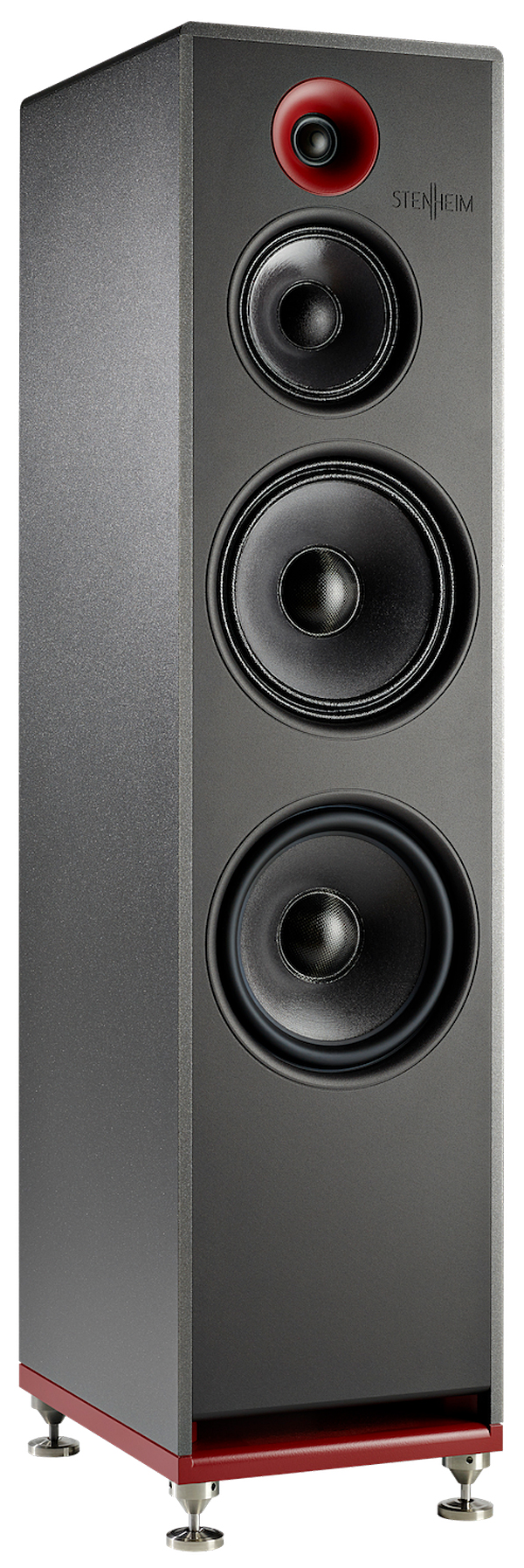
Stenheim Alumine Three loudspeaker Review
October 24, 2021 Comments Off on Stenheim Alumine Three loudspeaker Review
https://www.stereophile.com/content/stenheim-alumine-three-loudspeaker
When reviewing audio equipment, I always attempt to elucidate what the reviewed component does different than, or better than, or worse than similar components in its price-performance category. This can be difficult if I’m not in-home familiar with the review component’s competition. But it was easy with the Stenheim Alumine Threes.
What separates the Threes from most other top-tier luxury-class speakers is twofold: First, the Stenheims’ look is living-room, partner, and family-friendly, not audiophile weird. Second, and more importantly, the Alumine Threes are not dreadful-to-drive, low-EPDR speakers that will only work with massive crazy-money monoliths that are capable of driving 2 ohms. While the Stenheims responded extremely well to large amounts of high-quality amplifier power, they were equally exciting when powered by a 25W class-A solid state amp and a 22W single-ended triode. I regard this as proof that a well-engineered speaker need not be difficult to drive.
 Audiophilepure
You must be logged in to post a comment.