Audio Research Reference 80S Review
April 14, 2024 Comments Off on Audio Research Reference 80S Review
https://www.hifichoice.com/content/audio-research-reference-80s
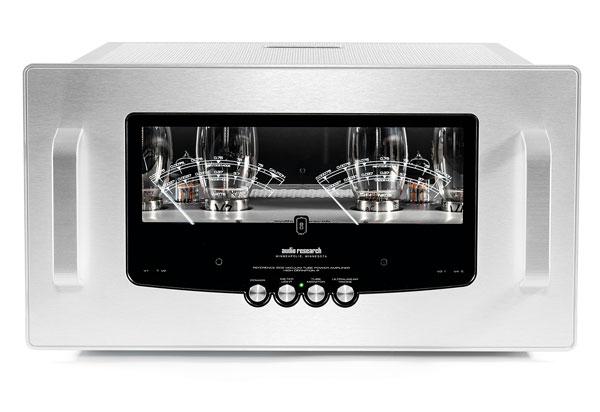
Impressive though Audio Research’s Reference 80S undoubtedly is, there’s a sizeable elephant in the room that should perhaps be put to one side before we go any further. With a £15k price tag, this absolutely isn’t typical HFC fare, which almost immediately puts it out reach of most wallets. Which is a real shame as this is a quite stunning power amplifier that does the easy bit of delivering the power, while handling the more challenging side of subtlety and fine detail with absolute aplomb. In the highly unlikely event that you inadvertently stumble across that lost winning lottery ticket or a rich relative that you never knew about leaves you stacks of cash only on the understanding that you spend them on hi-fi exotica, this is an absolute must-have. For the rest of us it’ll have to remain a dream to aim towards. Regardless, there’s no disputing that the way the Reference 80S delivers the sort of precision that’s more commonly the realm of solid-state rivals from glass tubes is nothing short of miraculous.
OCTAVE AUDIO V 110 SE INTEGRATED TUBE AMPLIFIER $9,500REVIEW
April 12, 2024 Comments Off on OCTAVE AUDIO V 110 SE INTEGRATED TUBE AMPLIFIER $9,500REVIEW
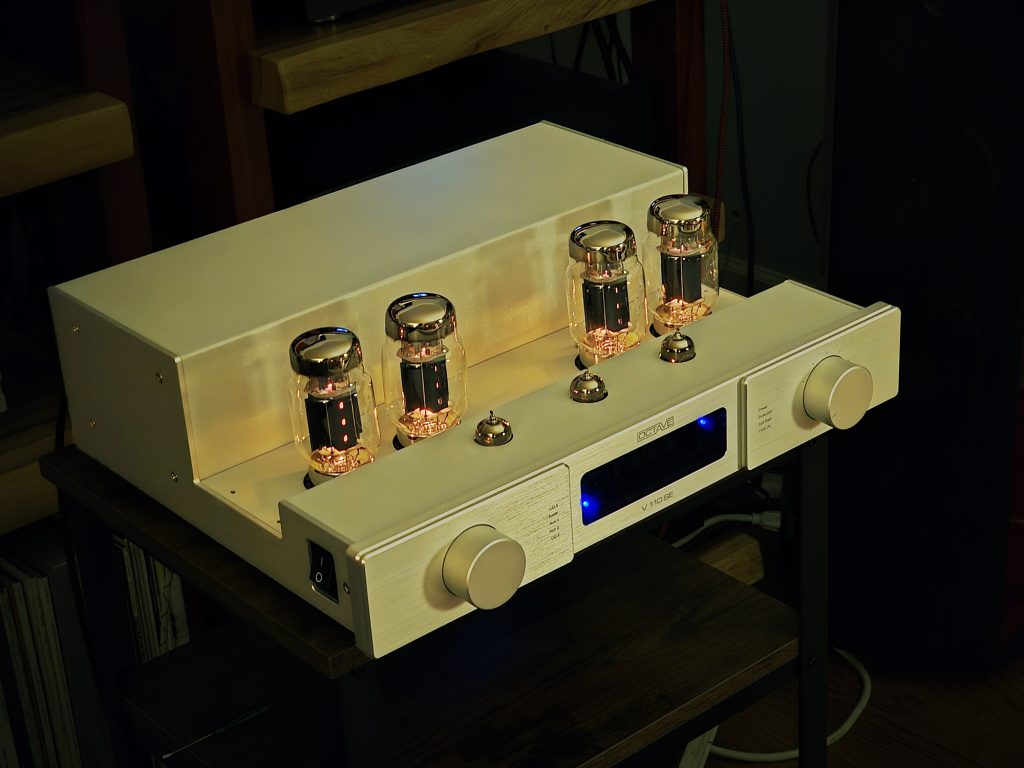
The reason a low output impedance is important is that, with the input impedance of a speaker being about 4-8 Ohms, the amplifier’s output impedance forms a voltage divider such that there is a voltage drop across the speakers. The ideal output impedance would be zero Ohms. Since this is not possible, what we would hope for is 1/100th output impedance compared to the input impedance of the device connected to the output. This is easy when connecting the output of a preamplifier to the 10 kOhms – 100 kOhms input impedance of a power amplifier. But for a power amplifier connected to a pair of speakers with 4-8 Ohms impedance, this is much more difficult. The output impedance of a solid-state power amplifier is usually less than 1 Ohm, but for a tube power amplifier, it is usually between 1 and 5 Ohms even with the output transformer. So, at least a small amount of voltage drop is inevitable with the tube amplifier. The V 110 SE has an output impedance of 2 Ohms.

Arcam A25 and ST5 Stereo System Review $2,298 Review
April 7, 2024 Comments Off on Arcam A25 and ST5 Stereo System Review $2,298 Review
https://www.soundandvision.com/content/arcam-a25-and-st5-stereo-system-review
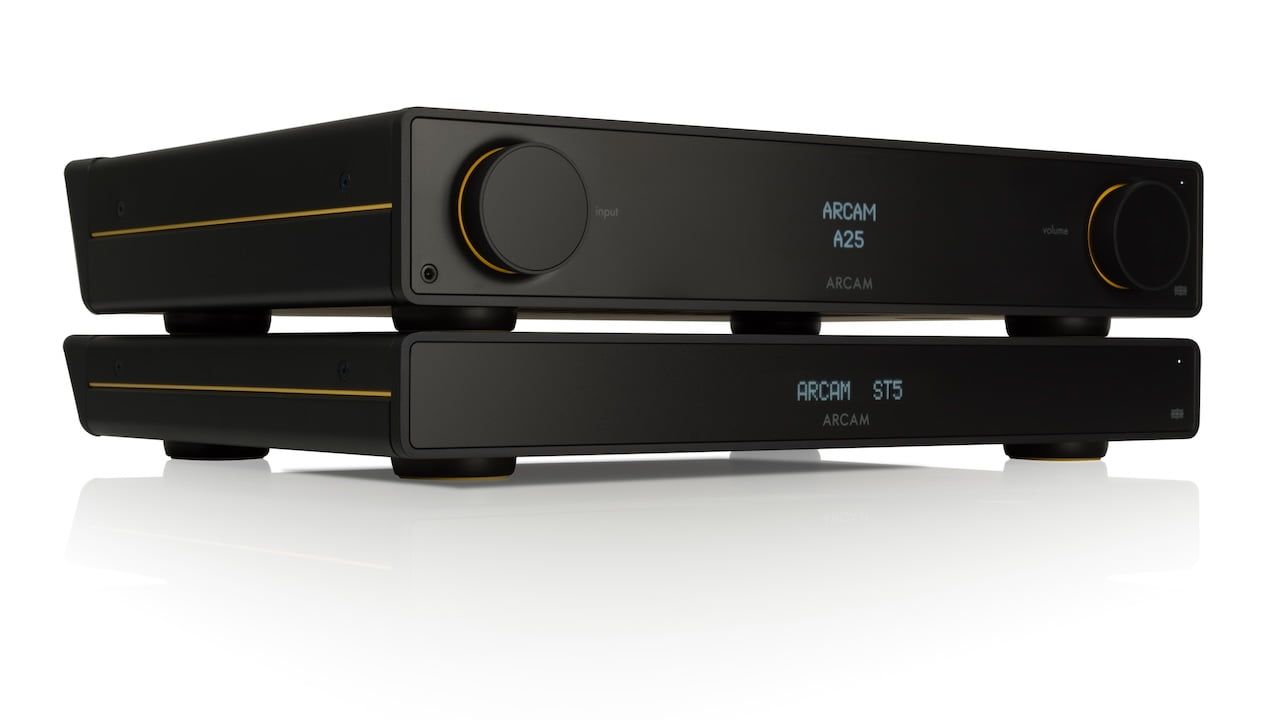
When connected digitally, there is just a single volume control displayed on the A25; when using the analog connection from the ST5, each device has independent volume controls. As such, it was possible to overload the inputs to the A25 by maxing out the volume from the ST5 while the volume on the A25 was low. The slight distortion vanishes after balancing the gain between these units, and using the TOSLINK or digital coax connection completely eliminates it. I found no reason to use the analog connection, especially considering the ST5 uses a high-quality ESS ES9018K2M high-resolution DAC. This same DAC is used in the A25.
I prefer to stream Tidal, especially for sound quality evaluations. I queued up Norah Jones’ latest release, “Staring at the Wall”, a delightful collaboration with Leon Michels. The ST5 and A25 captured every nuance of this upbeat and insanely catchy song. Jones’s tripled vocals with lead and harmony were distinct, and even the slightly detuned piano was conveyed transparently. The overall mix has a raw, garage-studio quality, and all of the imperfections of the performance are captured.
Bella Sound Kahili Amplifier Review
April 6, 2024 Comments Off on Bella Sound Kahili Amplifier Review
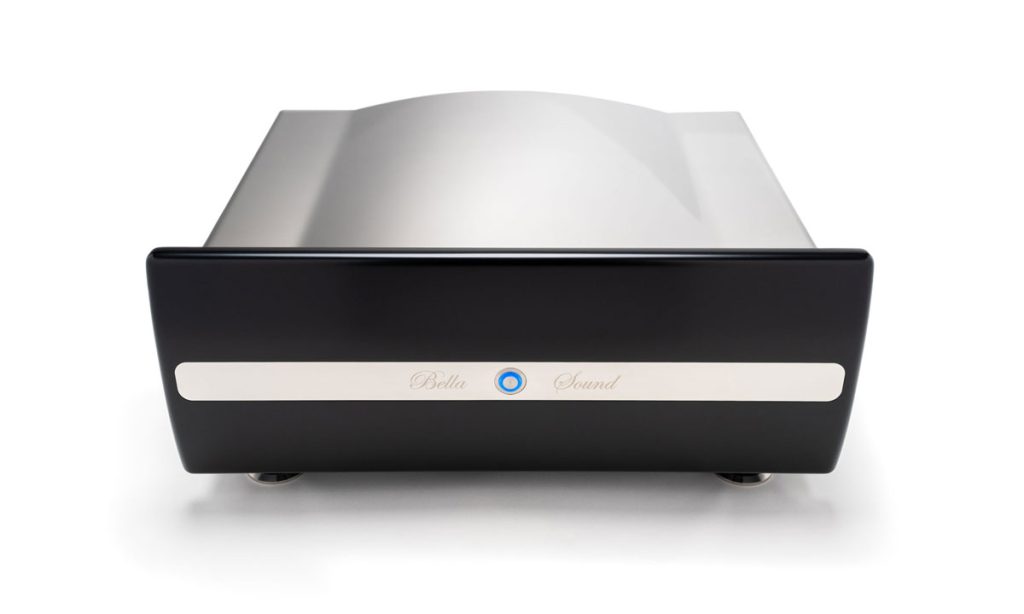
During setup I had simply placed the Kahili amps in the system connected with exactly the same cabling that was used for my Krells. Bella Sound had provided their Kaula2 power cables, so once I felt I had a reading on the sound of the amps, I substituted the Bella Sound power cords. Chances are, if you hear this amp at a show or in a showroom, it’s likely powered by its own Kaula2 cords. Although the inclusion of the cord brings the price of ownership to just $500 short of $30k, I suspect many purchasers of this amp with opt to include the cord, which is exquisitely constructed. There was an immediate synergy between the amp and the power cord. The basic nature of the amp was not changed but subtly sweetened and enriched.
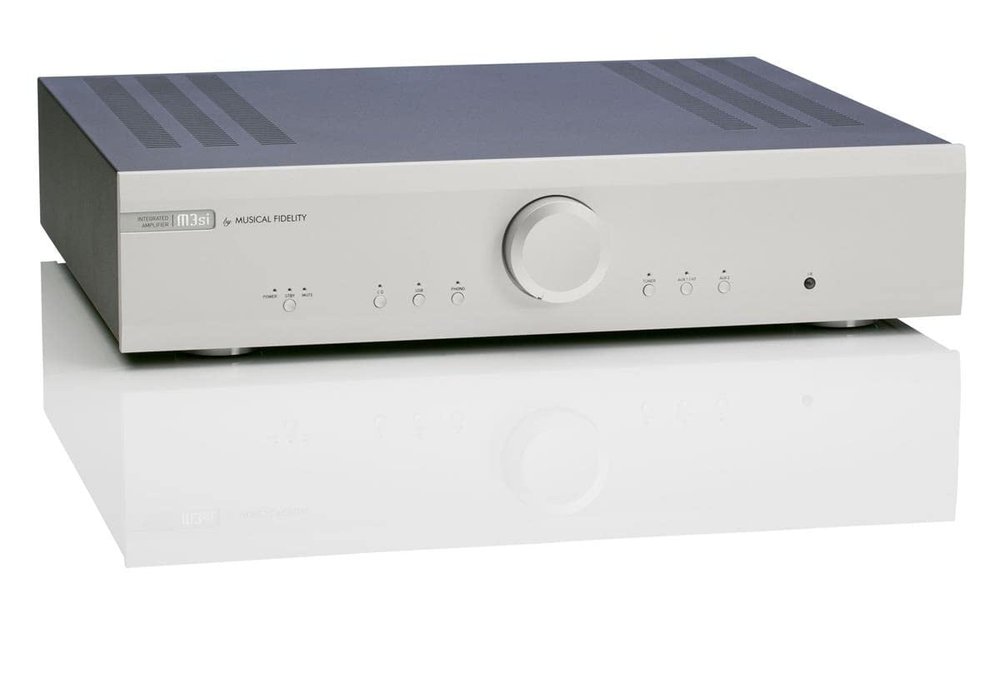
Musical Fidelity M3si Integrated Amplifier $1599 Review
April 4, 2024 Comments Off on Musical Fidelity M3si Integrated Amplifier $1599 Review
https://www.audiophilia.com/reviews/2023/1/3/ps-audio-perfectwave-dac-ii
The M3si properly honoured this performance with each speaker I tried, helped in part by the album’s immaculate production quality. Given some of the M3si’s strengths, I see how it could handle midrange-focused vocal recordings. Listening to Where Are We reassured me the amplifier was not all brawn but had the brain (and heart) to do justice to a more tender recording.
With all the speakers I used, the M3si retained a consistent personality. It had massive drive, hard-hitting bass delivery, and the ability to command a wide clean soundstage. With warmer speakers the overall presentation was the most musical and with leaner speakers such as the Canton Vento 20, the presentation could turn brittle with recordings that were less than easy. While I only was able to try four different speakers, this trend was apparent enough for me to recommend that the M3si either be matched with neutral to warm speakers or carefully auditioned with unfamiliar speakers.
AGD DUET GaN-Power Monoblock Amplifier $11,500 Review
April 2, 2024 Comments Off on AGD DUET GaN-Power Monoblock Amplifier $11,500 Review
There was no over-emphasis on upper frequencies, stridency, or stretch. Transient string and metallic percussion articulations were strikingly beautiful, consistent across the frequency and dynamic spectra, devoid of any sense of artificial exploitations. There was a tangible, organic presence about the lower frequencies – Firm, well-fleshed, and true to character. Definition, speed, and tautness were equally accurate and impressive. For such an unassuming amplifier, the DUETS made their presence known with real weight and punch – plenty of heft behind them.

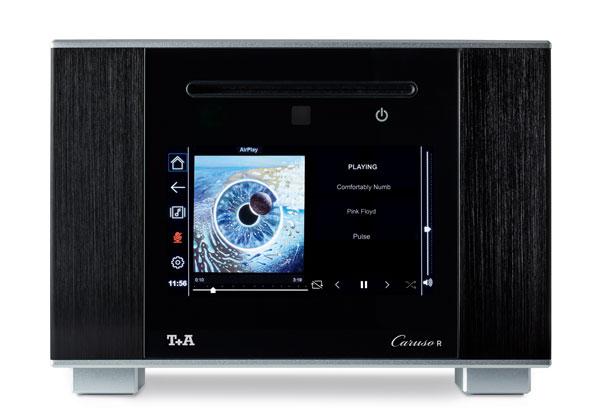
T+A Caruso R Review
April 1, 2024 Comments Off on T+A Caruso R Review
https://www.hifichoice.com/content/ta-caruso-r
The matching speakers haven’t been supplied for this review, but the unit has enough power to drive a wide range of third-party choices: the onboard amplification delivers 50W into 8ohm, doubling into a 4ohm load, with peak output at 50 percent more. That proves to be more than sufficient for the speakers with which I try the T+A, including the Scansonic M20 reviewed in the last issue and my own Neat Iota Xplorer (HFC 435), both of which are driven and controlled with authority, whether from network or online sources, or the excellent onboard CD player.
The balance here is more refined and mature than red in tooth and claw, meaning that the Caruso R puts up a fine showing with First Aid Kit’s live Who By Fire set of Leonard Cohen covers. A small tweak of the contour controls brings out more of the presence of the set, but that apart the immediate impression is of weight and richness allied to fine levels of detail, instantly involving the listener in the performances. There’s not quite the speed and drive you’d get from the similarly priced models in the Naim Uniti range, for example, or from NAD’s M-series all-in-one streaming amplifiers, but the generosity of the T+A sound combined with the ease of listening it offers is hard to overlook.
Krell KMA-i800 monoblock power amplifier $73,000/pair Review
March 27, 2024 Comments Off on Krell KMA-i800 monoblock power amplifier $73,000/pair Review
https://www.stereophile.com/content/krell-kma-i800-monoblock-power-amplifier
Given the KMA-i800’s huge power output—Krell says it can output 800W RMS into 8 ohms, doubling twice to 1600W into 4 ohms and 3200W into 2 ohms, and can drive speakers of 1 ohm impedance—I wondered whom Dave and Rondi envisioned as buyers. “There are plenty of people out there who have rather large rooms and want commensurately large speakers they can play loudly,” Dave replied. “No one is going to use this much power, but it makes average listening levels, which may go up to 100W, sound much better because that’s a small percentage of the total possible power output. It’s more linear than an amp that tops out at 100W, because as you approach the limit, your distortion goes up dramatically. A high-power amp gives you much more quality than an amp whose power exactly meets your needs.” As someone acutely aware of the arbitrary and frequently over-exaggerated divide between the two viewpoints commonly labeled “subjectivist” and “objectivist,” I asked Dave, “When you developed the KMA-i800, were you looking at measurements or at sound? What was the final arbiter that led you to declare, ‘It’s done!’?”

Aurender AP20 Integrated $22,000 Review
March 25, 2024 Comments Off on Aurender AP20 Integrated $22,000 Review
https://audiophilestyle.com/ca/reviews/aurender-ap20-integrated-review-r1256
The design of the AP20 is really something to behold. It’s the right horse for not just a single course, but many courses. Its flexibility enables it to be used as an all-in-one or as a single component of a larger system, or as something that falls in between those two. I used it in two different systems, and mainly as the only component connected to my Wilson Audio Alexia V loudspeakers. I still have a smile on my face when thinking about playing Mahler’s Third through this system, with little volume attenuation. Enough transients to scare any listener and plenty of delicacy to please even the most discerning audiophile. The team at Aurender has seriously outdone itself.

 Audiophilepure
You must be logged in to post a comment.