T+A Elektroakustik DAC 8 DSD High End D/A Converter Review
March 21, 2019 Comments Off on T+A Elektroakustik DAC 8 DSD High End D/A Converter Review
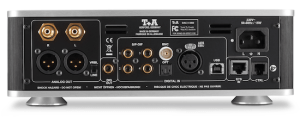
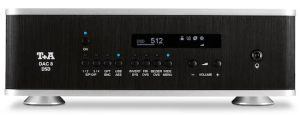
“Much like any top DAC these days, digital filters offer the listener a customized sound. Want a softer, gentler approach? Done. Want an etched, lean performance? You got it. I spent a few days reading the manual and pressing buttons. I settled on one filter and left it for the duration of the review. I did the same when reviewing the Mytek Manhattan DAC II; the MQA setting, which the T+A does not offer (an MQA software update is in the works). I used Qobuz, primarily, as a streaming service via Roon on my Antipodes CORE Music Server. With Qobuz, there is no MQA support, but some seriously amazing hi res recordings available from the ever growing Qobuz catalogue. You won’t miss it.
Here we get a choice of four oversampling filters, used only for PCM audio (the 8 plays DSD, too, up to 512). There are two Finite Impulse Response filters and two Bezier interpolations. My choice was the ‘BEZ 1’ (blue LED), which is said to produce results ‘similar to an analogue system’. All four filters offered refined, superior sound, with enough variation to satiate the most nit picking listener. ‘A Bézier curve is a parametric curve that uses the Bernstein polynomials as a basis.’ Deep MIT dive here. To me, ‘BEZ 1’ sounded as detailed as the three other filters but with an even more pleasing musicality. ”
MSB Technology Reference DAC review
March 13, 2019 Comments Off on MSB Technology Reference DAC review
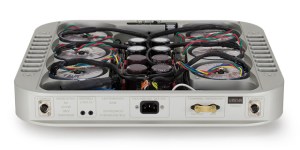
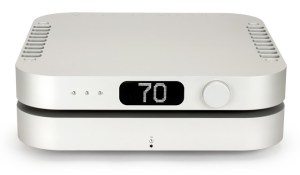
“Upgrading from the Base Output Module delivers a cutting edge constant impedance passive volume control preamp. Using this remarkable preamp will reduce system complexity and ultimately improve the audio quality of the entire system.It’s a remarkable feat of electrical design that sets a new benchmark in the industry. The output modules are individually tuned for maximum quality balance or single-ended audio. ”
PS Audio DirectStream Memory Player and DirectStream DAC Review
March 6, 2019 Comments Off on PS Audio DirectStream Memory Player and DirectStream DAC Review
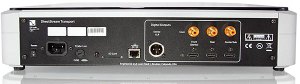
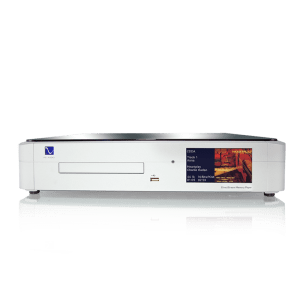
“The Digital Lens imposes a small penalty on user experience. The interface to the Memory Player is the same symbols and functions we are accustomed to for CD and DVD playback – and for tape before that – except you engage with it via the touchscreen in place of physical buttons. But because the Digital Lens needs to accumulate the data before sending it along, the Memory Player is overall less responsive than CD and DVD players. Not agonizingly so, and certainly not a deal breaker for me, but having lived with CD players for decades, it’s something you notice and may find frustrating. We’re used to ever-increasing speed with our technology (among other things); it’s hard to go back.”
Chord Qutest DAC Review
March 1, 2019 Comments Off on Chord Qutest DAC Review
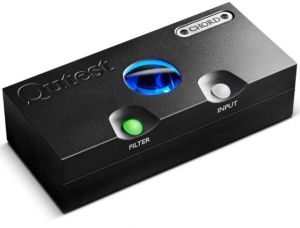
“One of the things that hit me about the Qutest’s sound after I had run it in for a good, long while is the amount of resolution it is capable of digging out of even well-worn tracks in my library, surprising me more than a few times with its clarity and subtle spacing of players within the confines of recordings at this price point. After trying out the four filters on hand”
AURALIC VEGA G2 DAC AND LEO GX MASTER CLOCK REVIEW
February 26, 2019 Comments Off on AURALIC VEGA G2 DAC AND LEO GX MASTER CLOCK REVIEW
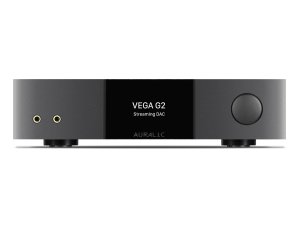
“I could not hear any difference between the VEGA G2 alone or with the LEO GX only in 16/44 sampling. I could hear a difference with 24/96 and 24/192 when I streamed the music. This did not occur with all streaming. Just some of it. This was due to the LEO GX’ ability to suppress all the jitter that probably is present in some streamed music. The VEGA G2 alone could not suppress all the jitter. Most of it, but not all. The VEGA G2 is a very good DAC. The LEO GX is better at jitter suppression, but both products are excellent. I would recommend the two be purchased by consumers who are streaming all or much of their music rather than playing it from disc.”

JDS LABS EL DAC REVIEW
February 21, 2019 Comments Off on JDS LABS EL DAC REVIEW
Sonically, the EL can be considered a baseline. It maintains that distinct level of clarity and simple detail in everything it does irregardless of the complexity thrown at it. It leans on the slightly warmer side of things (relatively) and pairs well with most amps and headphones I’ve used. For better or worse, just like its outer shell, the EL DAC is mostly free of any strong sonic characteristics save its penchant for a wider and more open sound stage.This can leave listeners say wanting more bass kick, or a thicker mid range, or a more intimate performance. The EL is smack dab in the middle and it likes it there.”
Mytek HiFi Manhattan DAC II Review
February 20, 2019 Comments Off on Mytek HiFi Manhattan DAC II Review
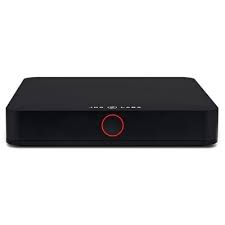
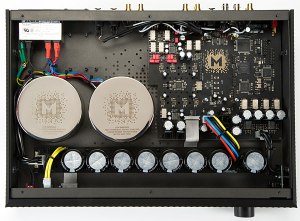
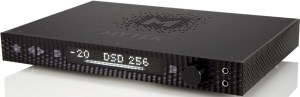
“I have read the Manhattan II’s optional phono card is very competitive and the headphone amplifier is a revelation for those who use headphones. It wouldn’t surprise me, knowing Jurewicz’s design prowess. It also doesn’t surprise me that he has designed a superb volume control for both the digital and analog domain. Your choice, or bypass them completely, and it’s potentiometer heaven. The network card is also a very viable downsize option if you dig streaming above all.
But it’s the conversion and myriad of settings that’s the star turn. And why I would purchase it. The 55K Black is out of reach for most, but the Mytek Manhattan DAC II, ten times cheaper, gives you much of what Black delivers.

Dan D’Agostino Momentum Integrated Amplifier w/DAC & Audio Streaming World Premiere $50,000 Review
February 18, 2019 Comments Off on Dan D’Agostino Momentum Integrated Amplifier w/DAC & Audio Streaming World Premiere $50,000 Review
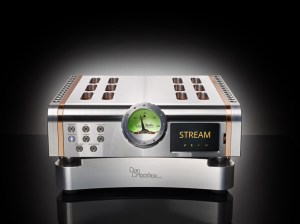
“My concentration changes focus throughout the piece, in sort of a meditative way as it ebbs and flows throughout the piece. I found this happening when listening to the MLife play my favorite power orchestral pieces. Regardless of how boisterous the music might become, my focus changes throughout the piece, focusing on different instruments, different sections of the orchestra, and to its soloists. As it does in real life. The dynamic distance the MLife can create with this large group of instrument is second to none in my experience, regardless of whether I’m listening to the internal DAC fed by the Ethernet connection or a source connected through an interconnect, digital or analog. The internal DAC of the MLife was the best at conveying the characteristics inherent to the MLife itself. And sounded the best out of all the sources. Yes, there will always be something special about playing LPs, and the MLife did not diminish this pleasure. But to have digital playback sound as good as the MLife could was new to me. And quite a pleasure.
One of the pleasures of a high-end system is being to step back in time, and thus come as close as humanly possible to what bewildered audiences heard in the very early 19th Century when Beethoven’s 3rd Symphony, or Eroica, was premiered. We’re hearing modern instruments, of course, but that’s not my point. At the time of its premier it was thought as too “structurally rigorous”, and at nearly 45 minutes, much too long. It was quite a ground-breaking piece of music. Now it is regarded as one of his most celebrated works, and for good reason. It probably surprises no one that my favorite movement is the Adagio, the second movement, which Beethoven titled “Marcia funebre”, or “Funeral March”. The DSD file of the Gewandhausorchester Leipzig, conducted by: Kurt Masur Symphony is not only well read, it is a great recording. Via the MLife’s internal DAC it is amazing to hear how it enables the sections of the orchestra to occupy distinct areas within the huge soundstage, projecting itself between, behind and to the sides of the speakers, making the speakers very difficult to locate when closing my eyes.”

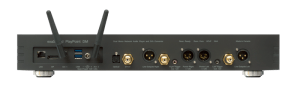
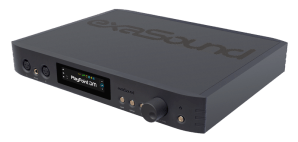
ExaSound PlayPoint DM Review
February 15, 2019 Comments Off on ExaSound PlayPoint DM Review
“As I listened to Brenda Navarette’s album Mi Mundo (192/24), I experienced stunning realism and immediacy to this Cuban singer/percussionist’s performance – it left me grinning at the beauty of the recording. The sound spread beyond the outer borders of my speakers with excellent focus and clear reproduction of the voices and percussive instruments while always sounding natural and effortless. The dynamic qualities of the percussion and bass were reproduced with a transient quickness and impact that were a real treat for this listener.
One recording that will challenge the best of systems is Don Grusin’s live album The Hang; a 96/24 presentation that combines the musical skills of Don Grusin with a host of top-flight musicians including Patti Austin, Ernie Watts, and Sadao Watanabe. I decided to open up the volume level to allow me to feel the dynamic impact reproduced by my Wilson Alexia Series 2 speakers. If this recording sounds congested during the dynamic passages, it’s something in your system. The PlayPoint DM sailed through this album with a “you are there” presence with absolutely no layer congeal. There was terrific weight and slam to the bass and percussion with impressive reproduction of instrumental textures. The powerful rhythmic drive of many of the selections were reproduced with a lively, upbeat sound that was an absolute pleasure to experience.”
EXOGAL COMET DAC AND ION STEREO POWER AMPLIFIER REVIEW
January 31, 2019 Comments Off on EXOGAL COMET DAC AND ION STEREO POWER AMPLIFIER REVIEW
“The Comet has the usual array of digital inputs plus a single pair of analogue inputs in a billet machined case with a headphone socket on one side and an almost unreadable LCD display. It does look cool though and if you get the angle right it’s possible to discern the reflective text and numbers from the matte silver background. The information is pretty basic with the chosen input at the top above the selected output, the latter offering main, Exonet, or headphones, a numerical volume indicator sits below both. A cheap remote control is supplied that can be used to change any of these but the simple app that Exogal has developed is a nicer way to do it. The latter baffled me initially because the Comet has no network connections or Wi-Fi antenna, it does however have a short Bluetooth antenna and that’s how it connects to your smartphone or tablet. Users of streaming sources will realise that this is all fine, but when you are choosing tracks with the streaming app you don’t want to have to switch to another app just to change volume. One answer is to use a second touchscreen device but the remote is probably easiest; that said, the app does make it clear when the output is muted as is the case at switch on, which can save some head scratching. Since its introduction the Comet has had one upgrade and that’s a new power supply; this is a £400 extra in a nice aluminium box (albeit with a power inlet that’s a little deep for chunky IEC plugs) and this was supplied for this review. The Ion also has an external power supply in a less sexy plastic case.”


 Audiophilepure
You must be logged in to post a comment.