MAGICO M9 FULL PRODUCT INFO
January 26, 2021 Comments Off on MAGICO M9 FULL PRODUCT INFO
https://www.monoandstereo.com/2021/01/magico-m9-full-product-info.html
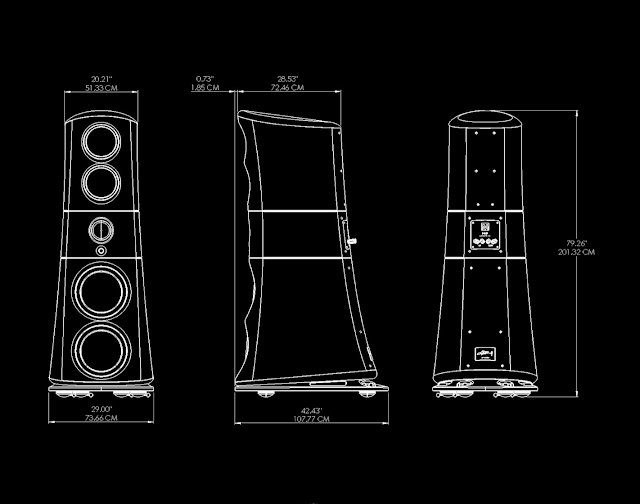
At such a low frequency, a passive crossover would require huge inductors and capacitors which would incur substantial losses. The meticulous design of the MXO has fully balanced and discrete circuit topology with Linkwitz-Riley filters to deliver steep 24 dB per octave slopes at the crossover frequency of 120 Hz. Precision step attenuators provide 0.5 dB/step control of each output, using a proprietary technique to ensure purity in the signal path. Open architecture accommodates additional filter topologies. The external power supply chassis regenerates AC and applies active regulation to every part of the circuitry.
A pair of M9 loudspeakers requires two stereo or four monaural amplifiers. The M9 tweeter, midrange and mid-bass drivers are controlled by a three-way passive crossover with acoustical target 24 dB-per-octave Linkwitz-Riley filters. Magico’s elliptical symmetry crossover design preserves maximum frequency bandwidth with minimal IM distortion.

Acora SRB loudspeaker Review
January 24, 2021 Comments Off on Acora SRB loudspeaker Review
https://www.stereophile.com/content/acora-srb-loudspeaker
These aren’t ordinary small two-way monitors. They sound bigger than they are. They are capable of producing an expansive soundstage. They are highly detailed and fast, with a feeling of microdynamic precision and quick-footed effortlessness. They can start and stop on a dime.
Partnering amplifiers should be chosen with care. The VAC tubes worked especially well.
Bass extended deeper than expected and had good clarity and definition—and yet, in my room, the SRB’s tonal balance ran mostly neutral to slightly cool, which makes me think my room was perhaps a little too large for them and/ or could have benefited from more absorption in this setup.

Wilson Audio XVX Chronosonic First Impressions
January 24, 2021 Comments Off on Wilson Audio XVX Chronosonic First Impressions
Burmester B38 Floorstanding Loudspeaker €18,900 Review
January 23, 2021 Comments Off on Burmester B38 Floorstanding Loudspeaker €18,900 Review
Let’s quickly move over to classical music: Here, the B38 knows excellently how to convince even those who don’t like it of the beauty this genre has, for example when the “Concierto de Aranjuez” is played. The fine dynamics demanded here are offered by the Burmester with confidence, in a way that even excites hardened and experienced fans of hi-fi. Depending on the angle and width of the base, the guitars occasionally sounded a bit too strict and minimally tied up, but could easily be brought back onto the path of virtue by small corrections concerning the positioning.
The airiness and generosity in the reproduction of the solo instruments as well as the entire orchestra was convincing as well – fortunately even when one did not enjoy the privilege of taking the central position on the sofa. Thus, even several people can enjoy the quality design together, which consists mainly of the polished aluminum front lacking visible screws and the slim silhouette.
What about the topic of “Rock” though? Nobody has ever doubted that a Burmester speaker can play rock music anyway, right? If you do: look around for a Burmester distributor and listen!


ACELEC MODEL ONE SPEAKERS REVIEW
January 18, 2021 Comments Off on ACELEC MODEL ONE SPEAKERS REVIEW
https://www.monoandstereo.com/2020/12/acelec-model-one-speakers-review-part-1.html
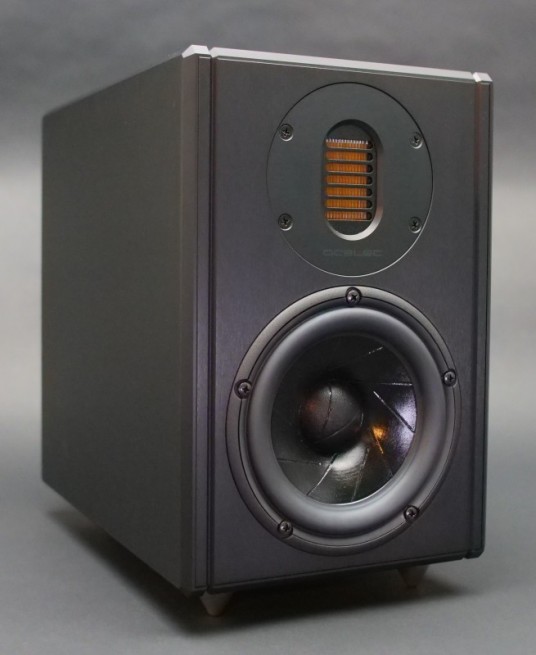
The Model One enclosure has proven to allow remarkable sonic performance even in my nearly 50 m2 reference listening room, where the Acelec monitors more or less show their true potential at 27db noise floor, 0.47s total RT60 time, and properly addressed room modes, Model One were operating far, far outside their given proportions.
I also heard the Model One in two smaller listening rooms, but for safety’s sake, I wanted to give them the freedom to show their mojo in my main studio. And the results were pretty amazing. I am no stranger to active, smaller pro audio speakers, where you can achieve a certain level of impressive performance even with a small, self-powered studio monitor. But, the Acelec monitors are passive, and as such performing boldly in a larger listening environment certainly is a great challenge.
Fleetwood DeVille Loudspeaker System $9,600 Review
January 17, 2021 Comments Off on Fleetwood DeVille Loudspeaker System $9,600 Review
https://audiophilestyle.com/ca/reviews/review-fleetwood-deville-loudspeaker-system-r969/
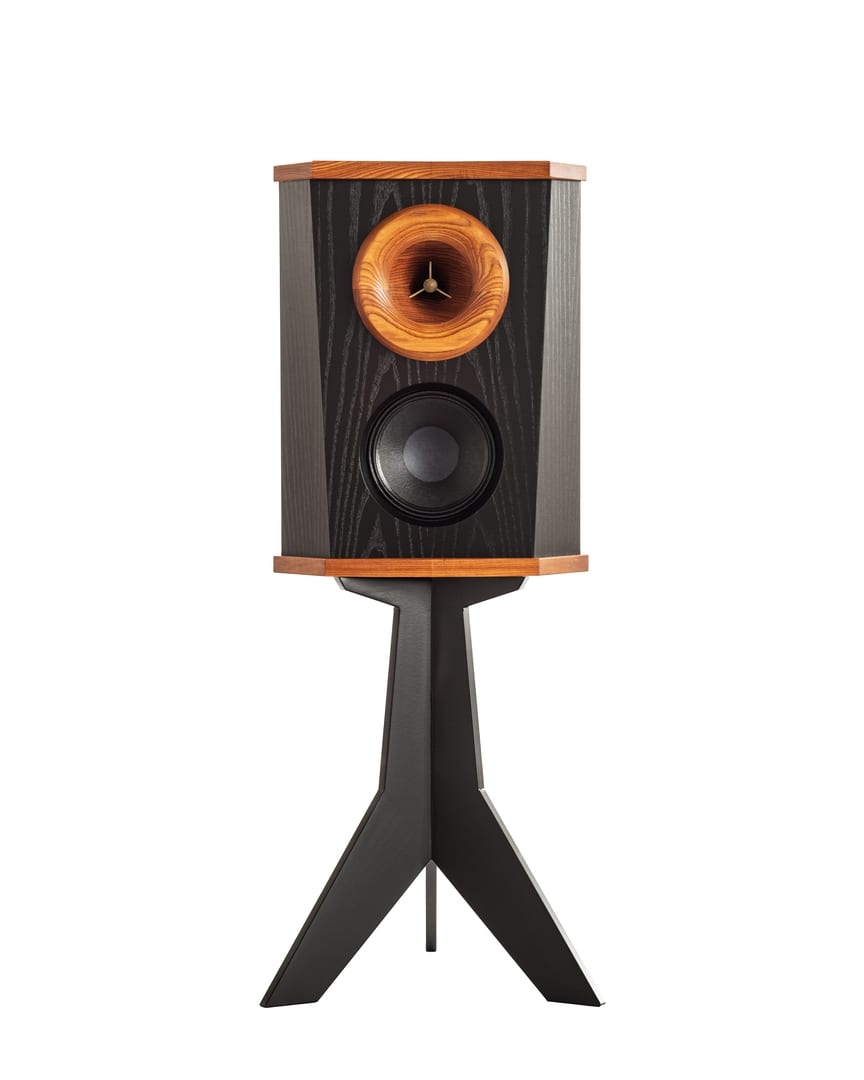
In today’s world, we have grown accustomed to instant gratification and an obsessive addiction to the yearly next best thing. Old school craftsmanship has become so rare: name one speaker company manufacturing cabinets from real wood, not MDF plus veneer. It’s exceedingly expensive, requires genuine artisans with wood working experience not to mention very specific tooling and above all is extremely labor intensive. Naturally, the world has moved away from those old guiding principles with very few exceptions. Yet it is precisely these methods that will ensure longevity beyond the norm. I have often said that even as today’s cars have become such unbelievable technology driven monsters, not one of them will work and function in thirty, forty, fifty years time. I can pretty much guarantee that these DeVilles will play just as well in 2060, as they do today. Finally, if I didn’t already have a house full of speakers, I’d buy these. I really would. They sing, they dance, they connect you to the music. That’s what matters. For a first effort, these are terrific examples of the old school world of manufacturing pride. If that’s your calling, I’d run to a showroom to audition them.
LIVING VOICE AUDITORIUM R25A FLOORSTANDING LOUDSPEAKER REVIEW
January 15, 2021 Comments Off on LIVING VOICE AUDITORIUM R25A FLOORSTANDING LOUDSPEAKER REVIEW
Living Voice Auditorium R25A Floorstanding Loudspeaker
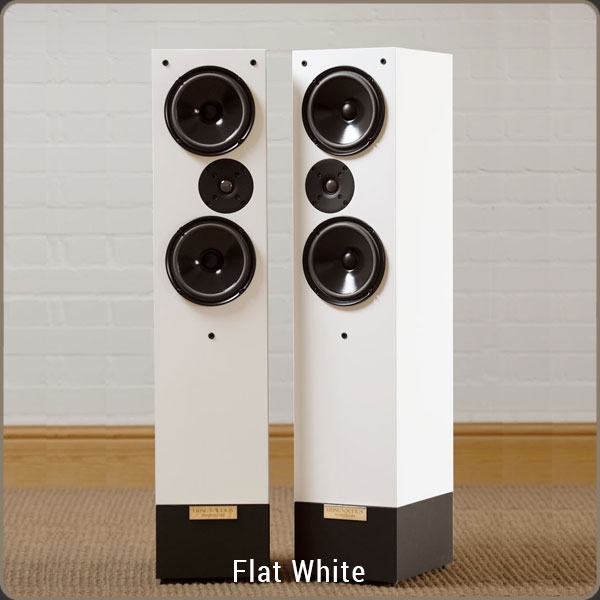
Coherent and articulate, dynamic and oozing musical intent, it’s clearly not a question of whether this latest Auditorium is recommendable at the price, but whether it’s sensible or even safe to ignore it. Living Voice’s compact floorstander established the form factor and set the bar 25-years ago. Two-and-a-half decades on and it’s just hoist that bar again – but this time with a considerably broader reach as well as setting it considerably higher. A shade over £5K is a long way from beer budget, but then the Auditorium R25A is so consummately capable and confidently superior that you can forget more affordable alternatives; this baby shows many more ambitious and much more expensive speakers exactly how it should be done as well as unlocking a world of affordable system options – systems that are, in turn capable of remarkably consummate musical performance. Bargains don’t come much more elegantly packaged or musically compelling than this – and make no mistake, the latest Living Voice is a very serious bargain indeed. If you’ve got £5,000 to spend on speakers you need to hear these one. If you’ve got £10,000 to spend on speakers, you still need to hear these – the Auditorium R25A really is that good.
GERSHMAN ACOUSTICS GRANDE AVANT GARDE LOUDSPEAKER REVIEW
January 13, 2021 Comments Off on GERSHMAN ACOUSTICS GRANDE AVANT GARDE LOUDSPEAKER REVIEW
Gershman Acoustics Grande Avant Garde Loudspeaker
By now it should be pretty obvious that the Grande Avant Gardes do big, do bass and do imaging. They also do natural and naturally expressive. It’s a particularly impressive overall performance and balance of virtues. It ain’t hard to get big bass out of modest boxes – if you are prepared to accept a crippling electrical load, low efficiency and the sort of constipated dynamics that result in a total failure to emote. The fact that the modestly proportioned GAGs achieve the scale and bandwidth that they do, while neatly side-stepping the practical and musical pitfalls that so often result is testimony to the efficacy of their chosen solution(s). The explanation offered for the operation of the separate bass enclosure is either disarmingly or disingenuously simple – but there’s no ignoring the speakers’ low frequency performance. Likewise, the small, non-parallel and heavily braced cabinet panels suggest a low-storage enclosure, its reluctance to contribute to the sound or interfere with the music ample recompense for the cost and complexity of construction. Building a two-part cabinet this shape is never going to be cheap or easy, but in the end the results justify the means, results that certainly stand out from the crowd. Just listen to a pianist shape a phrase, accelerating through it or pausing for affect and the absence of slurring, lag or hesitation in the notes tells its own story. This is one speaker system where the music doesn’t have to drag the cabinet with it. Instead, performances proceed at their player’s pace, fast or, just as importantly, slow. Unlike a speaker or amp that leans on the leading edge to add pace to proceedings, the Gershmans allow notes freedom of passage, without editing, cropping or giving them a push. This lightness of touch is especially apparent in slow movements, with poise, grace, delicacy and pathos all equally part of the GAGs musical vocabulary. They deliver the full emotional range, whether its expressed reflectively or explosively – and they transition from one to the other with an enthusiastic fluidity that makes most other speakers at this price level sound stilted and constricted. It’s a sure indication that as a design, they are sorted, both electrically and acoustically/mechanically.

DIY SPEAKERS – FOCAL STELLA UTOPIA CLONE TIME-LAPSE
January 12, 2021 Comments Off on DIY SPEAKERS – FOCAL STELLA UTOPIA CLONE TIME-LAPSE
KEF LS50 Meta Loudspeakers $1499 Review
January 5, 2021 Comments Off on KEF LS50 Meta Loudspeakers $1499 Review
https://www.soundstagehifi.com/index.php/equipment-reviews/1502-kef-ls50-meta-loudspeakers
The KEFs and GoldenEars sounded more similar than different. With “Feelin’ the Same Way,” also from Norah Jones’s Come Away with Me, their bass extension was roughly the same, as were the tightness of and detail in the bass. However, the BRXes’ slightly greater upper-bass energy translated into a bit more punch with kick drum, as in Lou Reed’s “Dirty Blvd.,” though still not up to the level of the Diablo Utopias.
With “Feelin’ the Same Way,” the BRXes were able to cast just as wide and deep a soundstage as the LS50 Metas, though the specificity of aural images on those stages wasn’t as precise as through the Metas. But unlike the Focals’ highs, which were brighter than the Metas’, the BRXes’ highs were slightly duller. The Metas’ highs also sounded cleaner than the BRXes’, which were slightly ragged by comparison.
The biggest difference was in Jones’s voice, which was very tightly focused at center stage through the LS50 Metas, and through the BRXes was just as centered but more diffuse, and without as much detail and clarity. The Metas sounded more crisp through the midrange and highs than the BRXes, which made the latter sound slightly laid-back. I heard the same when I listened through both speakers to “Don’t Know Why,” the big hit from Jones’s


You must be logged in to post a comment.