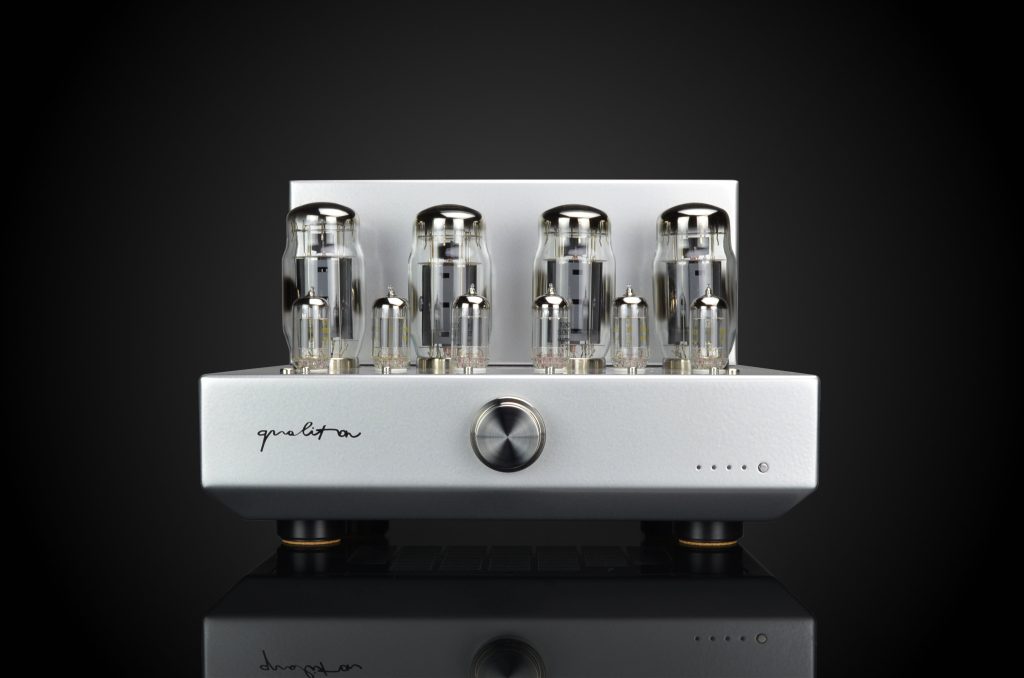
Audio Hungary Qualiton A75 Integrated Amplifier $9250 Review
March 2, 2024 Comments Off on Audio Hungary Qualiton A75 Integrated Amplifier $9250 Review
The further upshot of time with Audio Hungary’s Qualiton A75 was making plain to me, again, that music is about enjoyment not extraction of every iota of sound. More information is more information it is not necessarily more joy. As an audiophile, my musical interests have blossomed and include far more genres of music than when I started. I’m not going into a hermit state. I’ve poked into a lot of corners of music that I was never interested in. Some proved just interesting and some really enjoyable. So it goes.
The Qualiton A75 is a compelling offer to buy, simplify, and just enjoy. Have great sound without having to give up so much real estate while retaining some visual beauty. It’s an opportunity to bask in the joy of an evolved system. Instead of studying reviews of amplifiers to determine what your next audio purchase should be. Maybe what’s next is to continue exploring new music or it’s immersing yourself more deeply into your record collection or taking friends to your desert island system and basking in the full glory of what you’ve constructed. Audio Hungary’s Qualiton A75 could be that. Highly recommended.
Tannoy Stirling III LZ Special Edition $12,500 review
March 1, 2024 Comments Off on Tannoy Stirling III LZ Special Edition $12,500 review
https://www.whathifi.com/reviews/tannoy-stirling-iii-lz-special-edition
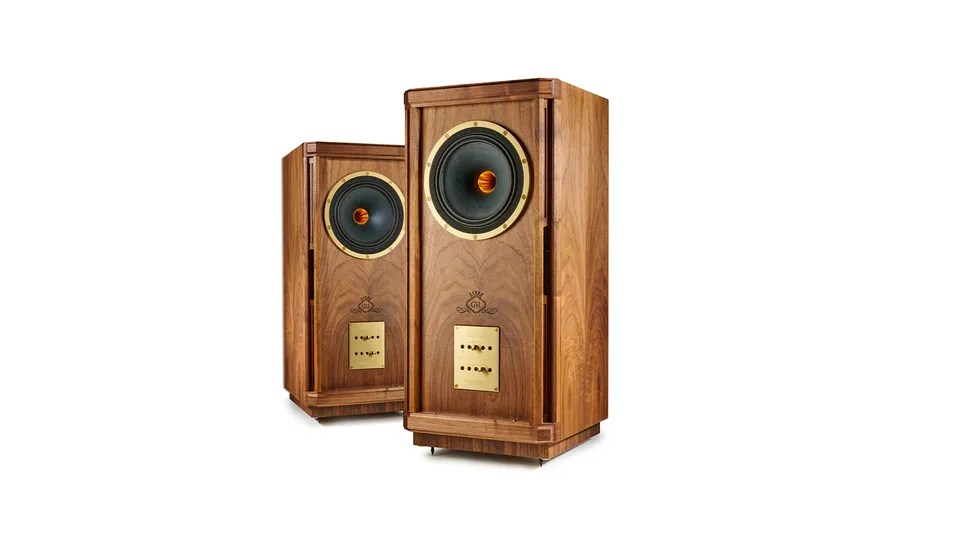
Tonally, these Tannoys sound lean and short of natural warmth through the midrange, leaving voices and instruments sounding thinner and harder than they should, which also contributes to a cluttered feel to the sound. We play around with the front panel settings for tweeter energy and roll-off but none of it helps as the issues have to do with quality rather than level.
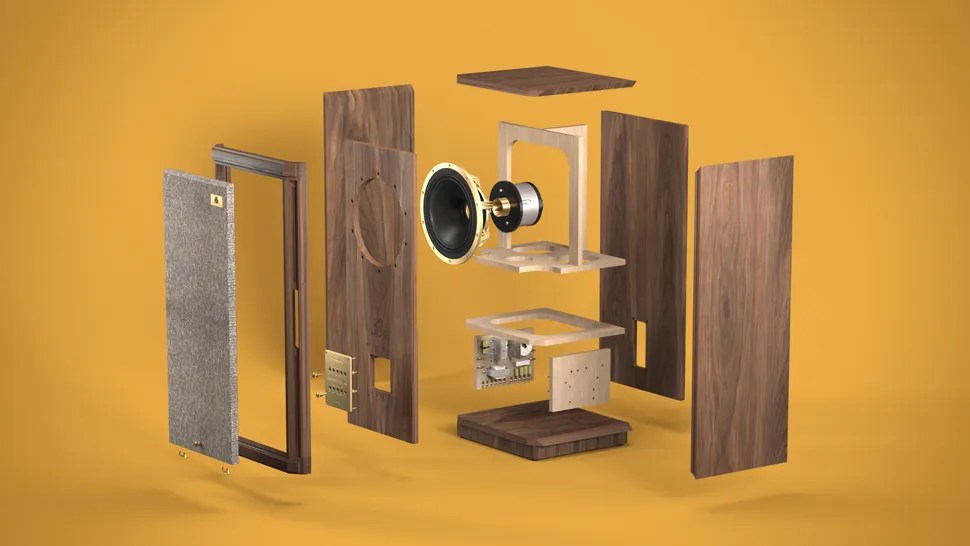
Bass performance is also flawed. Tannoy’s engineers have worked hard on the porting arrangement in the cabinet, but the results aren’t great. The Stirling can dig relatively deeply, but compared to the ATC SCM50 speakers when playing bass fests like Hans Zimmer’s Interstellar OST or Massive Attack’s Heligoland set, there is a notable shortfall of grip and definition. A better grasp of rhythmic drive and greater timing precision in general would be nice too.
Weiss Helios DAC | REVIEW
March 1, 2024 Comments Off on Weiss Helios DAC | REVIEW

Is Reel-to-Reel the Ultimate Playback Format
March 1, 2024 Comments Off on Is Reel-to-Reel the Ultimate Playback Format
HIFIMAN AUDIVINA HEADPHONE REVIEW
February 29, 2024 Comments Off on HIFIMAN AUDIVINA HEADPHONE REVIEW
The thick foam earpads are shaped to be thicker at the back and thinner at the front, helping to ensure a good seal completely around the ears. The pads are swathed in a soft tan leatherette while the contact patches are covered in breathable fabric. The interior of the pads is also covered in leatherette but, in addition, are perforated. The result of all these design attributes is to provide the HIFIMAN Audivina with an expansive soundstage and an experience more akin to open-back headphones.
The weight of the Audivina at 470 grams, while not featherweight, should be completely comfortable for the average person to manage for a few hours. I felt no fatigue from their weight at all. The clamping force of the headphones was quite reasonable and didn’t seem to cause any discomfort to me either.

Rogue Audio DragoN monoblock power amplifier$5995 Review
February 29, 2024 Comments Off on Rogue Audio DragoN monoblock power amplifier$5995 Review
https://www.stereophile.com/content/rogue-audio-dragon-monoblock-power-amplifier
The ESS Transtatic I is a hybrid-electrostatic loudspeaker (footnote 4). The fabric-wrapped 120lb cabinets are three-walled, open on the inside face. Low frequencies are transmission-line loaded and radiate from bass ports above each laminate-veneered loudspeaker pedestal’s cardinal directions.
Each speaker uses a 9″ × 12″ foam, flat-piston KEF B139 oval “racetrack” low-frequency driver and a rear-ported KEF B110 midfrequency driver, coordinated with an array of three RTR electrostatic panels. These drivers were fairly common in the 1970s, used by various manufacturers including Infinity. According to the specifications, the Transtatic I’s lows extend below 15Hz, the highs up to 32kHz, with a ±3dB range of 25Hz–20kHz. Admirably, ESS specified a minimum—not nominal—impedance, of 4 ohms. Sensitivity wasn’t specified, but I estimate it as in the vicinity of 90dB/W/m. The user manual suggests a minimum amplifier power of 60W and says it can take “greater than 650-watt musical peaks without distortion.”
Uncolored and unboxy, these are the best-sounding loudspeakers I’ve ever heard at low volume. For this review, I used them exclusively.

GoldenEar T66 Loudspeaker£6249 Review
February 27, 2024 Comments Off on GoldenEar T66 Loudspeaker£6249 Review
https://www.hifinews.com/content/goldenear-t66-loudspeaker
he result is a loudspeaker with a better balance overall. Not only is the sound less dense and compact in terms of imaging, but fine detail is presented in a more airy and open fashion. In other words, while never quite displaying ultimate resolution, the GoldenEar T66 has the audiophile character its designers were aiming for. Anyone used to the erstwhile ‘American’ tuning, which sometimes seemed more suited to home theatre than hi-fi, will be pleasantly surprised. The interplay between the T66’s passive drivers and its active woofers delivers spacious detail on an expansive soundstage that has the rock-solid foundation you would expect from a son of Triton. A benefit of the semi-active DSP-controlled approach is that the T66 generally remains in equilibrium, even at lower volumes.

ROGUE AUDIO RP-5 V2 PREAMPLIFIER REVIEW
February 27, 2024 Comments Off on ROGUE AUDIO RP-5 V2 PREAMPLIFIER REVIEW
I also heard and enjoyed all the ambiance of the venue. Take “Solar” as one example. Not only can you hear the audience noises, but I also hear the lifelike sound of Scott LaFaro’s fingers on the strings across a backdrop of sweet drumming and the “inconsiderate” audience making audience noise (and talking!) All this came to the fore on the bass solo.
Did I mention Evans’ piano yet? Well, it’s a versatile instrument: Bill Evans was a jazz virtuoso, and the RP-5 allowed all this to be front and center. So, the piano was melodic and percussive in equal parts. The Rogue provided a very natural representation of a real-world instrument. “Alice in Wonderland” was another standout where the piano in particular had a starring role throughout the forte passages during which the bass really anchored the ensemble. The Rogue RP-5 v2 made it all sound so musically satisfying.

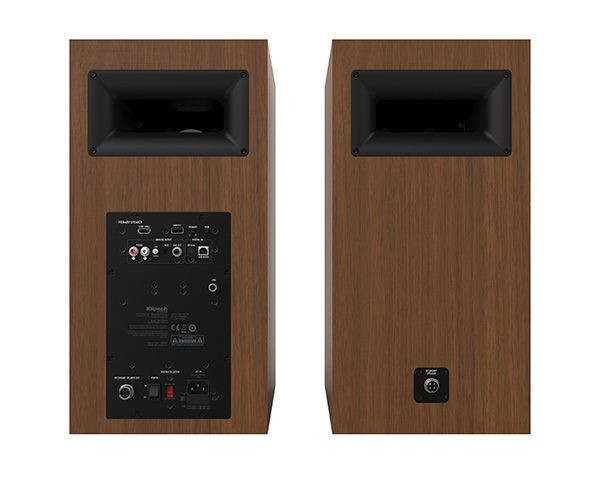
Klipsch The Nines integrated loudspeaker system
February 26, 2024 Comments Off on Klipsch The Nines integrated loudspeaker system
https://www.stereophile.com/content/klipsch-nines-integrated-loudspeaker-system
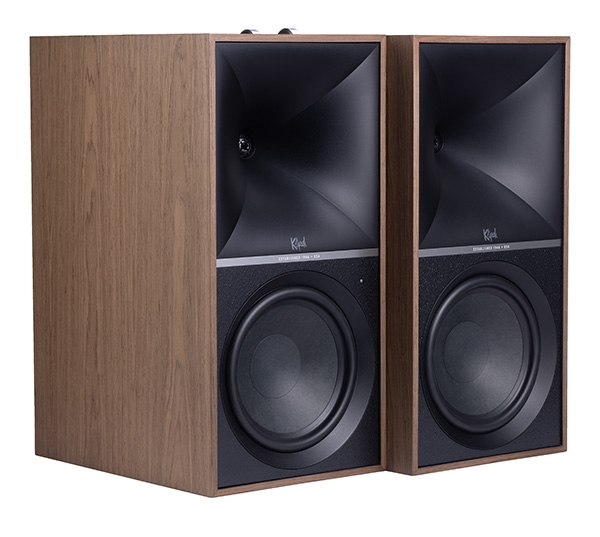
I closed my eyes, forgot I was listening through little wooden boxes (and worked hard to ignore the vinyl ticks and clicks). Lo and behold, there he was in front of me, to my right, blowing that wonderful solo.
But can these speaker-gadgets rock? My acid test for speakers—for determining whether they have any hope of compatibility with my listening tastes—is the Rolling Stones’ “Can’t You Hear Me Knocking” from Sticky Fingers. The version I have preferred lately is on the Japanese SACD, which claims to be a “flat transfer” of the master tape. It preserves the dynamics I remember from the LP—nice, crisp drumbeats and distinct and varied guitars—as opposed to recent CD reissues, which are superloud with almost no dynamic range and so sound mushy. To my surprise, The Nines played the DSD file on my hard drive (ripped from the SACD by a friend who knows the “PlayStation method”) through the Foobar2000 player with the DSD/SACD plug-in.
 Audiophilepure
You must be logged in to post a comment.