NOBLE AUDIO SULTAN REVIEW
July 23, 2020 Comments Off on NOBLE AUDIO SULTAN REVIEW
“In a short summary, I’d call the Noble Sultan a well balanced monitor with exemplary low-end extension, lightly forward mids and a clear top section. It features very good resolution and texture, but absolutely shines in terms of depth and layering. While it doesn’t create the widest stages out there, it still reaches good measures. The Sultan is a nicely enjoyable monitor, that does many things right, but might miss out on a unique character for some.”

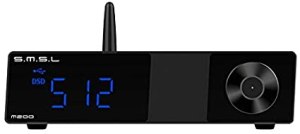
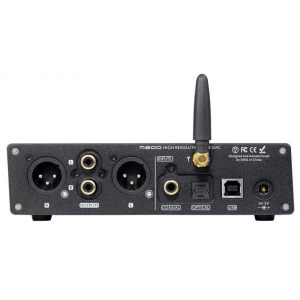
SMSL M200 Review
July 23, 2020 Comments Off on SMSL M200 Review
“Sadly, the M200 doesn’t have a headphone out, it is a pure DAC only and that makes it difficult to judge exactly what presentation the product actually offers. I have to rely on knowing my amps to connect it to, and how they differ in sound setup connected to this M200 vs other DAC’s I have experience with”.
I’ve found the M200 to be light on the low end, but moderately responsive to EQ and boosting if need be. You can drop in +5dB, or maybe even a bit more, and yield a more potent low end.
KEF R5 LOUDSPEAKER AND KF92 SUBWOOFER $5,000 REVIEW
July 22, 2020 Comments Off on KEF R5 LOUDSPEAKER AND KF92 SUBWOOFER $5,000 REVIEW
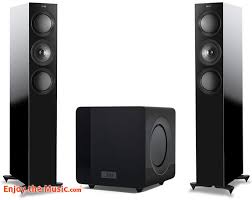
“Every single note projected from this system had a seamless and uninterrupted path from the formation of the note, to the sustain of the note and to the decay of the note. The low end of the R5’s without the KF92 is clean with the port plugs installed, without, the bass deepens and becomes more open and dynamic. Midrange and upper frequencies were absolutely full of detail and articulate but not bright or overbearing. Personally find myself able to listen for hours without any fatigue. The R5 does a good at being resolving, bringing you all the detail within a recording, all while being forgiving to recordings that are not of the greatest quality.”
Rockport Technologies Avior II Loudspeakers Review
July 21, 2020 Comments Off on Rockport Technologies Avior II Loudspeakers Review
“Listening to Sara Watkins’s Sun Midnight Sun (16/44.1 FLAC, Nonesuch/Qobuz), he noted that “her fiddle sounded rosiny, and her voice in ‘When It Pleases You’ was clear and tinged with emotion.” Jeff could also clearly hear that the recording “lacks wide dynamic range,” and pointed out that it “can sound too processed through some speakers because of their inability to reveal microdetail — sounds that should be distinguished from each other are instead mushed together. But I found that if a recording contains a detail, I heard it through the Avior IIs.”

REL ACOUSTICS S/510 SUBWOOFER £1,899 REVIEW
July 21, 2020 Comments Off on REL ACOUSTICS S/510 SUBWOOFER £1,899 REVIEW
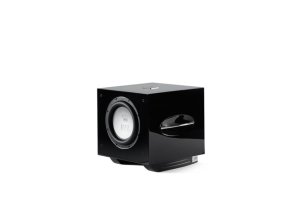
“You can hear the difference between ‘musically integrated’ subwoofers and their more cinematic brethren by playing a simple piece of music with a bass line. It’s perhaps no wonder that REL uses ‘The Ballad of the Runaway Horse’ by Jennifer Warnes and the late bassist Rob Wasserman, either from the 20th Anniversary version of Famous Blue Raincoat by Warnes [Private Music, BMG] or from Wasserman’s Duets [MCA]. The recording is simple (effectively a voice and a bass), but tells you all about a sub. Switching a correctly set-up subwoofer in and out adds some depth and ‘shape’ to the bass notes, of course, but what it does when set properly is lock Warnes’ voice in the centre of the soundstage. The better the sub, the more precisely that voice is solidly rooted between the speakers and with the S/510, if her voice was any more rooted, she’d need watering.”
ELAC NAVIS ARB-51 ACTIVE BOOKSHELF SPEAKER $2,299 REVIEW
July 20, 2020 Comments Off on ELAC NAVIS ARB-51 ACTIVE BOOKSHELF SPEAKER $2,299 REVIEW
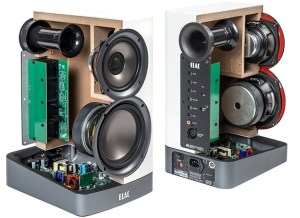
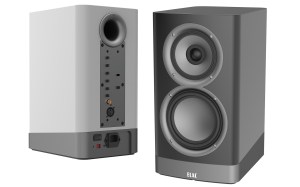
“The Uni-Fi is still a great little speaker for the money. Hook them up to some good electronics and a healthy dose of amplification and they will just boogie all day long and you won’t get tired listening to them. The Navis is like the Uni-Fi but turned up to 11! Everything that I was hearing on the Uni-Fi was played back with more clarity and specificity on the Navis. Where I thought I knew where instruments and details were when listening on the Uni-Fi, I knew exactly where they were when listening through the Navis. The bass on the Navis also felt like it had a little bit more wallop than from the Uni-Fi but I don’t think it actually reached any lower in range.”
Lindemann Musicbook Source & Power 1000 Network DAC/Pre and Power Amp Review
July 20, 2020 Comments Off on Lindemann Musicbook Source & Power 1000 Network DAC/Pre and Power Amp Review
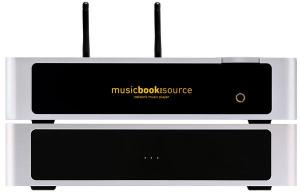
“There are plenty of good looking compact systems around, but not so many that I’ve been comfortable listening to over a protracted period of time. Happily the Lindemann’s Musicbook Source/Power 1000 combination succeeds by serving up an enjoyable and engaging musical performance. It might not match up to some conventional – less attractive and more bulky – hi-fi separates, but still proves genuinely satisfying to listen to. Essentially, it is clean, detailed and articulate – with a good deal of drive and power, too.”

Stax SR-Omega headphones $3000 Review
July 19, 2020 Comments Off on Stax SR-Omega headphones $3000 Review
“A note of warning if you’re able to make the same comparison yourself: The SR-Lambdas are slightly more sensitive than are the SR-Omegas, so you’ll have to readjust the volume when switching over, to avoid being misled. In all my comparisons, I set the respective levels of each headphone subjectively. I normally prefer a more precise means of level matching; but, short of inserting tiny microphones in the ear canal to measure the operational sensitivity of each headphone, it’s impractical with headphones.”

”
Rega io integrated amplifier $599 Review
July 18, 2020 Comments Off on Rega io integrated amplifier $599 Review
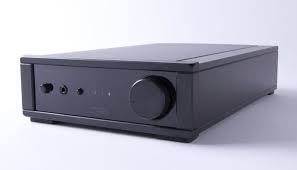
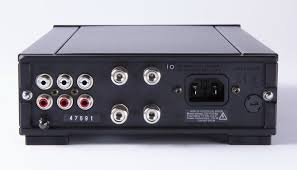
“The Rega io is so good, one is tempted to summon up a cauldron full of well-worn audiophile clichés. While it is excellent at first listen, the toughest part of reviewing a component offering such a high level of performance is that it begs being connected to much more expensive ancillaries to experience the depth of its true capabilities. You could grab a pair of budget speakers and a thrift shop turntable and live happily ever after with the io, but like that other legend from the UK, don’t be surprised to see this one in the company of much more expensive components. Watch for the audio forums of 2050 to speak of this amplifier in hushed reverence. Of course, the io is worthy of our Exceptional Value Awards for 2020, but that doesn’t truly explain a product that gets the essence of the music so right. Audiophiles beginning their journey here may be spoiled for a very long time.”
FIIO FA9 REVIEW
July 18, 2020 Comments Off on FIIO FA9 REVIEW
“Paired with FiiO’s M11, the IEM gives you the brand signature, magnified: great vocals, tight bass, and excellent layering. I tried the various switches, to check if that makes a real difference, and it does. My favorite setting is the “strong bass”, as the standard setting sounds a bit too weak on the lower-end.
Even, if I didn’t have the price in mind, I’d gladly put those ears against higher-tier IEM. I really loved the FH5 and for now, I’m pretty sure that will be the same with the FA9. Or so I hope.”



You must be logged in to post a comment.