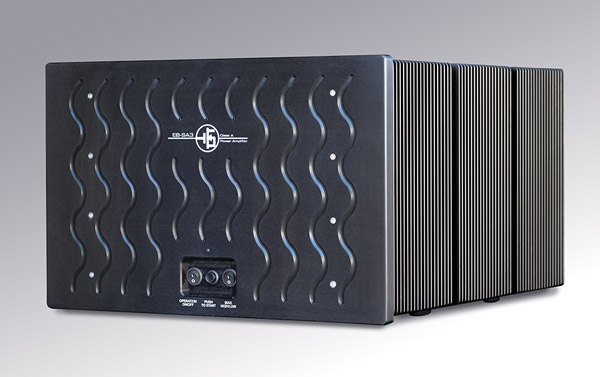
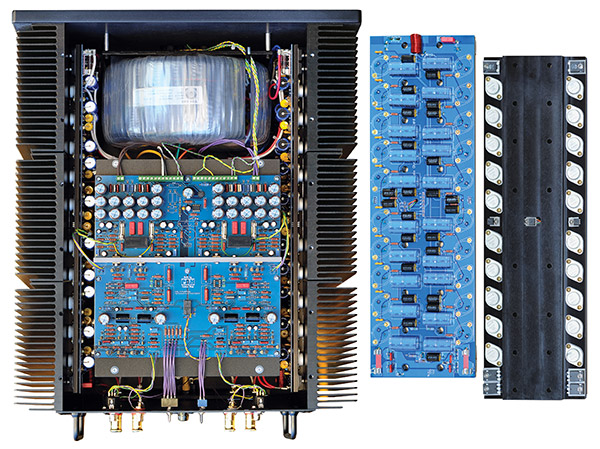
PBN Olympia EB-SA3 Amplifiers and Lxi Preamplifier$49,995 Review
January 6, 2020 Comments Off on PBN Olympia EB-SA3 Amplifiers and Lxi Preamplifier$49,995 Review
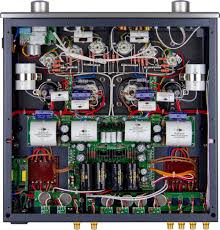
“Where this neutrality becomes very useful aside from distinguishing the recording’s origins and pure musical enjoyment, is what the changes made upstream yields. Changing from the PBN Lxi preamp to the D’Agostino Momentum was not a difficult shift to grasp. The Momentum is a bit of yin to the Lxi’s yang. It’s a shade darker, a shade warmer, a touch deeper in stage, and just as wide, if not as forwardly detailed. Textures are a bit more organic, but these qualities come at a 30% premium in price. The Lxi was livelier where the Momentum’s depth of stage seemed to shave a hair off dynamics. The bass is an equal in terms of extension, a bit heavier feeling-voiced, more bottom up, though with the tone controls the Momentum possesses, it can be transformed in either direction. I have grown so accustomed to having the tone control feature, especially one as well executed as the D’Agostino, I would find it hard to live without. But the Lxi was in the same league, and despite the quirk of not having the ability to switch sources with the remote, and no balance adjustment, I could live very happily with the Lxi. The one caveat beyond those inconveniences would be the Lxi would best suit a system that needs a kick in the pants, and move the stage and upper frequencies a bit forward in mix. “
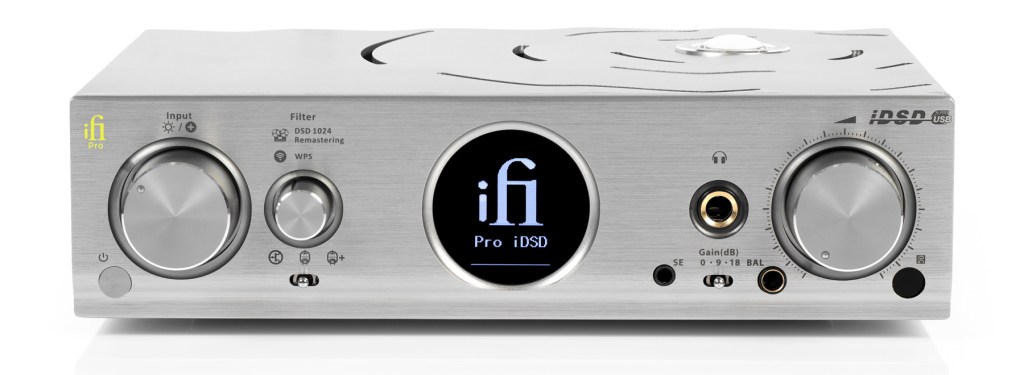
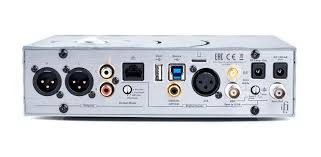
iFi Pro iDSD D/A Converter HP Amp/Line Preamplifier Review $2,749
January 5, 2020 Comments Off on iFi Pro iDSD D/A Converter HP Amp/Line Preamplifier Review $2,749
http://everythingaudionetwork.blogspot.com/2019/12/ean-audiophile-review-ifi-pro-idsd-da.html
” The classic “Autumn Leaves” track also revealed the same layering of the drum cymbals and an increase in dynamic range. Ooh, those cymbal brush licks. In top-class DACs, such as the Benchmark DAC3 and Mytek Brooklyn, there might be better spec numbers, but the iFi was right there in the straight ahead listening sessions. I listened to a Pentatone DSD download album, the 1974 version of Berlioz Symphony Fantastique, Sir Colin Davis and The Concertglow Philharmonic (Phillips)). This is my favorite recording of this Berlioz staple, in performance and in sound quality. The richness, fullness and ultimate power of the orchestra — combined with a vastly dynamic, yet rich, analog tape character — was stellar in the Bit Perfect mode, at 2.8MHz sample rate DSD”
Audeze LCD-1 Review
January 5, 2020 Comments Off on Audeze LCD-1 Review
https://www.innerfidelity.com/content/audeze-lcd-1-review
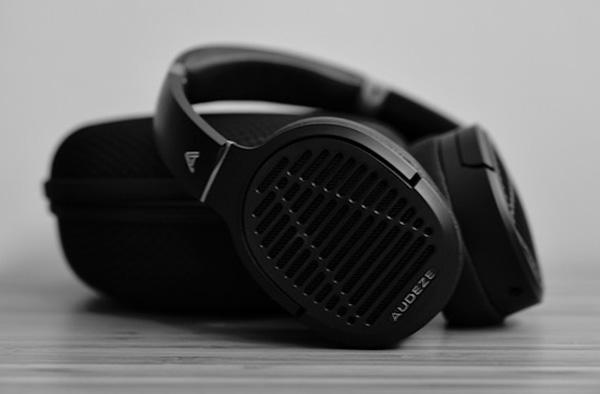
Comfort on the LCD-1 is good, it’s probably the lightest Audeze headphone I’ve yet encountered. Combined with the soft memory foam ear pads and headband, it makes for a pretty lightweight and comfortable listen. My ears are on the smaller side, and I had no problem with the size of the ear cups, though if you have larger or more horizontally-inclined ears, you may find them a bit compact. I do get a bit of discomfort from the top of the headband after particularly long listening sessions, but since the headphones aren’t particularly heavy I would characterize this discomfort as manageable and minor compared to some of the truly hefty full-size headphones I’ve used this year. Overall, the comfort is what I would describe as totally adequate. On to the part you really want to hear about though – the sound.”
Triangle Art Anubis Turntable $15,000 Review
January 4, 2020 Comments Off on Triangle Art Anubis Turntable $15,000 Review
https://positive-feedback.com/reviews/hardware-reviews/triangle-art-anubis-turntable/
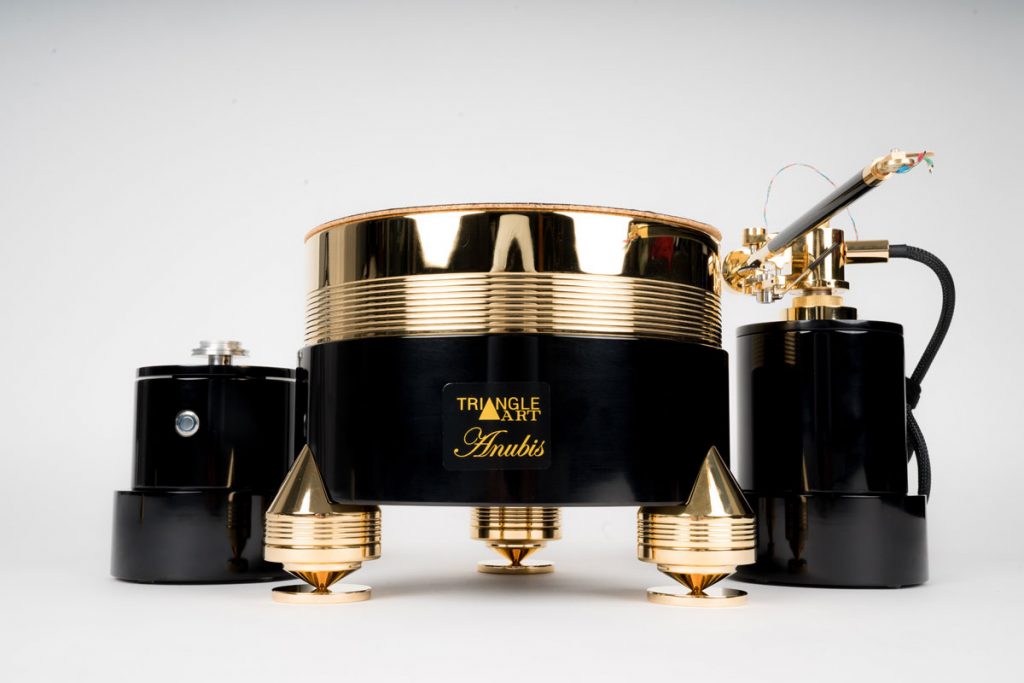
“Moreover, wearing the white linen gloves complicates things. In addition to protecting the shiny metal surfaces from fingerprints, they reduce friction, making gripping the heavy components, such as the platter, much more challenging—and potentially disastrous.
When I lowered the weighty platter onto the plinth, gripping it tightly, the tip of one of my gloves’ fingers stretched out and got pinched between them. I had to remove both gloves so I could lift the platter and extract it (I thought for sure the glove would tear). Frankly, I would recommend not wearing gloves while handling the platter and plinth to avoid risking dropping them.”
Paradigm Defiance V12 Review
January 4, 2020 Comments Off on Paradigm Defiance V12 Review
“
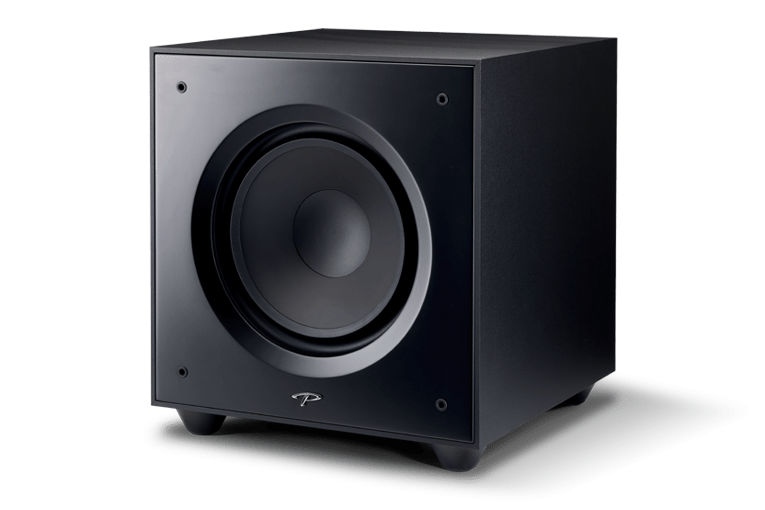
His final test, using “She Will,” from Lil Wayne’s Tha Carter IV and featuring Drake (16/44.1 FLAC, Cash Money), was the one that made the differences between the subs “most obvious”: “The SB-4000 managed to dig down deeper in reproducing ultra-low bass, and the slam of the thumping bass notes had just a bit more pressure with the SVS. Still, these differences were obvious only in these direct comparisons. The Defiance V12 really did perform admirably, especially considering its price.” In the “Conclusion” of his review, Diego summed up: “All told, the Defiance V12 is a great value that I wouldn’t hesitate to recommend to anyone — even those willing to spend much more.”
When Diego’s review of the Paradigm Defiance V12 was published, the subwoofer earned, based on his high recommendation, our Reviewers’ Choice award. In December 2019, the Defiance V12 was recognized as one of our 2019 Products of the Year: Exceptional Value. This month, we add it to our list of Recommended Reference Components — the lowest-priced subwoofer yet to be included.”
Rega Planar 10 / Apheta 3 review
January 3, 2020 Comments Off on Rega Planar 10 / Apheta 3 review
https://www.whathifi.com/us/reviews/rega-planar-10-apheta-3
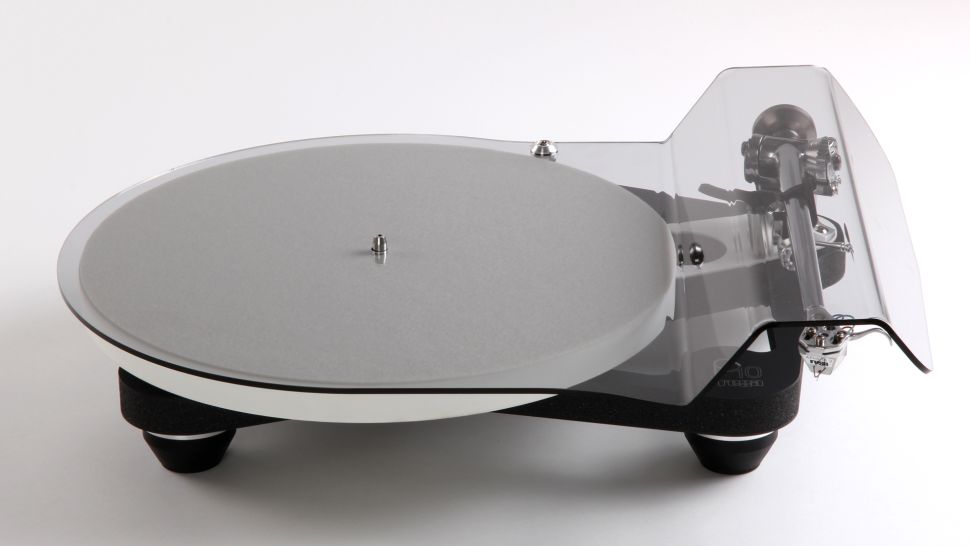
“The Planar 10/Apheta 3 resolves a great deal of detail but never comes across as overly analytical. All that information is presented in a coherent and wholly musical way. It simply helps to communicate the music’s message rather than impress in its own right.
Moving to Bob Marley’s Catch A Fire reinforces our impression of a rhythmically coherent sound but also shows that the package has an expressive and clear midrange. Marley’s voice comes through with clarity and passion on Concrete Jungle, while the backing instrumentation is presented with an insistent drive that has our feet tapping instinctively.”
Elac Carina BS243.4 loudspeaker Review
January 3, 2020 Comments Off on Elac Carina BS243.4 loudspeaker Review
https://www.stereophile.com/content/elac-carina-bs2434-loudspeaker
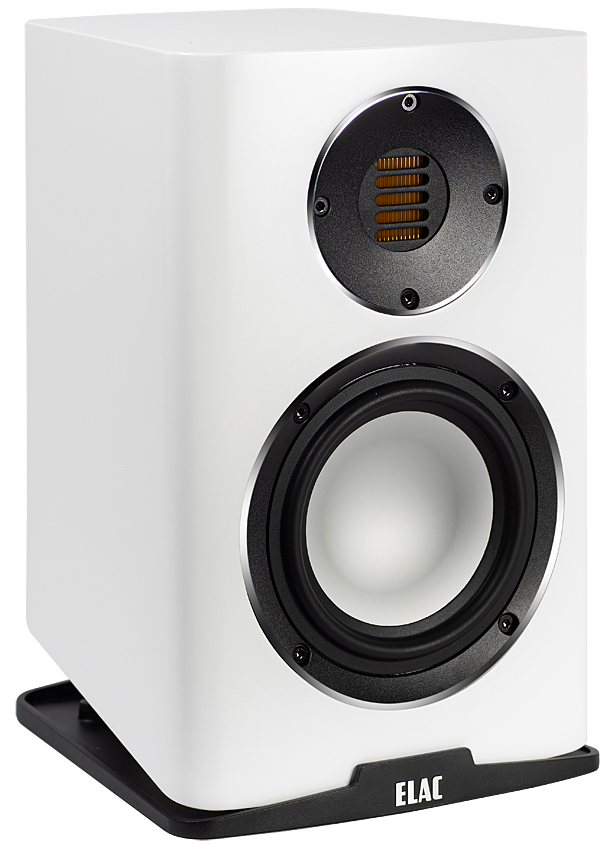
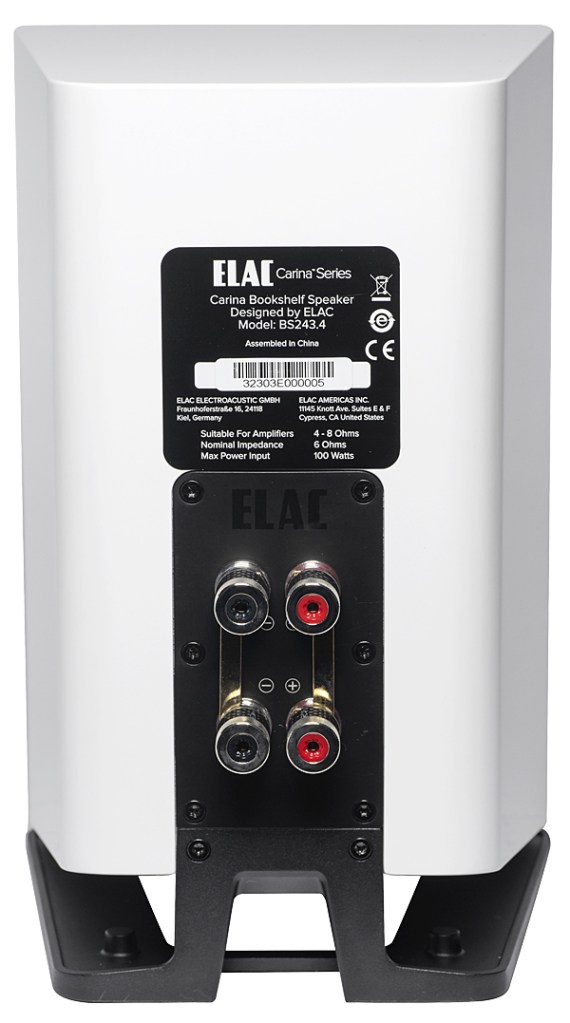
“I had high hopes for the Carina BS243.4 with Schiit’s new $799 Aegir power amplifier. If this combo could play demonstration-quality recordings with demonstration-quality sound, a better place.
I already knew the Elacs could do elegant and refined, but there remained in my mind some X-factor, some sonic issue I was not quite noticing. I felt this because, while I listened, my brain kept scanning the soundfield for anomalies, trying to decide whether the BS243.4s can focus and image with sufficient precision. I realized that, despite the Elacs’ good dispersion—or perhaps because of it—toe-in was working like the focus ring on a camera lens. But unfortunately, at this point in the review, my brain could not decide when the best focus had been achieved.”
JL Audio E-Sub E110 10” Active Subwoofer Review
January 3, 2020 Comments Off on JL Audio E-Sub E110 10” Active Subwoofer Review
https://www.stereo.net.au/reviews/jl-audio-e-sub-e110-10-active-subwoofer-review
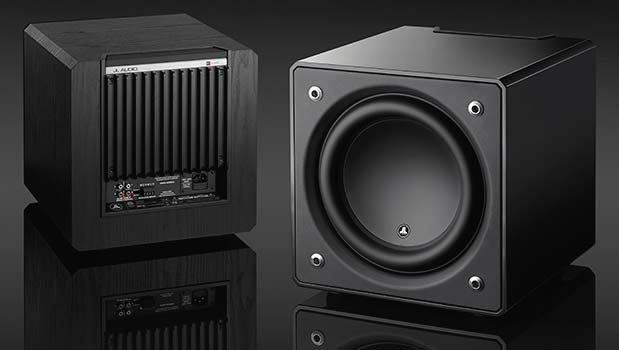
While the e110’s modest 343x362x419mm dimensions can easily be characterised as svelte – at least in the world of subwoofers – its weight of nearly 24kg is anything but. Indeed it’s a very sturdy product, one that you wouldn’t want to drop on the cat. Understandably perhaps, it arrived double boxed, and this opened up to reveal the e110 inside a soft synthetic bag to protect its finish. Fully unpacked it was clear that it had a beautiful finish, in striking high-gloss piano black lacquer. I liked this very much indeed, but its reflective nature could be distracting in a dedicated theatre if that’s where you plan on using it.
The sealed cabinet – with an internal volume of 2.1 litres – has tapered edges, rather than the rounded edges now commonplace with many manufacturers. While notably different, this does give the sub a slight octagonal appearance. Removing the cloth speaker grille reveals the driver which has both the JL Audio logo, and a somewhat concave appearance. The rear is dominated by a grille, below which reside line-level inputs and outputs and high-pass inputs. The controls are on top of the cabinet at the back of the sub. It’s here that you’ll find a two-way low pass/high pass active crossover for integration into stereo systems that lack bass management. The e110 also offers a variable crossover from 25 to 130Hz, and 0- to 280-degree phase control for use when connected to an AVR’s subwoofer output. Volume and power controls, as well a switch to defeat the sub’s internal crossover, complete the picture.
PrimaLuna EVO 400 Preamplifier Review
January 2, 2020 Comments Off on PrimaLuna EVO 400 Preamplifier Review
https://www.tonepublications.com/review/the-primaluna-evo-400-preamplifier/
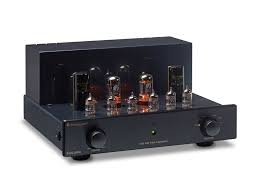
“The EVO 400 provides this in abundance. Yet, where some tube components take this to an extreme, where it is so lush and romantic, dynamics and resolution suffer, the EVO 400 is a modern tube preamplifier. Most tube families have their own voice – the 6922/6DJ8 based units have one range of sound, those based on the 6H30 another, and the 12AX7/12AU7 still another. There are even a few designs based on the 300B tube.
Without going into an endless playlist of tracks, the EVO 400 is definitely rich in tonal saturation and contrast without over embellishing. Great recordings sound great, yet mediocre recordings sound pretty good, unlike some overly “tubey” preamplifiers, where everything sounds pretty good, yet nothing sounds brilliant. All of your favorite audiophile clichés apply to the sonic landscape painted by the EVO 400: big, broad, three dimensional. This is that “reach out and touch – it” feeling that tubes accomplish with ease.”
Does Amazon Music HD Make the Grade?
January 2, 2020 Comments Off on Does Amazon Music HD Make the Grade?
https://www.soundandvision.com/content/hands-does-amazon-music-hd-make-grade
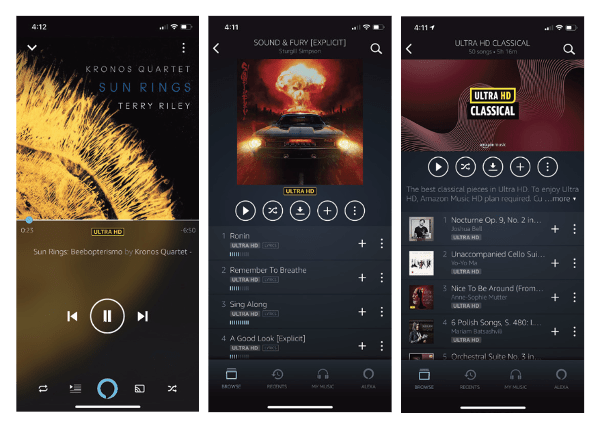
“Next, I shifted gears and cued up Van Morrison’s seminal 1968 offering, Astral Weeks (24/48). So many haunting, moving choices here, but the final track, “Slim Slow Slider,” has always been a particular favorite. I loved how John Payne’s counter soprano saxophone line wafted from the right channel into the left, playing off Van the Man’s otherworldly vocal delivery. Even the notable string buzz at 2:50 sent a chill down my spine.
Recently, I caught a rerun of Saturday Night Live hosted by comedian Chris Rock from November 2014, which featured the late Prince as the musical guest. The uninterrupted 8-minute medley performance by The Purple One and his then-backing band 3rdeyegirl was beyond electrifying. Would Amazon HD have each song from said medley in HD? Must be a sign o’ the times, because they sure did, so I created a Prince SNL playlist to give them all a proper spin”


You must be logged in to post a comment.