FELIKS AUDIO EUFORIA AE REVIEW
December 28, 2019 Comments Off on FELIKS AUDIO EUFORIA AE REVIEW
https://www.headfonia.com/feliks-audio-euforia-ae-review/
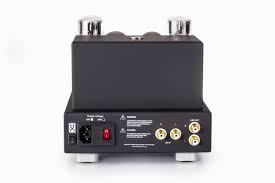
“Feliks Audio is a family, boutique manufacturer of hand-crafted tube amplifiers, with over 20 years of audio solutions development experience. All their products are in-house engineered, tuned and assembled at their site in Lubliniec (Poland). They create special and unique designs, blending together technology and tradition. Originally, Feliks Audio focused mainly on custom made amplifiers tailored to client’s order. Over the time we they developed many innovative and sophisticated audio solutions. Thanks to that they have gained valuable knowledge and experience across broad range of applications. Their amplifiers, among them Espressivo, Elise and Euforia, have won many supporters across the world. Their products offer a perfect blend of passion for honest sound, great attention to technical details and beautiful finish. Feliks Audio follows design simplicity, minimizing the number of elements in projected signal path. Thanks to this approach they ensure that the sound produced by our devices is pure and true”

AudioQuest DragonFly Cobalt USB DAC/Headphone Amp Review
December 27, 2019 Comments Off on AudioQuest DragonFly Cobalt USB DAC/Headphone Amp Review
https://www.hifinews.com/content/audioquest-dragonfly-cobalt-usb-dacheadphone-amp
“The latest arrival in the DragonFly range is a huge step up from the already impressive Black and Red models, being capable of levels of performance that are nothing short of stellar. Fast, weighty, dramatic and super-clean, the sound is superb with portable devices, and more than impressive enough for ‘main system’ use, too – at which point it will be embarrassing many a larger, and pricier, rival.”

KLH Ultimate One Headphones Review
December 27, 2019 Comments Off on KLH Ultimate One Headphones Review
https://www.hifinews.com/content/klh-ultimate-one-headphones
“One positive about the cable is that – despite a braided sheath – it does not generate high levels of capsule noise when it rubs against clothing or furniture. This may well have something to do with the Ultimate One’s structure being well damped at high frequencies but there is evidence – subjective and objective – of headband resonance at lower frequencies. This is at sufficiently low level that there’s no obvious coloration of pink noise played over one capsule only, but some carry-over of sound towards the inactive capsule can still be heard. Measurement confirms that the headband does resonate at low frequencies, most obviously when it is lifted off the artificial head. The dip in response at 60Hz appears to be associated with one of these resonances, as does the response glitch just above 1kHz.”

NAD Masters Series M10 streaming integrated amplifierReview
December 26, 2019 Comments Off on NAD Masters Series M10 streaming integrated amplifierReview
https://www.stereophile.com/content/nad-masters-series-m10-streaming-integrated-amplifier
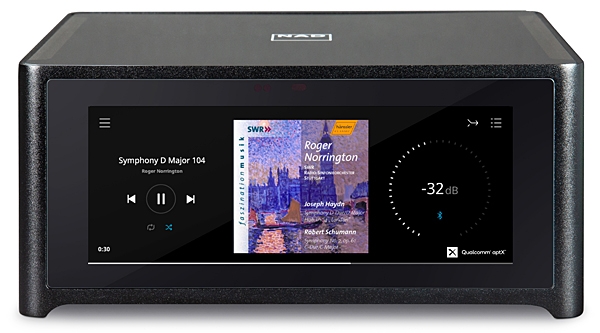
“Before installing the M10 in my system, I had been listening to my resident pair of KEF LS50s driven first by a pair of Lamm M1.2 Reference monoblocks, then by the Vandersteen M5-HPA monoblocks I had used with the Vandersteen Quatro Wood CT loudspeakers that I reviewed in the November 2019 issue. The latter had their high-pass frequency set to 20Hz so they would, in effect, be driving the KEFs virtually full-range. As you might expect, these very much more expensive amplifiers—the Lamms cost $32,490/pair, the Vandersteens $15,800/pair—set a high bar for the M10. Both made the KEFs sound considerably larger, more authoritative than you might expect from what are relatively small speakers. In particular, the Vandersteen M5-HPAs proved a particularly synergistic if unlikely match. I further explore the performance of this amplifier in my review of the Q Acoustics Concept 300 elsewhere in this issue.”
Wilson Audio Specialties Sasha DAW loudspeaker$37,900 Review
December 25, 2019 Comments Off on Wilson Audio Specialties Sasha DAW loudspeaker$37,900 Review
https://www.stereophile.com/content/wilson-audio-specialties-sasha-daw-loudspeaker
“With the speakers now set on large plastic furniture pads, we moved them in carefully measured half-inch increments from front to back and side to side; at each spot, McGrath would stop to listen and make notes. These included distance from the front wall and numerical grades—1 being worst, 5 being best—in five categories: Low, Low Mid, Upper Mid, Bloom, and Dynamics. McGrath is a tough grader: In only one position out of 13 did he assign three or more points in all five categories. The magic spot was 42.5″ from the front wall. This was only a bit more than 4″ farther from my listening chair than the speakers were initially, slightly farther apart, and more toed in than the speakers they replaced—and quite close to an equilateral triangle with respect to my chair. Grilles on or off? They were in place when McGrath first arrived, but he wanted me to take the grilles off. We also leveled the speakers once they were set—all the floors in my old house go in different directions. This improved the stereo sound- stage balance and detail.”


Continuum Obsidian/Viper Turntable/Arm Review
December 25, 2019 Comments Off on Continuum Obsidian/Viper Turntable/Arm Review
“What the eye also doesn’t see is that the entire arm mechanism is magnetically attached to the base of the Obsidian, using tungsten contact points instead of fixed mechanical means, eg, bolts or screws. Continuum says that, ‘In a sense, the mechanism floats on these tungsten contact points’. Tungsten is also used in the bearing shaft, the bearing itself being a magnetically-opposed, if non-floating design. Continuum fits a 60V, servo-controlled, ‘zero-cogging DC motor’ designed and constructed specifically to accommodate the Obsidian’s platter and which is said to possess the highest power currently available in a motor of its size. The motor – dubbed ‘The Quiet One’ – uses stainless steel, pre-loaded ball bearings, and graphite brushes for better current conductivity when driving a heavy platter. Best of all, the motor is indeed super-quiet, and gets up to speed quickly./”

Zappiti 4K HDR Media System Review
December 25, 2019 Comments Off on Zappiti 4K HDR Media System Review
https://www.soundandvision.com/content/zappiti-4k-hdr-media-system-review
The heart of the system is the Zappiti Video media player software, which runs on an Android-based processor. Zappiti Video is common to all players, but some features are reserved for the Pro model, including direct output of the video source resolution rather than a fixed-resolution output. The software has its own image enhancement to improve the look of lower-res media plus HDR-to-SDR conversion for playback on displays that don’t support 4K/high dynamic range. The only real compromise I noted was a lack of Dolby Vision support, a feature that’s also missing from high-end media player solutions like Kaleidescape

Fiio M11 Pro Digital Audio Player
December 24, 2019 Comments Off on Fiio M11 Pro Digital Audio Player
O”verall, Fiio have created a strong contender within the realm of digital audio players. The M-series of DAPs takes it a step further with an even more cohesive UI, beautiful aesthetics, and strong sound profile. Many users such as myself are happy with the inclusion of streaming services like Tidal and Spotify, which not all DAPs have the functionality to offer. Coupled with the powerful amplifiers and neutral but refined sonic presentation, the M11 Pro is an all-in-one solution equipped to service the modern audiophile’s needs. It will be intriguing to see what the Chinese audio firm will be next to release. Do stay tuned”

DUNU DK-3001 PRO $469 REVIEW
December 23, 2019 Comments Off on DUNU DK-3001 PRO $469 REVIEW
https://headfonics.com/2019/12/dunu-dk-3001-pro-review/
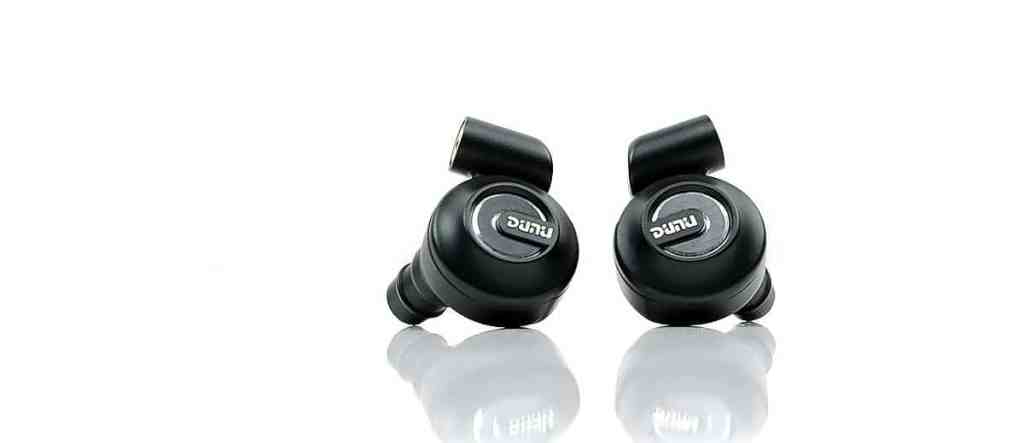
“How you receive and react to the bass response of the DK-3001 depends a bit on experience and expectation. One might think a 13mm dynamic driver would chuck out tons of coloration and smash something like the ultra-V shaped heavy-hitting Polaris 2 out of the park. That is not the case here with the DK-3001 PRO. This is a very linear and controlled low-end with a lighter than expected overtone.
Whilst the timbre is still a dynamic driver DUNU seems to have done an admirable job of reducing the worst excesses of dynamic drivers. That means it is fairly quick and tight sounding, very nicely layered and does not overpower the lower-mids with what I would describe as a very smooth transition from the upper bass into the lower-mids.”
Aurender ACS10 Music Server/Streamer/CD Ripper/HDD Storage
December 23, 2019 Comments Off on Aurender ACS10 Music Server/Streamer/CD Ripper/HDD Storage
http://www.theabsolutesound.com/articles/aurender-acs10-music-serverstreamercd-ripperhdd-storage/
“The primary reasons that the ACS10 is a closed system rather than a UPnP-compliant open system is for the control over all internal processes that a closed system can offer. Aurender’s position is that it can deliver superior stability with a closed system compared to an open one. During the review the ACS10 was tethered to the Mytek Manhattan II DAC’s USB input from the ACS10’s USB output.
All the D/A and USB conversion functions were performed by the Manhattan II’s DACs, as would be true of any DAC connected to the ACS10. When I compared Tidal, Qobuz, and my own hi-res and Red Book music files played back either via the ACS10 or via Roon or MControl to the also-Ethernet-tethered Mytek Manhattan II, I could not discern any sonic differences between the two different signal sources. At the worst I found the Aurender ACS10 using the Aurender “Conductor” app the sonic equal to the Roon-connected source during my listening sessions. “


You must be logged in to post a comment.