Aurender N100H Music Server Review
June 6, 2016 Comments Off on Aurender N100H Music Server Review
“How better to check out a component’s reproduction of the sound of a solo instrument than to play some solo piano music? I switched to Tidal and played Warren Mailley-Smith’s performance of Grieg’s Wedding Day at Troldhaugen, Op.65 No.6, from his album Rhapsody in Blue (16/44.1 FLAC, Sleeveless). The N100H’s ability to reproduce realistic dynamic contrasts made this recording sound better than anything else I’ve heard via Tidal. Splendid.”
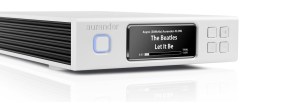
Aurender N100H Music Server $2699 Review
June 2, 2016 Comments Off on Aurender N100H Music Server $2699 Review
” My biggest quibble with Roon is that it lacks a Folder view, which would allow me to select individual files of the same name but different encoding. On the other hand, Roon automatically identifies and displays new albums I load onto my NAS. Roon isn’t perfect — no app in my experience is — but it found noticeably more album covers than Conductor. I preferred Conductor to the Roon remote for the iPad; it seemed easier to find albums when they were displayed by name. But the Roon remote running on my laptop computer seemed to equal Conductor. However, the laptop’s battery life was far shorter than the iPad’s, so for overall ease of use, Conductor was the winner. It also offered several more ways to sort albums. Nonetheless, Roon remains unparalleled in the amount of information it provides about the music in my collection.”
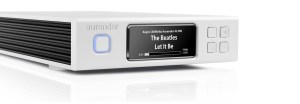
Aurender N100H Music Server Review
May 18, 2016 Comments Off on Aurender N100H Music Server Review
” Roon completely integrates music streamed from Tidal with music in your local collection. In Roon, music from Tidal appears right beside music in your local collection; there’s no need to switch between the local library and Tidal. The Search feature works on both your local collection and Tidal — type in what you’re looking for and Roon displays items from your local collection along with items from Tidal, the latter marked with a small Tidal logo in the upper left-hand corner of the album cover.”
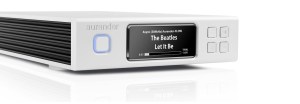
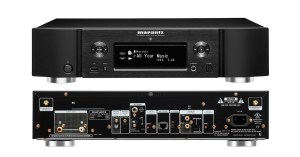
Marantz NA6005 Review
May 5, 2016 Comments Off on Marantz NA6005 Review
“Even if the Marantz NA6005, with its operational app-based upsets, sometimes tests our patience more than our analytical ears, it proves itself a decent and solid – if a little safe – sounding introduction into streaming for anyone on a budget looking to finally embrace digital and introduce network features into their system.”
Bluesound Node 2 Review
April 22, 2016 Comments Off on Bluesound Node 2 Review
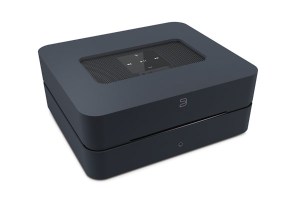
” Where the Node 2 falls short of separates is in resolution, nuance, color palate, micro detail, and macro pleasure. The Node 2 tends to make everything sound more similar than say the Auralic Vega DAC being fed its digits from the Node 2 via Toslink. Here, with a $3500 outboard DAC, music sounds more varied, individual voices sing out truer, and the overall sound image is more relaxed, better defined, and more natural sounding. I doubt anyone is surprised to learn this to be the case and it goes a long way in explaining the reason Bluesound includes those digital outputs. This comparison was a snap as the Node 2 outputs to both analog and digital simultaneously so all I had to do was select the related inputs from my Ayre remote.
Nativ Vita is the world’s first high-end music player
April 18, 2016 Comments Off on Nativ Vita is the world’s first high-end music player
“Nativ Vita is the world’s first high-end music player with a 11.6” touchscreen and pioneering user interface to conveniently access all of today’s music. Play popular streaming services such as Apple Music, Spotify or Tidal directly from the built-in LCD, and stream stunning music videos to your TV via HDMI or wirelessly with Google Cast. Nativ Vita supports Apple Airplay, Spotify Connect, Google Cast and Bluetooth aptX for seamless integration of your mobile devices, and plays music from your Mac, PC or NAS through its ultra-fast 802.11ac and Gigabit networking technology. Network music libraries can also be navigated with the pre-installed music interface from Roon. Large music libraries can be stored directly on the built-in hard disk or SSD drives with up to 4TB capacity.

SOTM S-MS1000SQ MUSIC SERVER REVIEW
April 12, 2016 Comments Off on SOTM S-MS1000SQ MUSIC SERVER REVIEW
” Ultimately these are four distinctly different options with different target users in mind. Sounds like a cop-out on my part but it’s absolutely true. If I had to break it down I’d say it like so: the Auraliti takes the budget recommendation — at that price it’s up against stuff from Cambridge Audio and Marantz which do a fine job for what they are yet simply aren’t in the same class for audio quality. The only sonic competition might be a used Bryston BDP-1, which was designed by…. the folks at Auraliti. So there you go. The Aurender X100L is best for those who value the app experience, as well as users needing massive storage. You don’t often see 12TB of internal storage on these types of things. Oh, and it sounds fantastic as well. The B.M.C. PureMedia is best enjoyed as the centerpiece of a mixed use media/music setup. For those willing to master its myriad features, it’s a rewarding experience indeed. ”
Sonore Signature Series Rendu $2,895 Review
March 15, 2016 Comments Off on Sonore Signature Series Rendu $2,895 Review
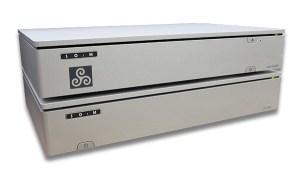
” Using the DirectStream Junio’s remote, I was able to remain in the listening seat and switch between I2S and USB, and using my iPad mini, I was able to switch between Lin’s Kazoo remote app and Aurender’s own app. Basically I would just let the same music play on both so that I could simply switch between inputs to do my comparisons.
AURALiC, streaming MQA, Xuanqian Wang intoduces the new app, Aries Mini – Video
February 26, 2016 Comments Off on AURALiC, streaming MQA, Xuanqian Wang intoduces the new app, Aries Mini – Video
Cary DMC-600SE Digital Music Center Reviewed
February 15, 2016 Comments Off on Cary DMC-600SE Digital Music Center Reviewed
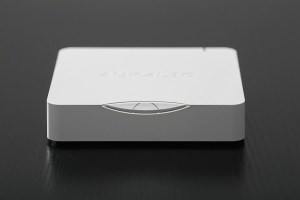
” Unlike the upsampling-rate feature, the sonic differences between the tube and solid-state outputs were easily discernable regardless of the source, sample, or bit rate. Part of this was due to the differences in output levels–the tube output is several dB less loud than the solid-state output. However, even when their relative levels are equal, the tube output sounded softer and sweeter, but with less dynamic punch and low-bass control and extension. The tube output also had a slightly richer lower midrange and upper bass, as well as a less analytical perspective overall. My own personal preference the majority of the time was for the solid-state output, but on aggressively mixed pop music, the tube output was a useful and welcome alternative.”

 Audiophilepure
You must be logged in to post a comment.