SMSL M300 MKII REVIEW
August 10, 2020 Comments Off on SMSL M300 MKII REVIEW
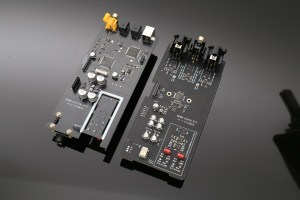
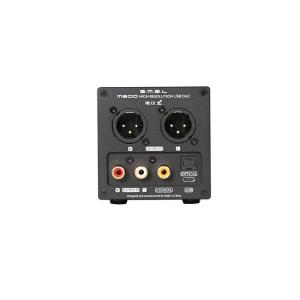
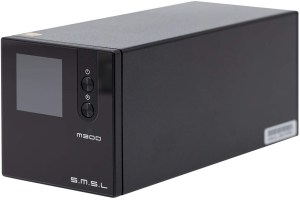
“The M300mkII has the AKM4497EQ’s characteristics. It sounds quite balanced across the spectrum. It has this effortless character, where everything happens to fall in its place. Coherency is the real key behind this tuning. Well done. While nailing this, the M300mkII also manages to maintain good control. Sub and bass regions are very tight and punchy. The midrange is very sweet. It has a semi-bold note weight and there’s definitely not lacking any body there. Upper mids are vivid with a pinch of sparkle. The high region however, is gentle. Brilliant clarity and spaciousness helps the dispersion of the high treble very well in the stage. I said gentle but think of it as Astell&Kern kind of gentle, definitely not rolled off kind. PRaT-wise it is also very competent. It can handle fast tracks very well when combined with an equally capable amp. As for the sound stage, you get a wide but not very deep stage. The distinction between the instruments is very clear. There is enough space between them so you can track them with ease. To sum it all up, I really like how the M300mkII is tuned.”
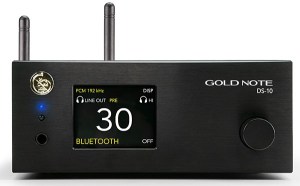
Gold Note DS-10 D/A processor Review
August 10, 2020 Comments Off on Gold Note DS-10 D/A processor Review
“For comparisons, I planned to use the Mytek Brooklyn DAC+ ($2195) and dCS Rossini DAC/Clock ($31,499 total plus three additional cables). While the Brooklyn DAC+ contains a headphone amp, which I compared to the DS-10’s, it does not accept Ethernet—for that, you need the Brooklyn Bridge streaming DAC ($2995), which I do not have here. Hence all comparisons between these two units were performed using the USB input on the two DACs. I also connected them to the MBL N11 preamp ($14,600) and attempted to answer the questions: (a) Does this preamp noticeably improve the sound of the DS-10, and (b) does its addition make more or less difference to the sound of the DS-10 than it does to the far more expensive dCS Rossini DAC/Clock combo? I also compared the DS-10/PSU-10 EVO to the Rossini DAC/Clock, both with and without the N11 preamp in the chain.”
EMPIRE EARS ODIN REVIEW
August 9, 2020 Comments Off on EMPIRE EARS ODIN REVIEW
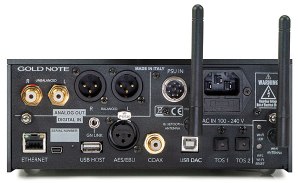
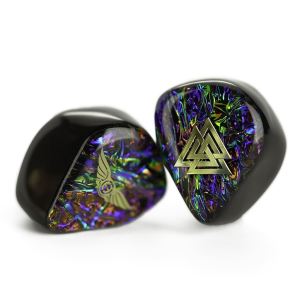
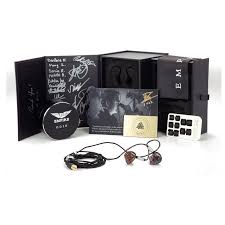
“Odin is Empire’s latest tri-brid monitor. It uses a set of two Weapon IX+ dynamic drivers. These are developed in house and feature a front and back-firing vent design. This is a common technique from two-channel HiFi, but hasn’t been done much in our parts. The Weapon IX+ drivers are a new version of their W9 drivers. The difference being that the W9+ is 1.2mm bigger in diameter, making them 10.2mm in size. One W9+ driver takes care of sub-bass while the second handles bass. The Odin uses five proprietary balanced armatures for low-mids (two), dual mids and a single high mid BA. On top of that they opted for a quad electrostatic/electet driver. This quad set uses a single transformer, as they are easier to push. The four estat/electet drivers take care of highs and super highs.
With a head-scratching low impedance of just three Ohms and a sensitivity of 108dB per mW, the Odin is very easy to drive. Unlike Wraith or Phantom, it isn’t very hiss-sensitive though. One thing I noticed with the Odin is its dependency of sources. It does certainly like ultra-low impedance sources such as the Hugo2. Which also is the confirmed device that EE uses to tune their monitors.
McIntosh Laboratory C1100 Preamplifier $14,000 Review
August 9, 2020 Comments Off on McIntosh Laboratory C1100 Preamplifier $14,000 Review
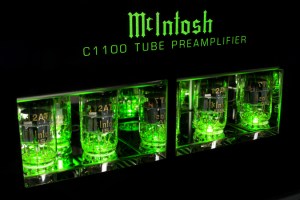
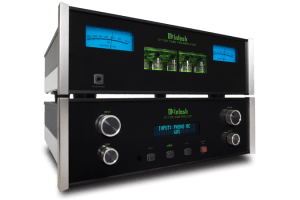
“McIntosh Laboratory’s C1100 is a captivating-sounding preamplifier, and a worthy successor to the C500 and C1000. Designed to be the center of any high-quality audio rig, the C1100 offers myriad analog and control connections, MC and MM phono stages, exemplary build quality, luxurious yet intuitive ergonomics, and a rich, inviting sound. Moreover, the C1100 is very competitively priced; at $14,000, it costs $3000 less than the C1000, and to get the same level of functionality from other preamplifiers of this ilk, you’d likely have to pay more. I thoroughly enjoyed my time with the C1100; it spoiled me every time I touched it, and captivated me every time I listened to it. Highly recommended.”
KEF KF92 REVIEW
August 9, 2020 Comments Off on KEF KF92 REVIEW
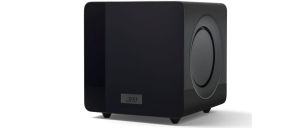
“The correct position of the Crossover Mode switch will depend on where you are sourcing the audio signal you’re using to drive the KF92. If it’s from a component that is supplying an audio signal that has already been through a low-pass filter (such as the LFE output of an AV receiver, for example) you’d set this control to ‘External’. If you’re sourcing from an ordinary line-level or speaker-level output, you’d set it to ‘Internal’, and then set the low-pass (crossover) rotary control to the appropriate frequency.
KEF’s equalisation mode control is fascinating. I don’t think I’ve seen its like before. Yes, I’ve seen EQ mode controls that offer two or three modes, (usually ‘Off’, ‘Wall’ and ‘Corner’) but I have never seen one that offers five modes… and I had absolutely no idea what the ‘Apartment’ mode might be used for – indeed I had to consult KEF’s Owners’ Manual to find out.”
Mark Levinson No.333 power amplifier $8495 Review
August 7, 2020 Comments Off on Mark Levinson No.333 power amplifier $8495 Review
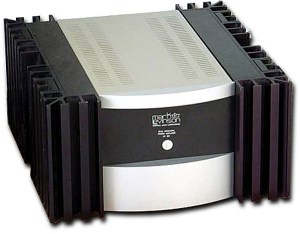
“An area where the No.333 excelled was dynamics. I never got the sense that I was running out of headroom, even on high-level, percussion-heavy recordings. Yet, perhaps more important for a high-power amplifier, the Levinson remained transparent at very low levels. Often, the designer’s need to use multiple pairs of transistors to obtain the combination of high output voltage and output current results in a murkiness at low levels. This wasn’t the case with this amplifier: in the performance of the Brahms Horn Trio on Stereophile’s Serenade CD, there is a magical moment when horn soloist Julie Landsman (first chair of the Metropolitan Opera Orchestra) and violinist Sheryl Staples (associate concertmaster at Cleveland) are playing the slow movement’s theme triple-pianissimo. When I made the recording at the 1995 Santa Fe Chamber Music Festival, I tried to capture the full dynamic range of the live sound, which meant that this elegiac passage peaks at no more than –50dBFS. Yet with the Levinson driving the B&W Silver Signaturess, you could easily hear the slight unevenness in the violin tone that results from the player not using vibrato and drawing the bow very slowly across the string. This is one transparent amplifier.”
SVS Prime Pinnacle Loudspeaker £1995 Review
August 7, 2020 Comments Off on SVS Prime Pinnacle Loudspeaker £1995 Review
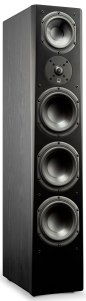
So where’s the trade-off that the Prime Pinnacle’s price tag implies? Sure, there’s a sense that treble definition could be sharper, which robs tracks of that top layer of incisiveness, and the superb driving nature of its low-end isn’t matched by the same forcefulness higher up the frequency band. As such, the astonishing lead solo in Pink Floyd’s ‘Comfortably Numb’ [The Wall; EMI 50999 028944 2 3] sounds a little shy, Dave Gilmour’s axe not so much cleaving through the instrumentation as gliding across it.
This is hardly a blot on the copybook for, as well as being nuanced, authoritative and weighty with bass, these SVS’s floorstanders are very effective at creating soundstage depth and width.”
The Drop + Audio Technica Carbon VTA
August 7, 2020 Comments Off on The Drop + Audio Technica Carbon VTA
Raidho TD2.2 Loudspeaker £38,000 Review
August 6, 2020 Comments Off on Raidho TD2.2 Loudspeaker £38,000 Review
“And bass? Neither the cabinet volume nor drivers are especially capacious but the TD2.2 still digs impressively deep while very rarely biting off more than it can chew. The signature drum programming that powers Gorillaz’ ‘Dracula’ [G Sides; Parlophone, 44.1kHz/24-bit] takes these Raidhos as far as they will comfortably go, while the opening of ‘Faust’ moves them just a little bit further still – no overt bloom or boom here but there is some loss of rhythmic composure. Time to back off the volume control.
The TD2.2s seem otherwise quite at home penetrating and untangling the densest of mixes. Their ability to convey energy without chaos was ideally suited to a session listening to Jimmy Page’s latter-day remastering of Led Zeppelin’s Presence, the band’s seventh album also produced by Page back in 1975-76 [Warner Music 0081227955724; 96kHz/24-bit]. The album, free of keyboards, still sounds raw but the multiple, over-dubbed guitars have a greater clarity in this 96kHz rendering – a quality not lost on the TD2.2s.”
Akitika GT-102 Power Amplifier $488 Review
August 6, 2020 § 1 Comment
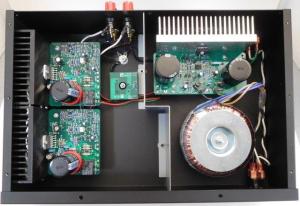
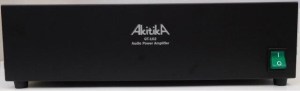
“Just when I’ve been moaning to myself about how expensive everything has gotten in high-end sound, the Akitika GT-102 comes along and blows that complaint out of the water. It ain’t perfect, but it is a satisfying amplifier if you match it properly. Dan Joffe’s design and implementation proves you don’t have to be a one percenter to play in the high-end audio game. The assembled, tested, GT-102 amp goes for $488 plus $26 shipping in the lower 48 states. The kit version is $314 (really?) plus $26 shipping in the lower 48 states.”
 Audiophilepure
You must be logged in to post a comment.