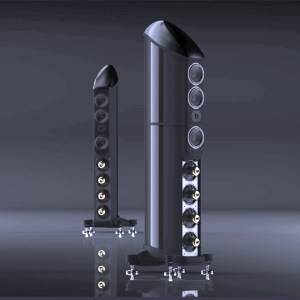
Wilson Benesch • Eminence Loudspeakers $235,000 Review
June 10, 2020 Comments Off on Wilson Benesch • Eminence Loudspeakers $235,000 Review
“The first point to make is that there are two distinct types of coloration, additive and subtractive. A little like odd and even-order distortion, subtractive coloration is relatively benign, whereas even small amounts of additive coloration can (and often do) wreak havoc. That’s because of the different ways in which they impact on the sense of the musical signal. The notes and different instruments in a recording constitute a three-dimensional pattern, laid out in space, time and amplitude. That pattern is what separates music from noise; it’s what a system is trying to reproduce and what our brain is trying to recognize. Subtractive distortion, as long as it is not too gross or specific, will diminish the scale or scope of that pattern, but leave it essentially intact. Once you start adding things to the pattern, especially because additive distortion is so often frequency-specific, you start to bend the pattern out of shape, so that it no longer makes sense. A bit of stored energy in a cabinet, arriving later than intended and at the wrong frequency? An energy spike in the structure of a poorly designed driver? Excessive bass output at particular frequencies? You can hear how they serve to alter not just the relative weight or amplitude of notes but their timing too — and that’s where things get destructive.”
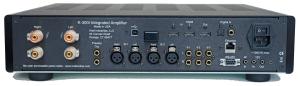
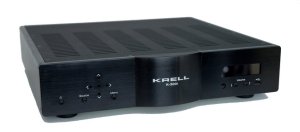
KRELL K-300I INTEGRATED AMPLIFIER £7,500 REVIEW
June 10, 2020 Comments Off on KRELL K-300I INTEGRATED AMPLIFIER £7,500 REVIEW
“Drawing on its well of power and coupling it with notable resolution proves to be a winning combination for the K-300i. It has even found favour with Naim Audio die-hards (no easy task), who view the K-300i as something akin to a ‘SuperDuperUniti’. So, purely as an integrated amplifier, the Krell-300i is a winner. The Krell has an excellent taut tonality that stays this side of ‘lean’, has power to burn and can deliver it into all sorts of speaker loads with speed and sure-footed dynamic stability. Like all good amps, it imposes itself on the music yet never gets in its way and the 150 watts into 8 ohms is going to be ample for all but the more extreme systems and locations. So far, so good, but the K-300i becomes a different proposition entirely with the addition of the digital board, and for the extra outlay, it is well worth it. Audiophile-grade streaming is a growing area of the market and incorporating all the electronics into a single component is going to be attractive to many people. If you’re one of them, you should certainly put the Krell K-300i on your audition shortlist. ”
VISION EARS EVE20 REVIEW
June 9, 2020 Comments Off on VISION EARS EVE20 REVIEW
“Unfortunately I don’t have the VE6 here as Nathan was the lucky one who did that review, but I do have the award winning VE8. Compared to the VE8, the EVE20 has a less emphasized lower range section and bass and mids in the VE8 have a fuller presence with a higher level of warmth. Where the VE8’s bass and treble have a bigger contrast, this in the EVE20 is more linear. EVE20 does sound more clear as well as more spacious/airy. The VE8 is all about body and impact where the EVE20 is more refined in technicalities. The VE8’s low have a good sub rumble but while the EVE20 reaches down low as well, the rumble can’t be found there. The treble section of the EVE20 sounds more energetic to my ears, or at least it comes out more because of the mids and bass being lighter in weight. So personally I wouldn’t say both of these monitors are close to each other, but they are family for sure.”


Aavik Acoustics U-380 integrated amplifier $39,000 review
June 9, 2020 Comments Off on Aavik Acoustics U-380 integrated amplifier $39,000 review
“Without question, the Aavik Acoustics U-380 integrated amplifier delivered the finest class-D sound that I’ve ever heard in my system. Beyond the strong and superbly controlled bass that I’ve come to expect from amplification of its class, it also exhibited an uncommon range of color, dynamics, and detail. While a slight dryness of timbre and lack of ultimate brilliance were evident, they manifested in a context so musical as to render their ultimate effect perfectly suited for extended listening. To put this in some sort of context, speaking from direct experience, the difference in timbre, color, liquidity, and brilliance of the San Francisco Symphony in SF’s Davies Symphony Hall and Seattle’s Benaroya Hall is far greater than the sonic differences between the Aavik U-380 and the other integrateds I’ve auditioned.”
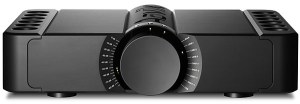
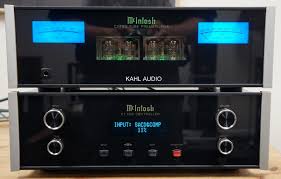
McIntosh Laboratory C1100 Preamplifier $14,000 Reviews
June 8, 2020 Comments Off on McIntosh Laboratory C1100 Preamplifier $14,000 Reviews
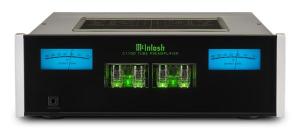
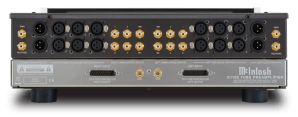
McIntosh Laboratory’s C1100 is a captivating-sounding preamplifier, and a worthy successor to the C500 and C1000. Designed to be the center of any high-quality audio rig, the C1100 offers myriad analog and control connections, MC and MM phono stages, exemplary build quality, luxurious yet intuitive ergonomics, and a rich, inviting sound. Moreover, the C1100 is very competitively priced; at $14,000, it costs $3000 less than the C1000, and to get the same level of functionality from other preamplifiers of this ilk, you’d likely have to pay more. I thoroughly enjoyed my time with the C1100; it spoiled me every time I touched it, and captivated me every time I listened to it. Highly recommended.”
Audiovector R1 Arreté $5500 review
June 8, 2020 Comments Off on Audiovector R1 Arreté $5500 review
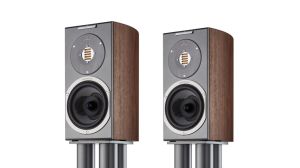
“It really is impressive just how bold and confident these speakers are when challenged with the music’s savage dynamics and dense instrumentation. The R1s stay composed even when pushed hard and barely harden-up in such circumstances.
Detail levels are as high as the price point demands, but the Audiovector’s musically cohesive way of assembling all that information really impresses. These are the kind of speakers that allow you to analyse the production of a recording if you want to, but they’d rather you step back and enjoy the musical experience.
When we listen to this Stravinsky piece we’re wrapped up in the musical drama rather than wondering about the mechanics of the recording. That’s just as it should be in our view”
 Audiophilepure
You must be logged in to post a comment.