dCS • Rossini 2.0 Digital Playback System $24,000 Review
November 3, 2019 Comments Off on dCS • Rossini 2.0 Digital Playback System $24,000 Review
“What this truthfulness emphatically does not mean, however, is that nothing stands out in Rossini 2.0’s intrinsic sound. It displays impressive speed, bass depth and power, midrange color and heft, and an inherently natural way with tone and transients. It’s more transparent, and less obtrusive, than any collection of digital electronics I’ve heard, other than the Vivaldi 2.0, that is. It’s just that, on the one hand, it revels in the fireworks of Keith Richards’ Main Offender [Virgin V2-86499] as readily as the gentle, lilting instruments lines of Thelonious Monk’s Plays Duke Ellington, so nailing it down to a base signature is difficult, if not impossible. Yet, the resolution is so high that discerning the differences between the JVC K2 remaster of the Monk album [Riverside RCD-201-2] and the earlier regular issue [Riverside OJCCD-024-2] is a cinch, with the remaster displaying meatier individual notes — a virtue with Monk’s playing — and a more up-front and vivid presentation.”

Elac Alchemy DDP-2 Pre-amp, DAC, streamer
October 17, 2019 Comments Off on Elac Alchemy DDP-2 Pre-amp, DAC, streamer
CHORD ELECTRONICS HUGO TT 2 DAC/M SCALER UPSCALER REVIEW
September 26, 2019 Comments Off on CHORD ELECTRONICS HUGO TT 2 DAC/M SCALER UPSCALER REVIEW
“I enjoyed similar benefits when I played the ‘Triptych (Excerpt)’ from A Company of Voices – Conspirare in Concert [Harmonia Mundi, 16/44.1]. This exuberant and syncopated piece for percussion ensemble and concert choir is not one that is easy for most DAC’s to handle, in part because of the large-scale dynamic swings involved and the perhaps slightly over-modulated choral swells that at times threaten to become ragged and strained. However, with the M Scaler assisting the Hugo TT 2, the timing and timbres of the percussion ensemble instruments improved dramatically, with more incisive transient sounds, rounder tonalities all around, and the all-important qualities of ‘swing’ and dynamic ‘jump’ in evidence. Individual choral lines also became clearer and more intelligible, while the potentially problematic vocal swells sounded better controlled and more expressive, with elements of congestion mostly (though not entirely) cleared up. In addition, the sounds of the concert venue were captured more realistically (I can say this with some conviction because I was present in the hall on one of the evenings when the recording was made) and with appropriate stage width and depth. Once again, the M Scaler/Hugo TT 2 pair made an already good recording sound a whole lot better.”
« Previous1234Next »

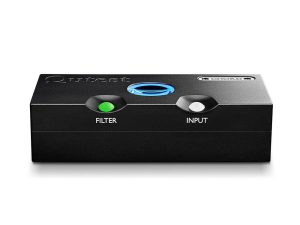
Chord Electronics Qutest DAC Review
September 17, 2019 Comments Off on Chord Electronics Qutest DAC Review
”
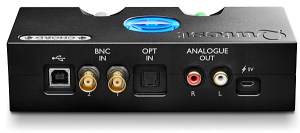
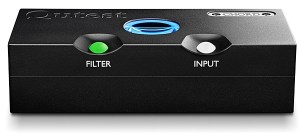
I connected the Qutest to said auxiliary battery supply figuring that, now the Qutest is being powered exactly like the Hugo 2. So if it’s in some way the pure DC from a battery that’s accounting for the difference in sound performance I was experiencing, this should level the playing field. Again, I noticed no difference between the Qutest on battery power and the Qutest on mains-derived 5 V USB power. There has to be some other reason why these two supposedly identical D-to-A circuits sounded so different. All other things being equal the difference would almost have to be in each unit’s analog output stage. I have no way of knowing how the two line-level output stages differ, but clearly they do. The web-site spec sheets are no help as the Qutest shows the specs for the line-level output and the Hugo 2 spec sheet shows the specs for the headphone driver amp – which when listening through the line-level outputs has no relevance to to the Qutest output.”
dCS Bartok DAC $13,500 Review
September 11, 2019 Comments Off on dCS Bartok DAC $13,500 Review
”
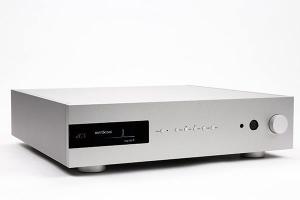
Returning to our original conversation, you don’t have to be an aristocrat to have a dCS Bartok of your very own. If you love music, and you want a top-quality digital front end that will offer enough performance to stay put, the Bartok is a winner. The performance that it provides more than justifies the price asked. dCS has put a considerable helping of their top technology in a package that outperforms many far more expensive boutique DACs.”
AudioQuest’s DragonFly Cobalt Review
August 5, 2019 Comments Off on AudioQuest’s DragonFly Cobalt Review
Schiit Audio’s Modi Multibit DAC Review
July 31, 2019 Comments Off on Schiit Audio’s Modi Multibit DAC Review
CHORD ELECTRONICS QUTEST DAC REVIEW
July 12, 2019 Comments Off on CHORD ELECTRONICS QUTEST DAC REVIEW
“Every manufactured chip has limitations and generally made to a price point and design criteria. The chip cannot be auditioned before production, and although it is logically and mathematically sound, you have to wonder if they’re designed with the utmost sound quality in mind?
At Chord Electronics, things are done a little differently. Rob Watts’ FPGA (Field Programmable Gate Arrays) approach allows him to design digital circuits with total control over the hardware. So by designing a DAC using FPGA and discrete analog components, it is possible to have increased flexibility over the rigid performance aspects compared to typical off-the-shelf DAC chips.
Watts’ considered approach to ultimate DAC design is to utilise far more complex calculations than was ever thought to be needed, with unheard of long interpolation filters which he designs using what’s known as a windowed-sinc technique. He calculated that a 1,000,000 tap filter (with the number of taps being the indicator of how complex the FIR filter is) is needed to guarantee 16-bit performance from the interpolation filter, a number that was so inconceivably high that many thought that it would be impossible to build. ”


You must be logged in to post a comment.