Little DOT LD H1 $1,399 Review
November 28, 2020 Comments Off on Little DOT LD H1 $1,399 Review
Little Dot LD H1 Review
According to Little Dot, the fully discrete, symmetrical, pure class A amp circuit has better transient response and lower cross distortion than the asymmetric circuit, which makes the sound quality more sweet. You can find out more about the LD H1 hybrid design philosophy and the impact of it on the “sound” on the Little Dot product page. The beauty of a hybrid amp is that it in theory can drive headphones with an impedance between 16 and 600Ohm. We’ll be looking at the sound part later in this article.
The Little Dot LD H1 has a single ended RCA input, a 3-pin XLR input as well as a balanced 3-pin preamp output. Headphone-wise it has a 4-pin XLR balanced output and 6.35 SE output. Internally the LD H1 uses top quality components such as Philips BC Components electrolytic and coupling capacitors, as well as dedicated (German) Mundorf MCap EVO audio coupling capacitor.


J.SIKORA STANDARD MAX BLACK 14,770 EUR REVIEW
November 27, 2020 Comments Off on J.SIKORA STANDARD MAX BLACK 14,770 EUR REVIEW
https://www.monoandstereo.com/2020/10/jsikora-standard-max-black-turntable.html
Analogue could still be seen by many as a radically different medium compared to digital technology. It has its qualities, but at the upper level of the 21st century, the differences are not as great as they were a few years ago.
The younger generation, born and grew up in the digital world, is wrongly generalized as unfathomable for the analog. Many of them are rediscovering the vast musical heritage of vinyl records and going even further by trying to find music that was never released in the digital realm.
The analog is not cemented in the older generation. It finally broke out of the mold. As with books, there is a positive trend towards recognizing the qualities of the analog medium and a deeper appreciation of the physical interaction with record and album covers. “

KINERA FREYA REVIEW
November 27, 2020 Comments Off on KINERA FREYA REVIEW
Treble is of course not on the same level as the Nanna but it’s still very impressive. The extension is well done and treble resolution is quite nice. There’s plenty of articulation and air. I think high frequencies are the best part about the Freya because it’s not easy to find this type of extension and articulation with sub-300$ earphones.
You gave good energy and brightness here as well as good transparency. Treble detail is good and highs overall are clean and crisp. I think the lower treble region is a bit boosted to improve overall clarity feeling, but the good part is that it’s not aggressive. The treble is under control and it’s not fatiguing.”


Rosson Audio RAD-0 Headphones Review
November 26, 2020 Comments Off on Rosson Audio RAD-0 Headphones Review
Rosson Audio RAD-0 Headphones – A Breathtakingly Musical, Aesthetically Customizable Headphone!
Despite the world that is swirling madly around, there is a wealth of riches about us in the form of millions of songs, available to all manner of electronic device, at home or on the go. And coupled with the growing array of playback devices and their next generation capabilities, there is a lot for us music lovers to be grateful for. That is, if we like the monk, who is chased by the tiger, brings awareness to the moment in order to stop and happily consume the strawberry before him.
The Rosson Audio RAD-0 is, without doubt, one of the most brilliantly engineered, astonishingly musical, incredibly transparent, and extended planar magnetic headphones that we have had the opportunity to review. And, of course, we are pleased to both very highly recommend it and to award to the The Rosson Audio RAD-0 our “GOLD KEYNOTE” AWARD. Kudos to Alex Rosson and the design team!”

Audion Monoblock Amplifier $7500/pr Review
November 26, 2020 Comments Off on Audion Monoblock Amplifier $7500/pr Review
John Patitucci is another Jazz bass standout, who has mastered both upright and electric bass. In 1991 he released Heart Of The Bass. This album was a collaboration with the legendary Chick Corea, who’s masterful musical interpretation can be heard in John’s performance of the famous “Prelude in G Major” from J.S. Bach’s “Cello Suite.” I am not one for remakes. Especially when a talented artist of any given instrument embellishes a beautiful piece of music with an abundance of busy work.
However, this was not the case in John Patitucci’s performance. His performance is moving, and John knows how to linger on notes just long enough to bring deep meaning to them. The small audible details in his finger work brought out by The Audion provided a tangible reality to the performance. I am not talking about the loud, or over-emphasized clicks and string-drags that are so purposefully built into many solo bass performances. What I heard was a soul, behind an instrument, driving a lifetime of learning through extremely quick and subtle finger movements to bring a song to life. The Audion could

LSA DPH-1 Headphone Amplifier Review
November 24, 2020 Comments Off on LSA DPH-1 Headphone Amplifier Review
LSA DPH-1 Headphone Amplifier
LSA has followed the aesthetic vibe started with their other components, and the DPH-1 is nicely finished, but not overly ostentatious. It feels good when you unbox and pick it up, and it looks great on your rack. Its basic functionality (volume control, input selector, and headphone jack) makes it easy to use. Fortunately, the power supply is built in, so there’s no external power supply to lose or deal with. A big plus.
By using casework like other LSA products, they keep the cost down. When you’re investigating components in this price range, it’s nice to see a manufacturer stick to basics, striking a balance with a product that sounds great, and has the looks to back it up without going overboard.
Add it all up and LSAs DPH-1 is a fantastic DAC/Headphone amp. If I didn’t spin records, I could easily live with it as my main two-channel preamp and build a great system around it featuring speakers. It ticks all the boxes – easy to use, reasonable price, and sounds fantastic. What else do you need?


Dynaudio Contour 20i Loudspeakers $5250 Review
November 24, 2020 Comments Off on Dynaudio Contour 20i Loudspeakers $5250 Review
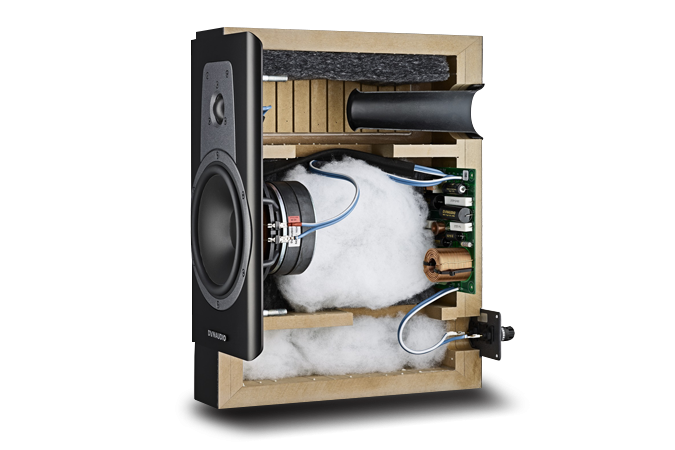
I really like what Dynaudio has done with the new Contour 20i. Your $5250 earns you the privilege of owning a mature, no-compromise, two-way minimonitor that does everything well. Built and finished to a high standard, it can play loudly and cleanly without the assistance of a high-powered, high-current amplifier. Its supremely balanced sound has been only slightly [ahem] contoured to have a subtly polite top end and a touch of midrange emphasis. Its bass performance is flat-out excellent, with healthy extension and outstanding control. It likely won’t thrill you in the ways some of its more effervescent competitors might, but I believe that the Contour 20i will prove to be a loudspeaker that the great majority of audiophiles could happily live with in the long run. It makes everything played through it sound good, whether it be after ten minutes of listening or ten hours.”

Sound Lab Majestic 645 electrostatic panel $24,660 Review
November 22, 2020 Comments Off on Sound Lab Majestic 645 electrostatic panel $24,660 Review
Sound Lab Majestic 645 electrostatic panel loudspeakers Review
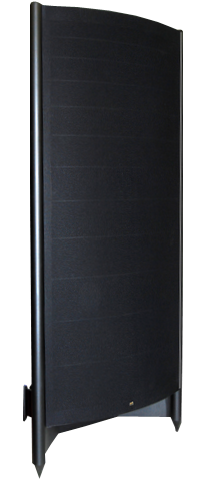
“But the electrostatic panels are also bass monsters. In the Sound Lab, I’m hearing the least compressed, swiftest in takeoff, and most natural bottom end of any loudspeakers. Apogee diehards prefer the fast, mass-less, potent bottom ends of ribbon panels like no other speaker users’ business. Being an owner of a pair of Apogee Duetta Signatures, I found the externally charged panels of the Majestic 645 produced a bottom end at the “0” setting that was not merely mindboggling but mind-bending. At this setting, the bottom-end reproduction of the Sound Lab attained such speed and force that it created a pseudo vacuum effect on my ear drum the moment the bass was cut during a scene in a movie. Panels microns thick that are the Majestic 645 excited the air with tidal waves of bottom-end densely woven in resolutions like I’ve never experienced before. The “+3” setting was too powerful for my taste, while the “-3” and “-6” settings accorded readers with smaller listening room a high degree of control for the best sound.”
Bakoon Amp 13R Integrated Amplifier $6000 Review
November 22, 2020 Comments Off on Bakoon Amp 13R Integrated Amplifier $6000 Review
“While I was writing this, I thought of the many reviews I have read that use descriptive language used to describe the sound of component both inexpensive and stratospherically costly that I have used in this review. Many of the same words can be used to describe the sound of a vast number of components. But none of them have the Satri circuit in them. This technology is the real deal and not just a company catch phrase. It proves it in the listening. In an email to me, Mr. Chae mentioned that this combination of amplifier and speakers are affectionately called Bonsai to them. Well little in stature and big on performance I say.”

Kharma Exquisite-Midi Loudspeaker $85,000 Review
November 21, 2020 Comments Off on Kharma Exquisite-Midi Loudspeaker $85,000 Review
Kharma Exquisite-Midi Loudspeaker
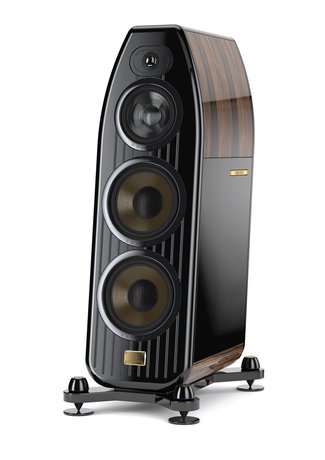
The Exquisite-Midi is staggeringly compact for its level of performance. At 40″ tall, 12″ wide, and 20″ deep (not including stands), its 180-pound weight hints at the quality, density of materials, and complexity of its construction. The combination of high-gloss black and high-gloss wood finishes with gentle curves screams fine craftsmanship and luxury. As with a Ferrari or McLaren, every line is purposeful and graceful. Every curve and seam is masterfully executed and finished. Tap on the top and all you get are sore knuckles and all you hear is a dull thud. The cabinet is designed, inside and out, to get out of the way of the music and to optimize phase behavior and minimize time delay. I will stay away from the great debate over which speakers are truly time and phase coherent, and which say they are and aren’t. Nor will I address whether time or phase coherence is more important. What I can say is that this speaker is among the most phase and time coherent transducers I have ever heard—at least to the extent I credit myself for being sensitive to such things. Speaking of coherence, the proximity of the four drivers lends itself to amazing driver integration, which is easily affirmed by listening. The crisscrossing support structure on the speaker’s base employs 1″ threaded spikes and 3″ floor plates. The 1″ threads allow for easy adjustment of the Exquisite-Midis’ 180-pound mass, and the 3″ floor plates permit relatively easy movement for setup. Around back are two pair of Cardas clamp-style speaker posts. Banana-terminated cables need not apply—they won’t work, period. Embrace the spade.


You must be logged in to post a comment.