Pure Audio One solid-state integrated amplifier $10,000 Review
February 29, 2020 Comments Off on Pure Audio One solid-state integrated amplifier $10,000 Review
https://www.dagogo.com/pure-audio-one-solid-state-integrated-amplifier-review/
“Moreover, unlike some amplifiers the Pure Audio One allows for future upgrading by serving as a power amp. Fortunately, I was provided a Pure Audio Control 1 Preamplifier for testing purposes. The Control 1 preamplifier was subsequently followed by a new preamplifier called — you guessed it — the Control 2 Preamplifier. The Control 2 updates the power supply and uses a more standardized input selector similar to the One.
Regardless, the separate preamplifier makes some significant gains to the overall presentation concerning transparency and overall clarity without taking away the richness of the presentation. I was impressed with the gains made using the Pure Audio Control preamplifiers (although when I pushed the remote control volume, it operated both units at the same time). Still, I felt the Control preamplifiers open up some of the sound creating more space, air, and articulation to vocals. Put simply, the presentation was more transparent.”

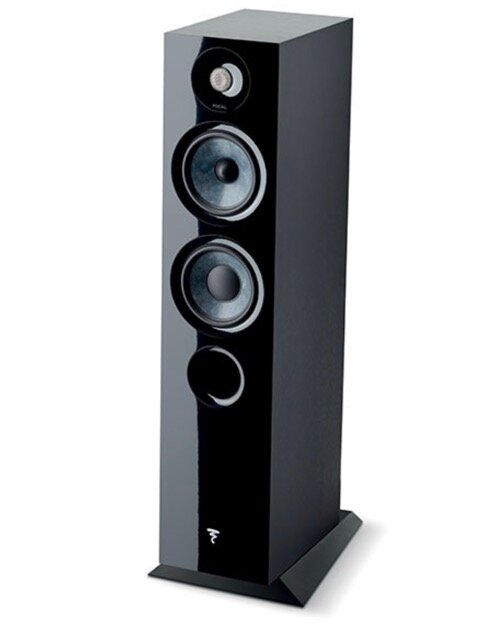
Focal Chora 816 Loudspeaker Review
February 28, 2020 Comments Off on Focal Chora 816 Loudspeaker Review
https://www.audiophilia.com/reviews/2020/1/31/sx2mawfb31qml5sp0jy537p7mznx97
“I then put on my 70s Robert Ludwig mastered copy of Patti Smith’s Horses. The first track, “Gloria”, features a chorus where background singers shout in a call and response patter with Smith. This effect was rendered incredibly lifelike on the Choras and I was able to distinguish the individual voice types in this group section, something I wasn’t used to hearing. The snappy Reggae inspired guitars and drums in “Redondo Beach” displayed excellent transient response. I could hear the pick scrape against the guitar pickup. Moving on to the track “Money”, I did sense a bit of glare in the piano tone. As much as the highs and lows of this speaker continue to impress me, as well as the three dimensionality of the soundstage, I do get a sense that the midrange comes across as a bit simple and grainy at times. Not overly so, but it is a contrast against the otherwise well-rounded areas of the frequency range. Despite this, this speaker was producing the kind of fun, toe-tapping sound that so many “audiophile” speakers at this price (and even above) lack.”
Lab12 Integre4 Integrated Amplifier Review
February 28, 2020 Comments Off on Lab12 Integre4 Integrated Amplifier Review
https://www.soundstagehifi.com/index.php/equipment-reviews/1373-lab12-integre4-integrated-amplifier
“In an attempt to push the Integre4’s upper mids to their limit, I streamed several tracks from Spotify, itself a bright-sounding platform. With the somewhat mellow-balanced Living Voice Avatar speakers I also own, the voices and guitars in “Don’t Bother Calling,” from Moses Sumney’s Aromanticism (320kbps Ogg Vorbis, Jagjaguwar), sounded fairly well balanced through the mids and into the lower treble. So, too, did SZA’s voice in “Love Galore,” from her album Ctrl (320kbps Ogg Vorbis, RCA). But through the more neutral-balanced Klipsch Epic CF-2 speakers the Integre4 pushed the presence region forward, adding some shrillness and excess sibilance to SZA’s voice. “Birds of a Feather,” from Mocky’s Saskamodie (320kpbs Ogg Vorbis, Heavy Sheet Music), also had a bit of excess glare and brightness in the sounds of tambourines and whistling, sounding at times too harsh.”

Cary Audio SA-500.1 ES Monoblock Power Amplifier Review
February 27, 2020 Comments Off on Cary Audio SA-500.1 ES Monoblock Power Amplifier Review
http://www.theabsolutesound.com/articles/cary-audio-sa-5001-es-monoblock-power-amplifie/
“Resolution of fine detail was well integrated with the amplifier’s tonal balance and rhythmic timing, and thus tended to a “greater whole” sort of presentation rather than one of crystalline clarity of minute details. I am not altogether sure if much higher overall resolution would necessarily fit with the 500.1’s mid-hall listening perspective or with its generally flowing, warm, and solid-foundation personality, for that matter. An attempt to increase its resolution could result in the amp’s sound becoming forced or unbalanced. For example, if there is an abundance of bow-on-string sounds (suggesting a relatively near listening position), but the general tone of those same instruments also have more rich, burnished qualities (indicative of a more distant listening position), the end result could be a mélange of inconsistent spatial cues. Massed orchestral string sections had enough information to suggest individual players but not to the extent I am used to with the other—admittedly more expensive— amplifiers I had on hand (covered below). Singers’ lip sounds were evident on closely miked recordings, but they were not out of proportion with the general presentation.’

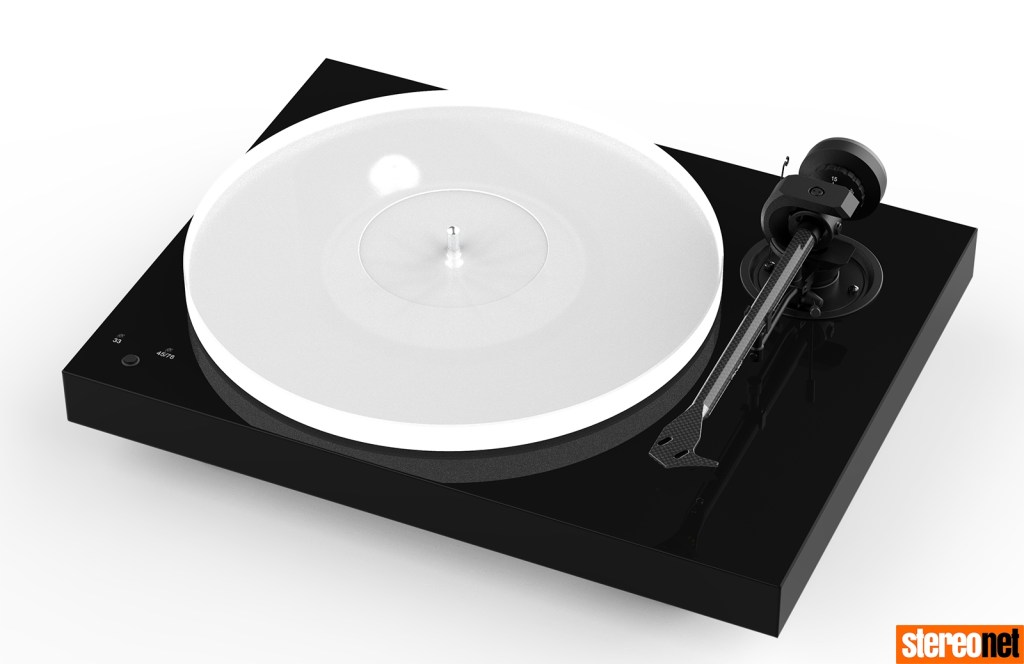
Pro-Ject Audio System X1 Turntable Review
February 27, 2020 Comments Off on Pro-Ject Audio System X1 Turntable Review
“The mark of a seriously affordable turntable is – to my mind – that it has none of the nasties associated with cheap record replay, and should also be fun. Some of us are old enough to remember the cheap Garrards and BSR turntables of the nineteen seventies, and these had rumble and wow and flutter aplenty. The original Pro-Ject 1 largely dodged these bullets, but the new X1 takes us out of the danger zone altogether. It’s a solid, composed and competent performer that doesn’t struggle with the basics of record replay. This lets the listener relax and enjoy what’s so famous about vinyl – its big, bouncy sound.
Perhaps most striking about its character is the surprisingly wide window that it opens up on the recording. If you’re used to entry-level digital, for example, you’ll be really surprised by just how ‘out of the box’ this sounds. For example, my 12” white vinyl pressing of Too Strong for So Long by Manix sounded expansive, with an upfront feel that saw the drum machine pushing out hard into the room, allied to wonderfully deep sub-bass that had my curtains flapping. The X1 set the scene really well for a budget turntable, floating the sound way beyond the physical boundaries of my loudspeakers. Vocals dominated the centre of the mix, giving things even more impact. There was decent stage depth too, especially when compared to budget digital that tends to render music only in two dimensions.”
Manley Absolute Headphone Amplifier $4,500 Review
February 26, 2020 Comments Off on Manley Absolute Headphone Amplifier $4,500 Review
https://www.innerfidelity.com/content/manley-absolute-headphone-amplifier-review
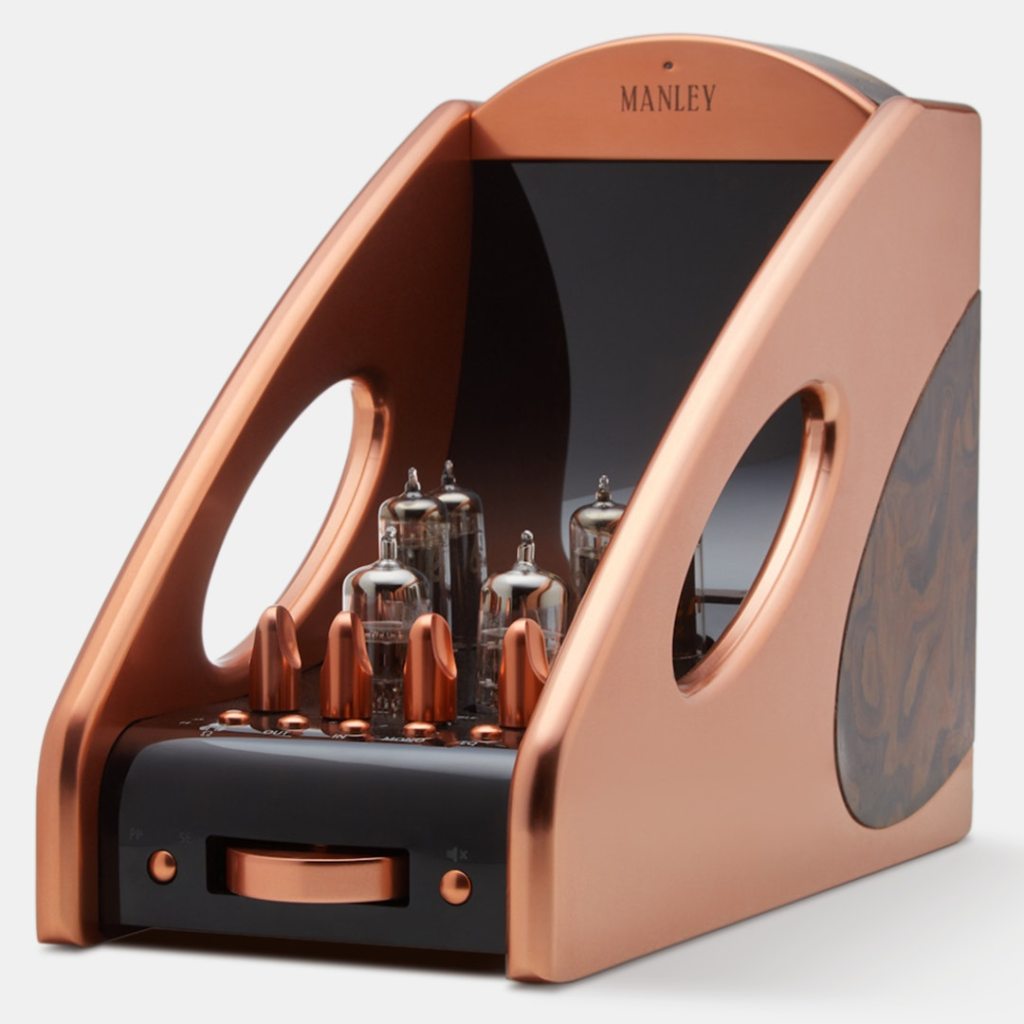
Manley still weren’t satisfied with this however, as they also tossed in a set of Baxandall EQ filters and both Mono and Balance functionality. Anyone with hearing loss or old mono records will appreciate the balance controls, though they were more ‘nice to have’ than necessary for me. The EQ was the real star of this show however, and Manley’s pro-audio heritage shines here. Most hi-fi companies, when they implement EQ controls, design simple bell or shelf filters, boosting frequencies in a given area pretty equally. The Absolute uses Baxandall filters which have subtle tapering and shaping around the outermost affected frequencies, and combining both controls can give interesting effects, such as boosting or cutting the midrange – if you’re a tweaker this will give you hours of endless fun.
Gold Note DS-10 DAC/Preamp/Streamer $2995 Review
February 25, 2020 Comments Off on Gold Note DS-10 DAC/Preamp/Streamer $2995 Review
https://positive-feedback.com/reviews/hardware-reviews/gold-note-ds-10-dac-preamp-streamer/
“That is a lot of detailed engineering and scientific information. What does it all mean to the layman who wants an all in one unit that can drive a line stage system? To someone that wants a whole lot of great features in a compact, easy to use (once you read the instructions and take the time to learn the unit), and very flexible unit built to a high standard that has not only great use ability, but also exceptional aesthetics? Perhaps we should get into that now.
I was very impressed when I unboxed the unit. It was compact, but a very stoutly built piece of kit. The review unit came in the silver finish and mated well to the white and silver theme of most of my gear. I have owned three Gold Note items. The Tuscany cartridge, the Pamphili phono preamp, and the DSS30 Blacknote (another Gold Note sub brand) USB player. All of their products have an immediate feel of quality. “


ZMF Verite Headphones Review
February 25, 2020 Comments Off on ZMF Verite Headphones Review
https://positive-feedback.com/reviews/hardware-reviews/zmf-verite-headphones/
“As with Meze Empyrean, the ZMF Vérités are certainly headphones where people gravitate towards their vocal-centric tuning. While the headphones escape from an overly “warm” or romantic tuning, the Vérité has enough richness in its midrange to really propel it into an affable listening experience. Tracks sound lively without resorting to thin or unnatural leading edge transients that some headphones implement to artificially boost clarity levels. Instead, vocals have great body with a slight warm tilt while maintaining high levels of resolve and liveliness. Every track just sounds right, which is not an easy feat for headphones to achieve owing to their propensities to exaggerate frequencies here and there. While the Empyreans opt for a smoother and “darker” tonality, the Vérité leans toward a relatively more vibrant character while still maintaining incredibly low levels of fatiguability, sibilance, or grain. Compared to HiFiMAN’s HE1000 V2, the Vérité sounds relatively more intimate, but more solid in its presentation compared to the former’s more airy, diffuse, and ethereal presentation. For orchestral music and tracks which benefit from a large soundstage and TOTL separation of instrumentals, the HE1000 V2 certainly wins but it is incredibly hard to take the ZMF Vérité headphones off for tracks where vocals prevail, and therein lies its magic.

Primare PRE35/A35.2 Networked Pre/Power Amp
February 24, 2020 Comments Off on Primare PRE35/A35.2 Networked Pre/Power Amp
https://www.hifinews.com/content/primare-pre35a352-networked-prepower-amp
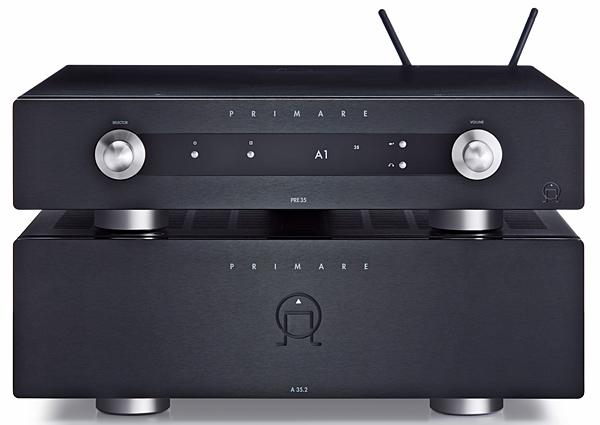
“When you first connect up the PRE35, having first screwed in its rear-mounted twin Wi-Fi antennae, it enters set-up mode. Give it your wireless router details – or plug in an Ethernet cable – and you’re all ready to go. The app lets you to play music via Wi-Fi and Bluetooth, AirPlay, Spotify Connect and Chromecast quickly and easily, as well as offering multi-room/multi-zone control. Available on both iOS and Android platforms, it looks elegant and confers great flexibility thanks, in part, to its Roon functionality. Meanwhile, the fascia controls feel silky and its white-on-black OLED display is clean and crisp. The pressed-steel casework is well finished and less resonant than that of many rivals.
Those going for more traditional source options will be pleased to see that the rear panel is crammed with sockets. There are twin analogue XLR inputs and outputs, three pairs of RCA inputs, four Toslink optical digital inputs and two coaxial digital ins, plus a USB input. These feed a sophisticated AK4497 DAC, working at up to 768kHz/32-bit PCM and DSD256 resolution. Fixed and variable analogue outputs, a coaxial digital output and IR in/outs complete the picture, along with an RS232 service port.

Audiofly AF100 MK2 In-Ear Monitors Review
February 23, 2020 Comments Off on Audiofly AF100 MK2 In-Ear Monitors Review
https://www.stereo.net.au/reviews/audiofly-af100-mk2-in-ear-monitors-review
If you’re looking for a cheaper alternative to the juggernaut industry-standard for professional IEMs, you may have just ended your search. The Audiofly AF100 MK2 comes in cheaper than the alternatives, yet delivers a more natural sound signature that’s hard not to like. For this reason, this pair of home-grown in-ears might prove hard to live without, for many head-fi fans. Factor in its really robust design and sensible, pro audio-friendly features, and here’s a design that’s at home both on and off the stage.”



You must be logged in to post a comment.