Keith Monks Audio Works Prodigy Record Cleaning machine Review
February 14, 2022 Comments Off on Keith Monks Audio Works Prodigy Record Cleaning machine Review
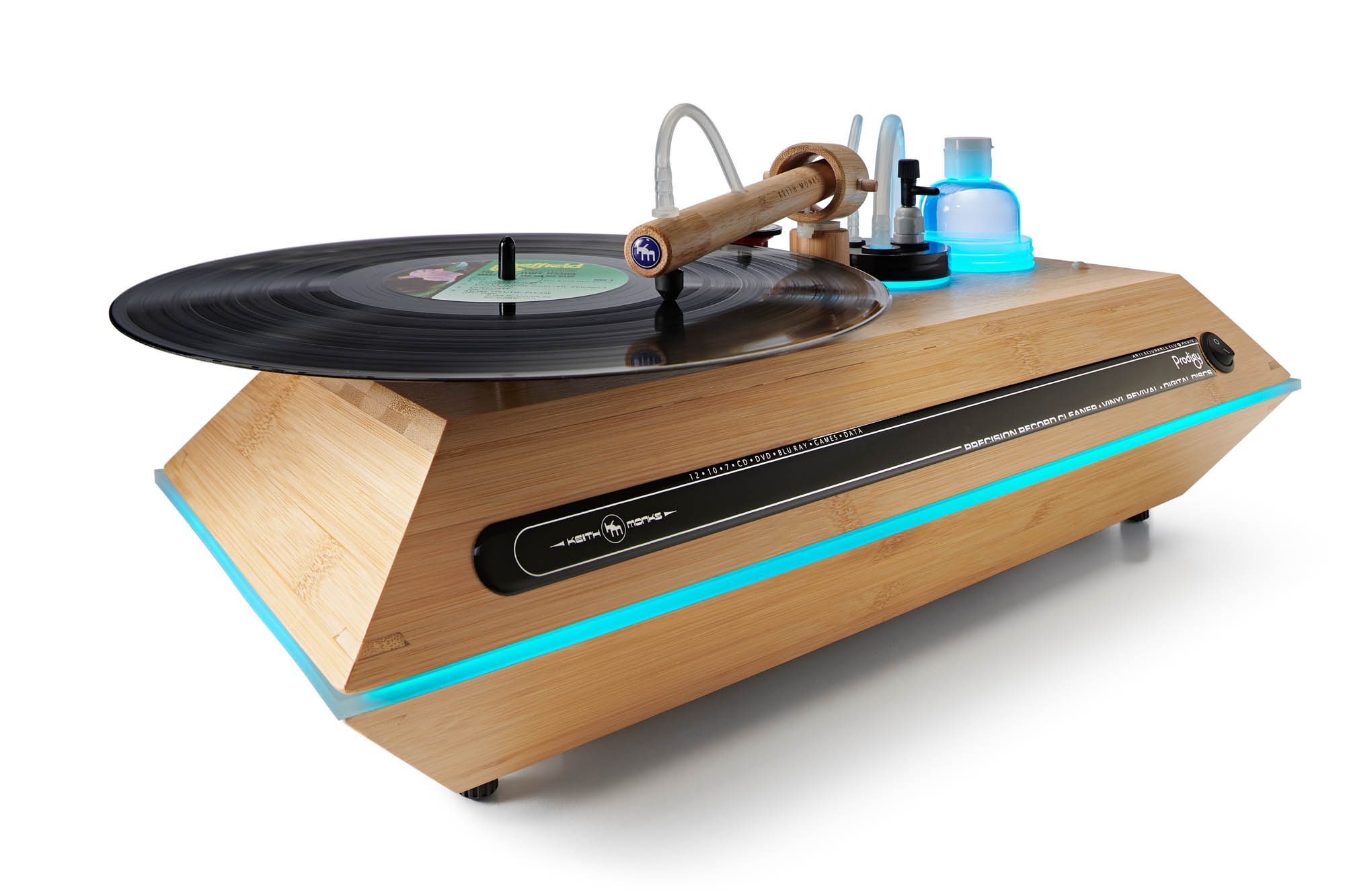
The Keith Monks Prodigy leaves LPs looking and sounding very clean. Cleaning time per LP is somewhere between 8 to 10 minutes. Although a bit slower in operation, the Prodigy delivers excellent results that are fully comparable in every way to Keith Monks’s full-size RCMs. For those willing to pay more, Keith Monks also offers the discOvery Redux model (£2,995) which provides faster, quieter operation, and more automation. However, the Prodigy costs a more wallet-friendly £795 and looks more domestically appealing; it does a great job at a great price and comes highly recommended!
A VISUAL TOUR OF OSWALDS MILL AUDIO
February 11, 2022 Comments Off on A VISUAL TOUR OF OSWALDS MILL AUDIO
Core Power Technologies AV EquiCore 1000
February 3, 2022 Comments Off on Core Power Technologies AV EquiCore 1000
A strong empirical example of the amazing noise reduction powers of the Core Power Technologies AV Equi=Core 1000 was what occurred when I first got the Equi=Core and the LSA Warp 1 Amplifier. Due to a series of mishaps, I ended up powering up the Warp 1 without an input connected which due to the design of the Warp 1 caused a loud humming sound. Since I had set up the Equi=Core at the same time, my first impulse was to bypass the Equi=Core in case that was the source of the issue and the noise was a magnitude louder with a significantly wider bandwidth of noise. Or to put in terms of the effect of the Equi=Core, the noise was reduced to about 10% of the level without the Equi=Core and reduced in frequency to say about 60 Hz, which one would expect if they had a pure 60 cycle AC signal without injected noise from other sources. The difference was jaw-dropping and while this is not a normal test case, it does parallel the effect of inductive noise that is not filtered out by a component’s power supply.
For active listening tests, I decided to use the Questyle CMA Fifteen (Review Pending) as Questyle is well known for their over-built power supplies which should make for a spectacular challenge. For headphone, I chose my Noble Zephyr IEM’s as they are one of my most efficient and articulate IEMs, and to maximize noise potential I put the amplifier in high gain and used the 4.4mm balanced output. At about half volume with the player (JRiver) on pause (IE: no signal but not open), I could hear the transistor noise. With the Equi=Core bypassed you could hear spurious noise added to the steady hiss of the transistors

Singxer Audio SU 6 USB audio bridge
February 1, 2022 Comments Off on Singxer Audio SU 6 USB audio bridge
The ABCs of ASC’s TubeTraps
January 31, 2022 Comments Off on The ABCs of ASC’s TubeTraps
https://www.audiophilia.com/reviews/2016/2/5/the-abcs-of-ascs-tube-traps
Founded in 1984 by Art Noxon, ASC supplies acoustical products to studios, auditoriums, churches, and a multitude of other venues, from their headquarters in Eugene Oregon (Mr. Noxon has also generously devoted precious research time to developing high articulation speech rooms for the hearing impaired). Noxon’s research led him to the sealed cylinder as a device for absorbing excess low frequency energy. While high and midrange frequencies can be absorbed by small devices, relatively large devices like the Tube Trap are necessary to effectively tame frequencies below 100Hz. ASC manufacturers traps with diameters of 9, 11, 16, and 20 inches, successively larger tubes having the ability to absorb successively lower frequencies.
In my experience, it is quite common for audiophiles to treat their rooms unevenly, resulting in short decay times in the middle and high frequencies, and much longer decay times in the bass. Such uneven treatment is almost as bad as no treatment at all! As with any acoustical treatment, including ASC’s Tube Trap, a balanced approach is best.

Isolation Platforms from Marigo Audio Lab Review
January 18, 2022 Comments Off on Isolation Platforms from Marigo Audio Lab Review
If you own one of the discontinued Isothermal Platforms, you’ll find the same features present in the replacement product, but better in every way. Instruments seemed to bloom with a constant swirl of shifting micro dynamics when I swapped in the Level 2 Isolation Platform. With the Level 3 Isolation Platform, the innermost action of the instruments was exposed as never before, bringing us closer to their real world behavior. You don’t often encounter this level of acuity in reproduction.
These platforms are powerful. I found some degree of placement experimentation useful, so be prepared to putter about. But when you hit upon a synergistic placement, the benefits are indeed significant. They invite you to sit down, chill a while, and be amazed. With a few of the L2 and L3 platforms, the competing demands of musicality and resolution were satisfied, and my soundroom was at peace. The King and the Bishop were quietly glowering in their corners, awaiting the next bout.
Clarus Concerto Power Conditioner $3600 Review
January 9, 2022 Comments Off on Clarus Concerto Power Conditioner $3600 Review
https://www.soundstageultra.com/index.php/equipment-menu/1072-clarus-concerto-power-conditioner
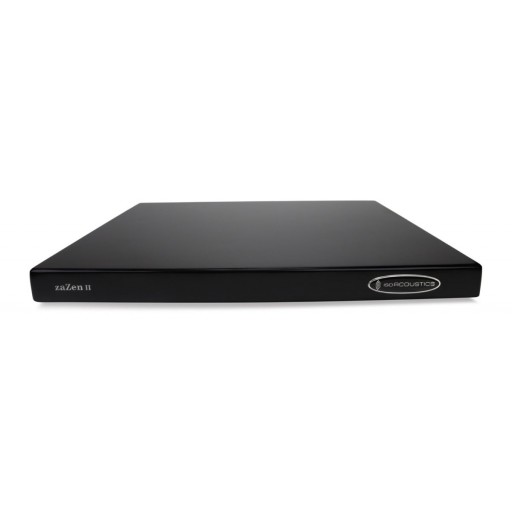
Retailing for $3600, the Concerto is not inexpensive, but it offers a lot of technology and useful features, including the ability to run high-powered amplifiers and further optimization for digital and analog components. All of that considered, along with the protection it offers against power surges or instability, the Concerto’s asking price is an insurance policy that a good system will be able to live up to its full performance and be protected against damage from most power fluctuations or even catastrophic failures.
For those with great audio systems, power filtration is necessary to get the most from them. The Clarus Concerto is a top-notch performer and very competitively priced given its impressive design and sophisticated engineering. I recommend it highly!


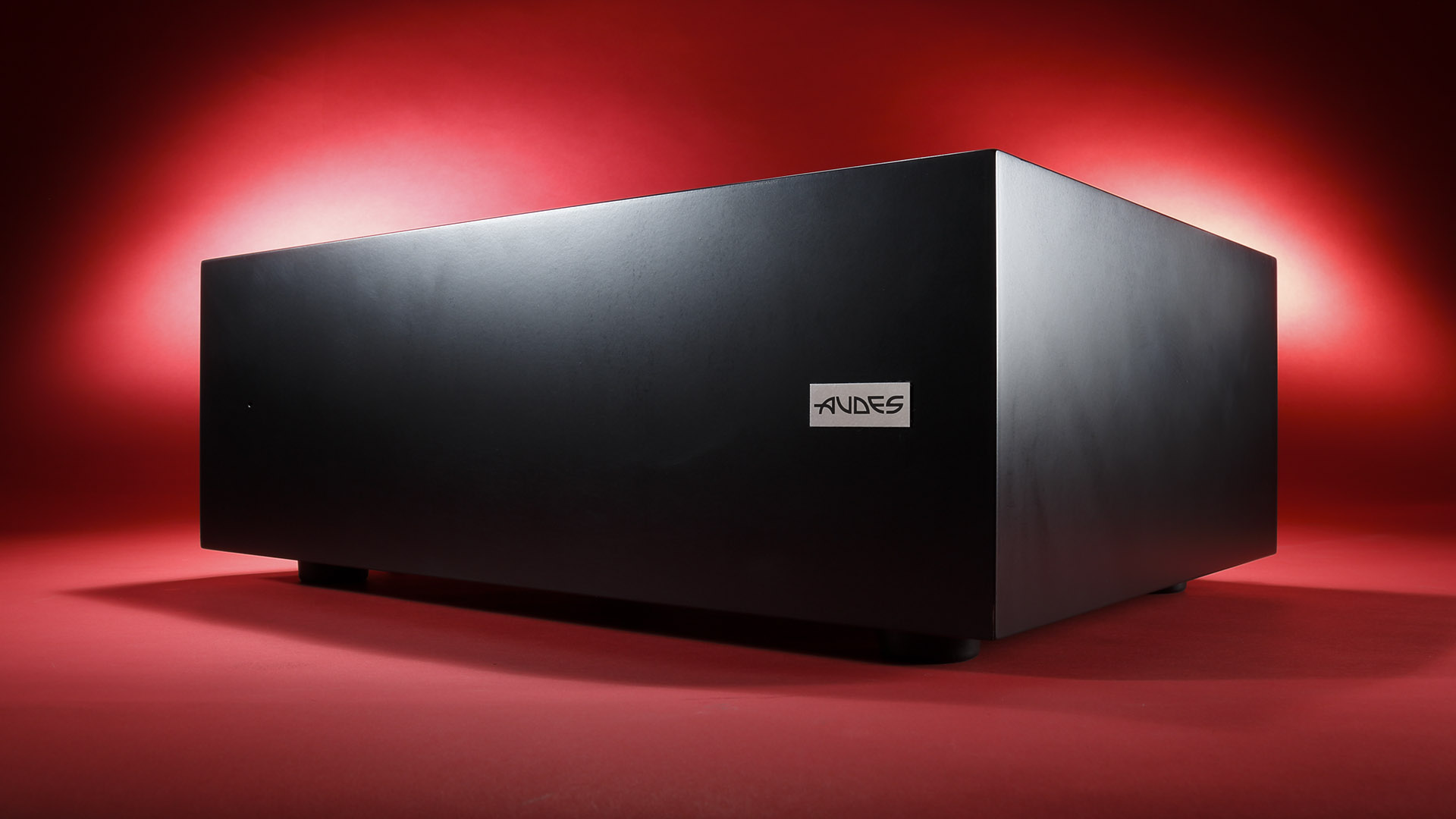
Audes ST3000 Review
December 27, 2021 Comments Off on Audes ST3000 Review
https://stereo-magazine.com/review/audes-st3000-review
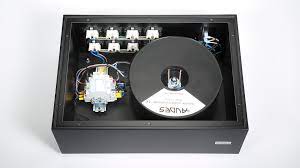
In addition, the Audes developers have decided to balance (or symmetrize) the mains voltage. That means that, instead of 230 volts between both “poles” (phase and neutral) or between the phase (outer conductor) and the protective conductor, they have realized 115 volts each between the two poles and the protective conductor. Of course, that still means that there are 230 volts between both “poles”. To illustrate this, imagine it on an electrical socket on your wall. The secondary winding is thus divided into two halves, which have an (artificial) center tap that is connected to the ground contacts. This is also the place to which all interferences are diverted. That‘s all, but the effect is enormous.

 Audiophilepure
You must be logged in to post a comment.