Magnepan LRS loudspeaker Review
July 29, 2019 Comments Off on Magnepan LRS loudspeaker Review
“Things got genuinely spooky when I put on the Electric Recording Company’s new LP reissue of The Country Blues of John Lee Hooker (Riverside/Electric Recording Company RLP 12-838). It was a promo copy, loaned by a friend, and the sound was recording-studio clear in a way I rarely experience from any home hi-fi. Hooker sang dramatically, swinging for expression between loud and whisper-soft. He strummed at his guitar with that signature John Lee Hooker beat. Intimacy, rhythm, and absolute clarity dominated the experience. Hooker’s singing voice had throat and lungs. His vocal inflections were roller-coaster rides. Wow!”

Soulution 330 Integrated Amplifier $22,500 Review
July 28, 2019 Comments Off on Soulution 330 Integrated Amplifier $22,500 Review
“High-end audio is so often about compromises, trading one quality for another. What sets the Soulution 330 integrated apart is its ability to strike just the right balance of musical and technical elements within a winning feature set, and to manage to deliver the sonic goods beautifully across so many recordings and styles. Moreover, the company has succeeded in keeping so many of its best sonic characteristics while paring down parts and pricing. The integrated gets out of the way of the music in the right ways but delivers the right stuff. This exquisite Swiss integrated might still cost a pretty penny but if you have the coin, I’d highly recommend auditioning it. For those yearning for Soulution’s Swiss sound and tech built-to-last, with the 3 series there’s never been a better time to invest in some of the finest solid-state around.”


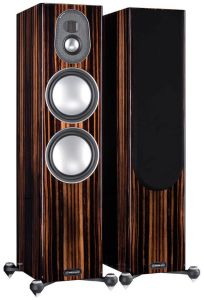
MONITOR AUDIO GOLD 200 FLOORSTANDING LOUDSPEAKERS REVIEW
July 28, 2019 Comments Off on MONITOR AUDIO GOLD 200 FLOORSTANDING LOUDSPEAKERS REVIEW
“But while they have no difficulties describing the scale of the Saint-Saens piece, nor in defining a convincing and easily understood stage for the performers, these speakers don’t escape the confines of their own beautifully finished cabinets as convincingly as they might. Everything that happens on the stage is explained in full and in detail, but it all seems to happen between the two towers. Stereo focus is impressive, but there’s no getting the information to expand much beyond the speakers no matter how much fiddling with positioning is indulged in. There’s great unity and coherence to the Monitor Audio Gold 200s, but there’s relatively little of the wide-screen element some similarly sized speakers can deliver.
Which simply goes to demonstrate that nothing’s perfect (but we knew that all along anyway, right?), least of all in the world of loudspeakers. And whilst the Gold 200s are short of perfect, just like all their rivals, they demonstrate some real strengths and areas of convincing expertise. As suggested earlier, there’s no ripping up of the Monitor Audio rule-book going on here, let alone the wider Loudspeaker Manual – but in terms of finessing and honing a long-in-the-tooth technology the Gold 200s are an unarguable, categorical success.”
Schiit Ragnarok 2 $1,499 Review
July 27, 2019 Comments Off on Schiit Ragnarok 2 $1,499 Review
“To test out using the Ragnarok 2 as a preamp, I hooked up the Schiit Aegir power amp, and at first I couldn’t get any sound out of the Aegir. I checked and rechecked the connections. They were correct. The owner’s manual was no help, so I just fiddled about trying things, and when I switched off the Ragnarok 2’s speaker output and turned on the headphone output, the Aegir started playing! So in other words you need to turn on the headphone output to use the Ragnarok 2 as a preamp! That’s very strange, but easy to do once you know how to do it.
Teamed with the Aegir the sound was even more see-through, and the soundstage took on a more three-dimensional quality. The ‘2 was no slouch on its own, but the Aegir conjured more space and depth between instruments, and individual voices in choral recordings were easier to hear with the Ragnarok 2/Aegir combination.”


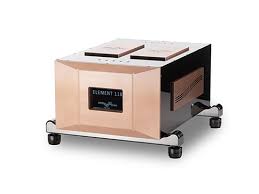
Merrill Audio Element 118 Mono Amplifiers $36,000 Review
July 27, 2019 Comments Off on Merrill Audio Element 118 Mono Amplifiers $36,000 Review
“Wanting to hear how the Element 118s would handle more lively music, I played some pop. Here more than anywhere else, the 118s made obvious the fact that if the quality of the recording itself was sub-par, so was the sound it reproduced. But find a decent recording, such as Beck’s Sea Change (16/44.1 FLAC, Universal) or Bruce Springsteen’s Born in the U.S.A. (16/44.1 FLAC, Columbia), and you’ll be rewarded with a musically engaging sound as replete with inner detail as with ambience. I have both albums on standard “Red Book” CDs and in high-resolution formats: Sea Change as a 24/88.2 FLAC file from HD tracks, and Born in the U.S.A. as a 24/96 DVD-A ripped to FLAC.”
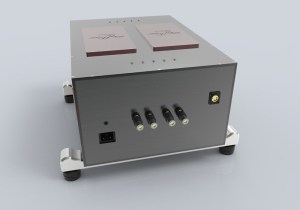
Valve Amplification Company Master Preamplifier $28,000 Review
July 26, 2019 Comments Off on Valve Amplification Company Master Preamplifier $28,000 Review
“After a shower, I decided that the Master excelled at producing air and spaciousness around large and usually solid instrumental images (save with orchestral music, which is notoriously difficult if not impossible to reproduce), superbly delineating different timbres and defining aural images, and reproducing rich textures, all on deep, broad soundstages, with great punch and timing. It was just a pleasure to listen to, making music that was immersive and sensuous that could reach out from the soundstage and just grab you. Though it was easy to pick out all the items on the usual audiophile checklist, mostly I just leaned back and reveled in the gorgeous worlds of its precisely animated soundfield.”


Focal Elegia Review
July 26, 2019 Comments Off on Focal Elegia Review
“Some question marks over its market purpose aside, this is a hugely enjoyable headphone to listen to. The work that Focal has put in means that even if you don’t see yourself wearing it on the move, its undemanding nature means it will deliver the bulk of its high-quality performance even when used with relatively humble source equipment. This may well be the most fun Focal headphone we’ve seen yet, and the fact that the Elegia has been achieved without hindering any of its technical abilities makes it a remarkably fine proposition indeed
Read more at https://www.hifichoicemag.com/content/focal-elegia#PQs0JETUFrTeAYIp.99”

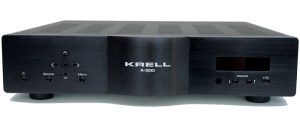
Krell K-300i Integrated Stereo Amplifier Review
July 25, 2019 Comments Off on Krell K-300i Integrated Stereo Amplifier Review
“My other concerns are pretty well documented above, but if you’re the type to skip straight to the criticism, here’s a brief recap: Although the K-300i is positioned as an AV device, not merely an audio one, its utility on the video side is somewhat limited by the fact that it doesn’t decode Dolby or DTS audio, nor does it have any internal bass management. You’ll need to use your subwoofer for that, although thankfully there are still plenty of subwoofers with internal crossover capabilities and speaker-level outputs.
The Krell K-300i also lacks any form of room correction. Even a basic parametric EQ would have been welcomed, as there are room modes to be overcome in my bedroom AV system that cannot be ameliorated by subwoofer positioning alone. My recommendation: if you’re planning on using the K-300i in a 2.1 AV setup, make sure your subwoofer not only has speaker-level outputs and crossover capabilities, but also some form of auto room EQ or parametric EQ.”

????????????????????????????????????

KEF R11 Loudspeaker Review
July 25, 2019 Comments Off on KEF R11 Loudspeaker Review
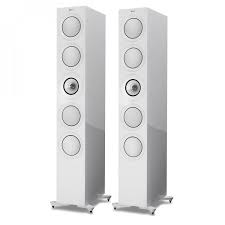
“Change to a big orchestral work, such as Bernstein conducting the overture from his opera ‘Candide’ [Bernstein Conducts Bernstein; Sony Classical SS 89043, DSD64], and the R11s show all their abilities in one 4m 16s track. The opening is explosive and hard-charging, with a great impression of ordered chaos in both the writing and the sound. These speakers swiftly relax into the fluid, romantic middle section, then gather up the power for the closing, charging to the finish with especially notable punch in the percussion. It’s a compact, total thrill-ride – on some speakers it can sound rather thin and brash, but via the R11s, with their solid low-end power, it just sounds big and exciting.
That’s also true in the way the R11s handle piano which, with its combination of potential delicacy in the right hand and room-shaking ability in the left, is always a stern test of any speaker. Play Stephen Hough’s recording of Rachmaninov’s First Piano Concerto, with the Dallas Symphony Orchestra under Andrew Litton [Hyperion SACDA67501/2] and the power of the musical forces, and drama they generate, grabs you in an instant. Yet it’s just as easy to appreciate the balance and definition, and the superb soundstage image the speakers are casting, with the piano full-bodied before the orchestra.”
Read more at https://www.hifinews.com/content/kef-r11-loudspeaker-page-2#AMrYHm9gSUUlrWdG.99

Klipsch Forte III loudspeaker $3998 Review
July 24, 2019 Comments Off on Klipsch Forte III loudspeaker $3998 Review
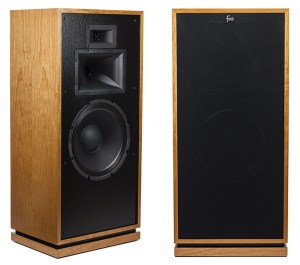
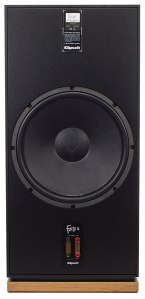
“I’m a drummer. Percussive sounds always capture my attention. I’m aware, for example, of the difference in sound between felt and lamb’s wool bass drum beaters. Felt beaters create a harder, more direct bass drum sound, while lamb’s wool is like soft cotton swooshing the head, moving its internal air more gently to create a softer sound. On Jersey’s title track, I heard the soft, warm sheen of a bass drumhead being driven by a lamb’s wool beater. The Forte was wonderfully transparent to this detail buried deep within the music.”


You must be logged in to post a comment.