SENNHEISER MOMENTUM TRUE WIRELESS 2 RECHARGEABLE EARBUDS REVIEW
September 25, 2020 Comments Off on SENNHEISER MOMENTUM TRUE WIRELESS 2 RECHARGEABLE EARBUDS REVIEW
“I also used the earbuds for phone calls and listening to my audio book collection, streaming direct from my Android phone. They make a huge difference. I could shut out ambient noise so that I could hear the sources much, much clearer. With the Transparent Hearing on, I could understand conversation better as well.The Bluetooth distance surprised me. I was able to listen to music streaming from my phone to the earbuds at the other end of my house.
”

NOBLE ZEPHYR HYBRID IN-EAR MONITOR PROTOTYPE $1,450 REVIEW
September 23, 2020 Comments Off on NOBLE ZEPHYR HYBRID IN-EAR MONITOR PROTOTYPE $1,450 REVIEW
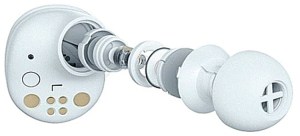
“Once again Noble Audio has struck gold with the Zephyr Hybrid In-Ear Monitor, especially in the musicality department. I have always held that a great speaker, headphone or IEM should perform well with all genres of music, and above all always impart an enjoyable experience, and in this, the Zephyr is a clear winner, providing a rich, colorful, exciting and engaging experience, with a huge three-dimensional soundstage, extreme clarity, speed, and detail, warmth, and musicality without veil or coloration and yet very forgiving of source electronics, which is a must in an IEM that will mostly be used with portable devices.
I must thank Jim Moulton and Noble Audio for this little glimpse into the future in allowing me to listen to a truly fantastic prototype of what I believe will be a best seller, my only regret is that it must come to an end. I look forward to a return of HiFi Shows and the opportunity to hear their new Sultan which promises to be another epic victory in the Noble showcase. Two thumbs up!
”

SCHIIT AUDIO FREYA+ PREAMPLIFIER AND VIDAR AMPLIFIER REVIEW
September 23, 2020 Comments Off on SCHIIT AUDIO FREYA+ PREAMPLIFIER AND VIDAR AMPLIFIER REVIEW
“Their social media presence is as sharp and strong as their sense of humor. As you can imagine, social media presence is very important in today’s day and age, especially because Schiit Audio sells direct to the consumer. But you can audition their gear in person at “The Schiitr”, a retail store they opened in Newhall, California. The company also uses distributors for countries other than the USA. Jason Stoddard is active on at least two audio web sites, and he will interact with people and answer questions directly and intelligently. When Schiit Audio released its new turntable, the Sol, recently, Stoddard actively sought feedback from users and took it back to the company to improve the turntable. So Schiit Audio is maintaining an active feedback loop to improve its products with its own customers. I can’t think of any other audio companies doing that nowadays.”

FIIO FH3 REVIEW $149 Review
September 22, 2020 Comments Off on FIIO FH3 REVIEW $149 Review
“The whole tube measures 41.5mm long, so not as long as the whopping 80mm of the FiiO FA9, enough to allow the full bass to develop. On the other hand, the high-frequency driver was put as close as possible to the ear canal, to ensure low distortion levels.
In the middle of everything, you find a new physical+electronic three-way crossover, in charge of all that work. It gains some help from FiiO’s patented balanced pressure relief technology (basically two vents) and some tweaks in the internal acoustic structure.”

Bel Canto E1X Integrated Amplifier $8,000 Review
September 22, 2020 Comments Off on Bel Canto E1X Integrated Amplifier $8,000 Review
“After putting in multiple weeks of listening time, I came to the conclusion that the E1X is capable of producing sonics that were the equal of my current reference gear. My primary sources were digital files, either from Qobuz, Tidal, or my NAS drive. On these I found the E1X capable of producing a level of sonic quality that gave me little, if anything, to complain about.
Beginning with the lowest frequencies, the E1X was able to retain all the sonic information I was hearing through my separate reference components. On difficult pop recordings that combine synth bass with electric bass, the E1X had no difficulty retaining all the tone, timbre, and texture of the instruments, while also preserving the individuality of each bass line. In addition, dynamic attack and transient response in the bass was every bit the equal of my references.”

Aurender N100SC caching music server and streamer $3,300 Review
September 21, 2020 Comments Off on Aurender N100SC caching music server and streamer $3,300 Review
“Primary auditioning of the N100SC took place in conjunction with the new $23,000 Esoteric K-01XD SACD player and the $19,000 Bricasti Design M21 DSD DAC, although the Aurender also saw action with the $150,000 Audio Note Fifth Element/Fifth Force 24bit/96KHz DAC and the $8,500 Audio Research DAC 9 Tube (review forthcoming). Operating the Aurender involved downloading the company’s app onto my iPad Mini, which would control the choice of accessing the internal hard-disk directly for playback, or to connect up to two external USB hard-disks, or to access the Tidal streaming platform via Ethernet. Digital cable was the Light Harmonics Lightspeed USB.
The Aurender was connected to my home network via an Ethernet connection through a pair of Zyxel Powerline adaptors, one near the Xfinity router in the other room that transmits and another one in the same room as the Aurender for the receiving end. During the review period, the transmitting module malfunctioned and derailed the auditioning process; good thing Zyxel sent me a replacement two days later. Price to pay for Ethernet until the day comes when a new standard would allow wireless connection all the way.”

NOBLE AUDIO ZEPHYR REVIEW
September 21, 2020 Comments Off on NOBLE AUDIO ZEPHYR REVIEW
“The Zephyr from 2-4k has a more of a bump than the Tux 5 but also less of a treble dominance around 5-7k. Female vocals have a smoother richer tone to them on the Zephyr, as do percussion timbre. The Tux 5 is a little leaner with more treble shimmer on the overtone down to about 2k so higher-pitching notes have this slightly more ethereal quality to them.
On the low-end, the Tux 5 is tuned for a deeper and more powerful response with an L-like dip from the sub-bass down to that 1k marker. The Zephyr does not have the same sub-bass weight, instead it sounds punchier with more of a mild mid-bass rise and a sub-bass response that is more or less linear to the mid-bass.”

Boulder 3010 Preamplifier and 2108 Phono Preamplifier $130,000 Review
September 20, 2020 Comments Off on Boulder 3010 Preamplifier and 2108 Phono Preamplifier $130,000 Review
“So what really let the Boulder strut its stuff? One of the most impressive albums I heard on it was the soundtrack of Super Fly with Curtis Mayfield. If one album lets you know that this equipment isn’t playing around, this is it. Take the track “Pusherman.” The deep, fat, and sassy electronic bass instantly emerges with propulsive power. The drums in back possess crushing impact. At the very same time, Mayfield’s crooning voice loses none of its insinuating silkiness as he announces, “I’m your pusherman.” Once again, total relaxation allied to stygian power.
As always, there are some caveats. If you’re wedded to tubes, the Boulder is not going to give you a sumptuous tonal balance or the kind of holographic soundstage that is often associated with glowing bulbs. The Boulder is after different game, which is to say that it’s seeking fidelity to the source. Its incredible rhythmic accuracy and clarity are pretty much bound to exert a spellbinding effect. At times, I was left looking rather like a goggle-eyed Bertie Wooster contemplating an acute observation from Jeeves. If you have a chance to listen to the Boulder gear, let it fly, as it were. I suspect that you, too, will find it a highly addictive experience.”
SCHIIT AUDIO MAGNIUS $199 REVIEW
September 20, 2020 Comments Off on SCHIIT AUDIO MAGNIUS $199 REVIEW
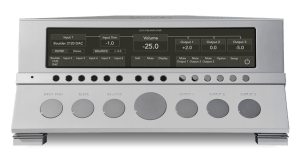
“Schiit is known for providing quality products at reasonable prices, and they have not failed in doing so with the Magnius. They have managed to create an op-amp based balanced amplifier that has lots of power, with a fast and detailed presentation, while remaining fairly neutral.
Despite being neutral, the Magnius manages to have a dynamic low end, texturized midrange, and a smooth and detailed treble. I wish they just moved the power switch to the front though, but that might be asking for too much from Schiit.”
qdc Dmagic 3D Review
September 18, 2020 Comments Off on qdc Dmagic 3D Review
“I do not know why companies have largely dropped the multi-dynamic driver design approach that seemed to be all the crazy a few years back. Ok, so some of them did not turn out to be all that popular, and the BA driver count wars were gathering a lot of marketing speed at the time.
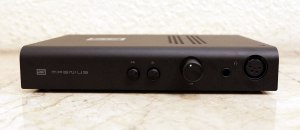
Still, with a bit of time and studied tuning they can, and often do, have a much better timbre than balanced armature drivers, especially on the low-end. They have their fans and for good reason. the Dmagic 3D tuning and that gorgeous design should go some way to proving the doubters wrong. This is a very smooth tuning.Stay tuned for the main review which will include more detailed Dmagic 3D sound impressions, synergy/pairings, and those all-important comparisons in the coming weeks!”


You must be logged in to post a comment.