Rethm Maarga loudspeaker Review
April 10, 2020 Comments Off on Rethm Maarga loudspeaker Review
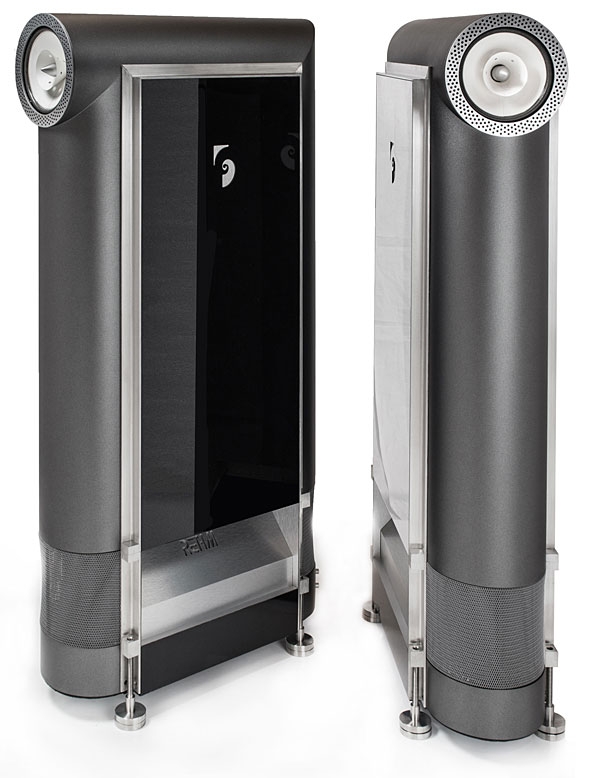
Once in my system, the Maargas brought to it a combination of strengths and weaknesses very different from those of my Altec Flamencos and DeVore O/93s. The Rethms were “airier” and more open than either, with spatial performance that was also superior (especially relative to the Altecs): Images of instruments and voices were more distinct from one another than I usually hear at home, some addressing me from a stage of greater-than-average apparent depth. On the down side, my system’s sense of scale took a step backward—the size of everything was now medium-small to medium—and there was a lack of midrange richness. There was also a bit more upper-mid graininess than I’m used to hearing”
Novafidelity HA500H USB DAC/Headphone Amp Review
April 10, 2020 Comments Off on Novafidelity HA500H USB DAC/Headphone Amp Review
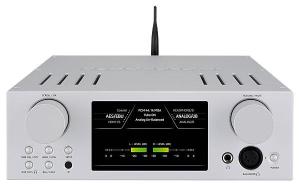
“Thanks to clear controls and a remote handset, the HA500H is simple to use: I especially like the front panel buttons for basic functions, from turning the ‘tube’ mode on and off, to choosing high/low impedance and switching between line and headphone output and balanced/unbalanced ‘phones. It’s so much better to have direct controls rather than having to delve deep into menus to make the most commonly-used changes.
It’s all helped by a large, sharp display panel able to show a range of screens, from virtual swing-needle meters – fun for about ten minutes and then very distracting – to bar-type readouts (ditto) and graphic representations of the input in use. Helpful, too, is a display able to show at a glance the state of all the selectable parameters.”
FOCAL STELLIA REVIEW
April 9, 2020 Comments Off on FOCAL STELLIA REVIEW
https://www.headfonia.com/focal-stellia-review/
“But, of course, there’s the cost factor and there’s no getting around it. And, of course, a lot of the Stellia’s cost includes paying for its sumptuous build and its absolutely decadent aesthetics. There’s clearly a market for this kind of headphone, and if it gets more people to take notice of high-end personal audio and want to experience something truly remarkable – well that’s just great. I appreciated the build and craftsmanship as someone only spending a brief amount of time with the Stellia, but in all honesty, they’re simply too ostentatious-looking for this reviewer. I’d feel simply too conspicuous if I left the house with them, and honesty, probably too conspicuous if I looked at myself in the mirror wearing them at home. If Focal managed to package that driver in a low-key black plastic metal body, with Alcantara instead of leather – and delivered at a lower price-point – then I’d be at the front of the queue. “

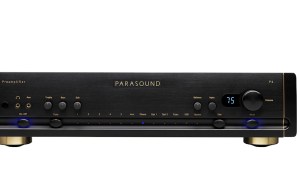
Parasound Halo P 6 Preamplifier & DAC Review
April 9, 2020 Comments Off on Parasound Halo P 6 Preamplifier & DAC Review
“For digital inputs, the P 6 features a pair of SPDIF optical inputs, coaxial SPDIF input, as well as a USB input. It should be noted that if you choose to use any of the SPDIF input options, you’ll be limited to PCM audio only, up to 192kHz/24-bit. Only the USB input allows you to take advantage of 384kHz/32-bit PCM and DSD up to quad rate.
With that said, for most of my listening, I fed the P 6 digital audio from my desktop computer to one of its optical inputs. This is my preferred connection when using a computer as a source due to Toslink’s inherent galvanic isolation. I do realize the relative limitations of using this input option, though, so to test DSD functionality, I did connect via USB for a short period of time.”
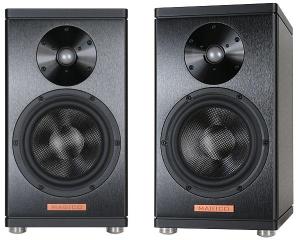
Magico A1 Loudspeaker £9998 Review
April 8, 2020 Comments Off on Magico A1 Loudspeaker £9998 Review
“Magico’s costlier enclosures employ constrained-layer damping – a sandwich of aluminium and a lossy polymer layer that converts vibration to heat. As one concession to cost, none of the A series has these layers, but with panel sizes as small and (relatively) thick as the A1, any such additional damping is rather less critical.
The A1’s drivers and crossover are all culled from Magico’s development of its costlier ranges. That extremely lightweight and rigid beryllium tweeter – shared across the A1, A3 and forthcoming A5 – uses the same 28mm dome as the high frequency drivers in its M-series, albeit without the ‘diamond coating’. The motor system is slightly simpler, but is still based on a neodymium magnet assembly and 28mm voice coil, and the driver as whole is now loaded into an improved absorptive rear chamber.”
Quad Artera Solus integrated amplifier/CD player Review
April 8, 2020 Comments Off on Quad Artera Solus integrated amplifier/CD player Review
”
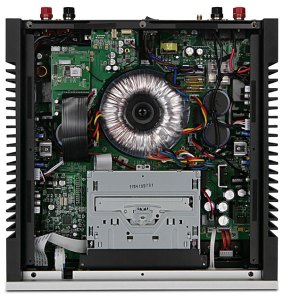
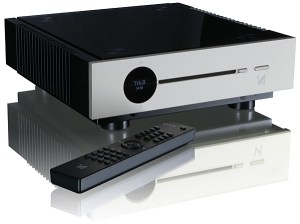
As I mentioned earlier, audio components usually fall into one of three categories: boring, annoying, or engaging. Quad’s Artera Solus fell easily into the third category. It was exciting to use, and it delivered music with a uniquely satisfying je ne sais quoi that I can best describe as sounding strong and musical. Recommended for the music-first audiophile who still enjoys CDs, and who wants lively, natural sound from a simple system.”
Pass Labs INT-250 Integrated Amplifier Review
April 7, 2020 Comments Off on Pass Labs INT-250 Integrated Amplifier Review
https://parttimeaudiophile.com/2020/02/09/pass-labs-int-250-integrated-amplifier-review/
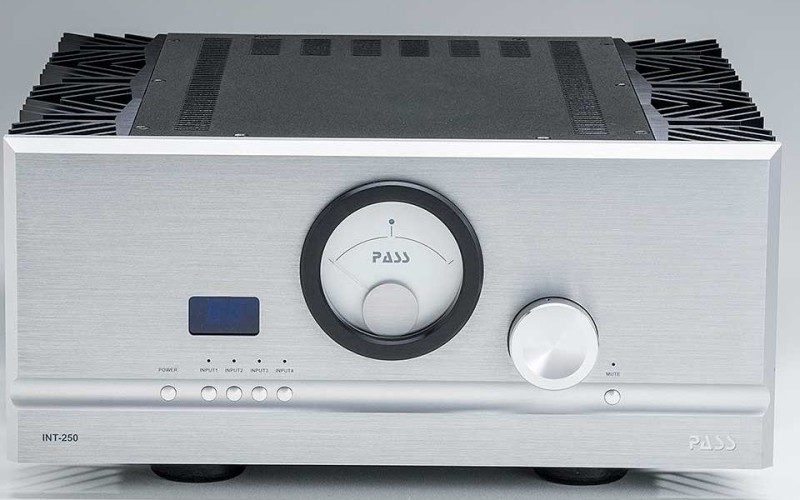
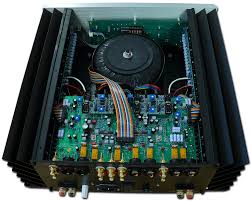
Beyond that, the pairing of the M3 and the INT-250 was something of a head-scratcher. It’s not that they sounded bad together by any stretch, but I wasn’t wowed by the combination, either. As notoriously difficult as it is to put these sonic perceptions into words, I’d say that the combination initially sounded a bit “flat,” both in terms of spatial presentation and also a certain paucity of tonal richness. I missed the musical magic dished out by the combination of the M3’s and my reference Vinnie Rossi LIO integrated. Given Pass Labs’ impeccable reputation for producing killer amplifiers, something, I thought, must be awry in my rig. What now?
This led to considerable theorizing. Perhaps what I was (or wasn’t) hearing was a lack of speaker/amplifier synergy. Using a behemoth amp like the INT-250 to drive the 95-dB efficient Spatial M3 Turbo S speakers in a medium-sized room (in a semi-nearfield seating arrangement, no less) might be a case of overkill, like cramming a Ferrari engine into a Mini Cooper. Then again, the impedance curve of the 4 Ohm Spatial M3 Turbo S is far from flat, so I’d expect the INT-250 to tame it with ease. But maybe, maybe another speaker would be more to the Pass amp’s liking? More on that in a moment.”
ROSSON AUDIO DESIGN RAD-0 REVIEW
April 7, 2020 Comments Off on ROSSON AUDIO DESIGN RAD-0 REVIEW
https://www.headfonia.com/rosson-audio-design-rad-0-review/
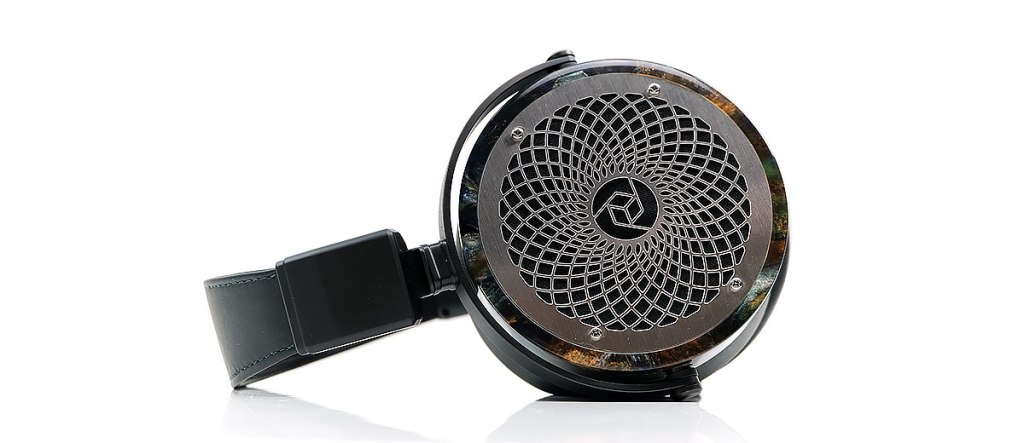
“The same story more or less goes for the Auris Audio Nirvana. In balanced mode you get really impressive bass with great depth and layering. The mids are rich, smooth and spacious with gorgeous vocals, while treble is extended and smoothly musical, yet energetic. For some the amount of bass and mid body might be a little much in balanced mode, but in that case the single ended output is the one for you. Here you get a faster, lighter sound but it isn’t as spacious, wide and extended as before. You do get a more balanced and faster RAD-0 with improved clarity, especially noticeable in the upper mids and vocals. On this amplifier, I kind of prefer the single ended output as it already carries enough smoothness and timbre from the lovely tubes.”
MCINTOSH C53 STEREO PREAMPLIFIER $8,000 REVIEW
April 6, 2020 Comments Off on MCINTOSH C53 STEREO PREAMPLIFIER $8,000 REVIEW
https://hometheaterhifi.com/reviews/amplifier/preamplifier/mcintosh-c53-stereo-preamplifier-review/
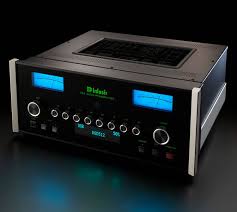
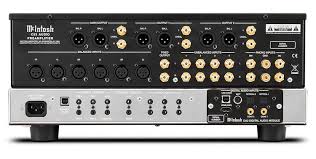
“McIntosh has always made great preamps, and their latest solid-state flagship not only carries on the tradition but does so with a full eight-band analog equalizer! One might fear that the full feature set provided with the C53 would interfere with the preamplifier’s tonality or transparency. Nope – This preamp runs with the best in the business in both categories. If you want McIntosh’s flagship stereo preamplifier, the C53 is for you!
The McIntosh C53 Stereo Preamplifier brings an exceptional level of control to a prospective owner without sacrificing sound quality. This is a difficult achievement because more active circuitry increases the risk of damage to the sound’s delicacy, flat frequency response, and imaging. This is why the majority of audiophile preamplifiers cling to the straight-wire-with-gain design philosophy. But McIntosh, ever the rebel, still offers this control center design that competes at the very top level. With but minor quibbles, this is one of the very best preamplifiers you can buy.”
Elac Carina BS243.4 Loudspeaker Review
April 5, 2020 Comments Off on Elac Carina BS243.4 Loudspeaker Review
http://www.theabsolutesound.com/articles/elac-carina-bs2434-loudspeaker/
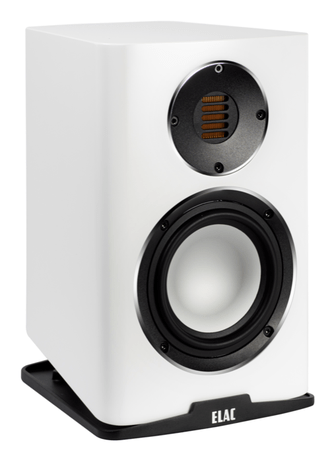
“Note that Carina possesses substantial midbass output, meaning that placement in your room is important. In my small-room setup I pulled the speakers out at least a couple feet from the backwall; otherwise low-end response was predominant. In spite of these ministrations Carina tended on occasion to impart a thickness to the bass range that in my room I was never able to entirely dispel. For instance, during Ana Caram’s cover of the “The Girl from Ipanema” from Blue Bossa, the acoustic bass was presented as more of a pulse than a group of specific pitches. In this respect, the bass response from the active Elac Navis ARB-51 (Issue 291) was more specific in pitch, timbre, sustain, and decay. “


You must be logged in to post a comment.