McIntosh Labs MC312 Power Amplifier $7000 Review
July 22, 2019 Comments Off on McIntosh Labs MC312 Power Amplifier $7000 Review
“I can summarize the sonic performance of the McIntosh performance rather easily. The descriptors that come to mind are effortless, spacious, transparent, and utterly grain free. I could not hope for more from a high class, well-engineered solid state amplifier. The sense of effortlessness really does make a difference in musical enjoyment. It ties into dynamics, which were reproduced naturally. Tonally, the MC312 was spot on; the whole spectrum of sonic colors was wonderfully presented, like a perfectly balanced photograph taken in natural light.
Ergonomically, the MC312 was mechanically dead quiet, ran cool, and provided trouble free performance over the course of the review period. One would expect nothing less than this for an amplifier in this price range, and considering its pedigree. Also, for those not enamored by the blue meter lights, they can be turned off. For me they are a mark of distinction, and added to the ambiance.”

SVS Prime Pinnacle Tower Speaker Review
July 22, 2019 Comments Off on SVS Prime Pinnacle Tower Speaker Review
“The Prime Pinnacles managed to keep all of the various aural events clear and distinct even during a complex action scene. The sound never became confused or muddled, and dialogue was clear and succinct always. I always caught the one-liners, even if I didn’t think they were all funny. Some bombed jokes aside, I enjoyed ‘Thor: Ragnarok,’ and the Prime Pinnacle speakers turned out to be an excellent platform to reproduce this epic soundtrack.”

Gryphon Audio Designs • Kodo Loudspeaker System $390,000 Review
July 21, 2019 Comments Off on Gryphon Audio Designs • Kodo Loudspeaker System $390,000 Review
“Once you start listening to really big recordings, from the largest orchestral or choral works to the most extravagant soundtracks, the Kodo system’s characteristics really start to emerge, along with the way they shape the overall character of the sound. That planted sense of musical authority and absolute stability is key, but so too are other aspects of the performance. I’ve already talked about the natural perspective and dimensionality that the Gryphon speakers bring to the soundstage, a soundstage that can extend well beyond the width of the cabinets when called upon to do so, and is both beyond and utterly divorced from them. The Kodo towers stand as if mute and immobile, the music occurring in the space beyond them, but that very separation of speakers and sound imposes its own character on proceedings. Listen across a range of material and it soon becomes apparent that there’s a pervasive warmth to the Kodo’s acoustic that invests it with an inclusive sense of presence but also limits its internal spatial separation. While the stage is wide and deep, and it possesses both a tremendous sense of air and a firmly defined height for the band within it, the warmer balance and the overall perspective are both consistent with a midhall listening position — and a midhall position that’s more Disney or Musikverein than the more structured delineation of Davies or London’s Festival Hall.”

Bowers & Wilkins Formation Duo review
July 21, 2019 Comments Off on Bowers & Wilkins Formation Duo review
“Grippy and with the kind of authority and punch you’d expect in high-quality floorstanders, it’s the ideal backdrop to the artful lead guitar and vocal detail every time Simon and his backing singers kick in. Each movement of his fingers up and down the fretboard, each sound as he changes chords takes you right into the studio.
There’s an even tonal balance as the song skips from gentle verse to upbeat chorus. With little audible sound from the speaker cabinets, there’s incredible clarity to the notes and a transparency that quickly makes us fussy about the quality of what we choose to listen to, with the 24-bit/96Khz wireless transmission more than enough to deliver the goods.”
64 AUDIO FOURTÉ NOIR $3,799 REVIEW
July 21, 2019 Comments Off on 64 AUDIO FOURTÉ NOIR $3,799 REVIEW
”
I’ve heard that there were prototypes floating around before the official release of the tia Fourté that had a warmer, more analogue sound. Could it be that Noir presents that tuning? Is it what the tia Fourté could’ve been if it wasn’t changed to a hyper detailed and brighter sound? Whatever the answer is to those questions, it’s awesome to have a choice now. Those who want the head-scratching clarity of the original are as much taken care of, as those that want a fuller and slightly warmer sounding Fourté.”

Mytek Brooklyn DAC+ DAC-Preamplifier-Headphone Amplifier $2195 Review
July 20, 2019 Comments Off on Mytek Brooklyn DAC+ DAC-Preamplifier-Headphone Amplifier $2195 Review
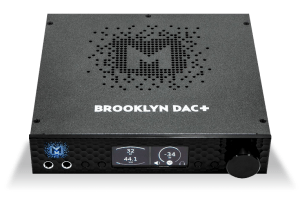
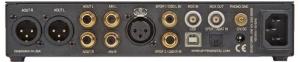
“With its DAC stage bypassed, the Brooklyn DAC+ can also function as only a preamplifier through the use of its single-ended RCA inputs. Having already run my computer into the Brooklyn’s digital USB input, I tested its analog input using my Benchmark DAC2 HGC as a source, and found its sound less engaging than when I’d used it as a combination DAC-preamp plugged directly into my ARC D300 power amp. Used as a preamp only, the Mytek still produced wide soundstages on which voices and instruments were located clearly but those stages were shallower than when its DAC stage was in circuit. “Always On My Mind,” from the Pet Shop Boys’ live album Inner Sanctum (16/44.1 FLAC, Sony Japan/Tidal), was flatter from front to back. Nonetheless, bass slam remained solid, and the Mytek continued to impress me with the evenhandedness of its reproduction of the midrange and upper octaves — nothing was glaring or too forward. My reference preamplifier, a Hegel Music Systems P20, presented deeper soundstages and a more fleshed-out personality to Neil Tennant’s voice, and overall this live recording had a more open sound than through the Mytek.”
Valve Amplification Company Master Preamplifier
July 20, 2019 Comments Off on Valve Amplification Company Master Preamplifier
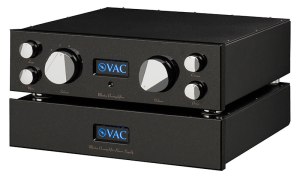
“To compare the sounds of the Signature Mk.IIa SE and Master, I listened to the Roy Hargrove Quintet’s Earfood again and with particular care to “I’m Not So Sure,” the track that had been so gorgeous through the Master. Overall, it sounded similar in terms of tones, soundstage depth and breadth, and air around instruments. The timbres of the trumpet and alto sax were also similar in character and sensuousness. But I could tell that the impacts of drumstrokes and bass plucks were softer, not as crisp or explosive. Hargrove’s trumpet was certainly as clear as through the Master, but not as dimensional in terms of its metallic sheen or blattiness. Finally, although Justin Robinson’s alto sax still sounded fluid and expressive, it wasn’t as piercing in the highs or dynamic peaks. There was a marked difference in extension, resolution, snap, and punch.
Listening again to Florilegium’s recording of Bach’s Brandenburg Concerto No.3 confirmed all of this. Though string tone was fine and the separation of sections impressive, microdetails were not quite as refined. I couldn’t pick out single instruments as easily — something I’d very much enjoyed doing with the Master. Pace, rhythm, and timing were good with the Signature Mk.IIa SE — the attacks of instruments were precisely together in this performance’s myriad tight entrances — but I couldn’t “see” as deeply into and among the aural images of the violins and viola da gamba. Yet with the Signature Mk.IIa SE, the strings were expressive and open, tutti energetic and thrilling, and harmonies bountiful.


New Sony WF-1000XM3 vs. Klipsch T5 vs. Sennheiser Momentum | Wireless sound showdown
July 20, 2019 Comments Off on New Sony WF-1000XM3 vs. Klipsch T5 vs. Sennheiser Momentum | Wireless sound showdown
Focal Kanta No1 Loudspeakers Review
July 18, 2019 Comments Off on Focal Kanta No1 Loudspeakers Review
“Where the Kanta No1s came up short was put in bold relief when I compared them with GoldenEar Technology’s super-large Triton One.R floorstanders ($5999.98/pair), which were in my room because I was reviewing them at about the same time. I played Bublé! again. Even driven by the powerhouse Revelation Taurus Monos, the Focals couldn’t come close to the bass depth and power of the Triton One.Rs. No surprise there — built into each One.R is a 1600W amplifier that drives the speaker’s three woofers, assisted by four passive radiators. This results in bass that extends with power down to 20Hz, the very bottom of the audioband. The Kanta No1, tiny by comparison, stops at 40Hz, a full octave above that, and with a bit of a whimper. And when I drove the Focals from the 8 or 4-ohm taps of the JE Audio VM60s, the bass got a touch lighter. That told me that most people will likely be best served by the No1s if they drive them with a powerful amplifier — probably a solid-state model that can put out at least 100Wpc into 8 ohms, and handle an impedance that drops below 4 ohms without blinking.
But above the deep bass, with either the Revelation Taurus Monos or the VM60s, the Kanta No1s charged ahead of the Triton One.Rs by sounding a little more open, more free of their enclosures. The No1s also sounded a touch cleaner in the midrange and highs, which I particularly noticed with the Carpenters’ With the Royal Philharmonic Orchestra (24/48 FLAC unfolded to 24/96 MQA, A&M/Tidal). The plucked guitar notes that begin “For All We Know” sprang more freely and cleanly from the No1s than from the Triton One.Rs — but it was the voice of Karen Carpenter, who enters at 0:38, that sealed the deal: its tightly focused aural image at the frontmost part of the stage sounded slightly clearer and more open through the Kanta No1s.”

 Audiophilepure
You must be logged in to post a comment.