Bowers & Wilkins Diamond Series 804 D4 loudspeaker $12,500 Review
January 2, 2022 Comments Off on Bowers & Wilkins Diamond Series 804 D4 loudspeaker $12,500 Review
https://www.stereophile.com/content/bowers-wilkins-diamond-series-804-d4-loudspeaker-page-2
Having visited Bowers & Wilkins’s research facility and factory in England, I believe their engineers can design a loudspeaker to sound and measure any way they wish. From my experience, not just with the 804 D4 but with the 705 Signature—where I wrote, “I was surprised how much I enjoyed having the Bowers & Wilkins 705 Signature in my system … because the speaker’s measured performance implies a somewhat ‘tailored’ sonic character”—both the 804 D4’s measurements and its sonic signature indicate that achieving a classically flat and neutral tonal balance à la Floyd Toole’s writings was not the design team’s primary goal. Instead, clarity, transparency, low-frequency articulation, and the absence of midrange coloration seemed to have had a higher priority.
Even after I had measured this loudspeaker, the issues I found seemed to step out of the way of the music much of the time. Those port resonances seemed to have very little effect on midrange clarity, and while I was occasionally aware that the resonance just below 4kHz was adding some presence-region emphasis, it did not seem to be excited with most recordings. The extreme toe-in recommended in the manual reduced the audibility of the excessive treble, though the speaker’s high-frequency balance will make system matching more difficult than usual. And combined with the speaker’s high impedance in the mid-treble, it will make tube amplifiers sound overbright.

Fink Team KIM Standmount Loudspeaker Review
January 1, 2022 Comments Off on Fink Team KIM Standmount Loudspeaker Review
https://www.stereonet.com/au/reviews/fink-team-kim-standmount-loudspeaker-review
Karl-Heinz then tried using a higher resistance inductor and another resistor in series to change the speaker’s alignment even more. “We can switch between 0.5 ohm, 0.25 ohm, and nothing, so this can be used to tailor your speaker to different amplifier technologies. A modern transistor amp has a high damping factor, so you use the larger resistor setting, while more traditional amplifiers like Naim normally use a smaller resistor in series, so the middle position is correct. And the left option is for tube amps; this works well with push-pull designs and helps with the bass.”
I found the KIM to be unusually easy to position in my room. Standing about 30cm out from the boundary wall on its 6mm carpet-piercing spikes doing their thing, it integrated very well and didn’t boom in the bass unduly. I alternated between the high damping factor and middle positions as I switched between my Rotel Michi X-5 and Exposure 3510 amplifiers, fed from a Chord Electronics Hugo TT2 DAC.

AGD Tempo di GaN Stereo Amplifier $5500 Review
January 1, 2022 Comments Off on AGD Tempo di GaN Stereo Amplifier $5500 Review
http://www.enjoythemusic.com/magazine/equipment/1221/AGD_Tempo_di_GaN_Stereo_Amplifier_Review.htm
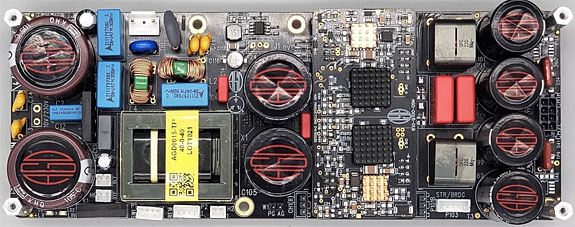
Actually, the name is “Tempo di GaN” so the “GaN” is easily identified as the Gallium Nitride FETs that are used in the amp. And yes, “di” is “of”. The duality comes into play with “Tempo” which in one sense is the rhythm of music or “rhythm of GaN” which is noticeably faster than with MOSFET transistors. The rise time or attack of the recorded music seems the same as the real-time in which it was performed. The music happens “right now!” And it happens without audible overshoot or irritation. It gives the music an immediacy and presence unlike MOSFETs or tube amplification. And a sense of dynamics that are not “off the charts” but pretty much “define the charts.”
All of which is to say that the proper execution of GaNFET technology is a very significant step toward experiencing recorded music as “live.” It doesn’t give us everything we need (yet?), but it seems to have conquered issues around pace, rhythm, and timing just as computer-regulated speed control has done for analog turntables and digital front ends. Resolution is as sharp as electrostatic speakers give us in the midrange and treble, and stays just as sharp into the low bass.
If you get the sense that I’m telling you GaNFET transistors are a game-changer, you’ve stumbled onto the second half of Alberto’s double entendre. “Tempo” is also “time” and yes, this is the era of GaNFET technology — not only for high-end audio, but other fields as well. There will always be lovers of tube technology, just as there are still lovers of sailboats, but if you are in the solid-state camp, either as a manufacturer or a listener, you need to be listening with GaNFETs.


Jadis Diapason Luxe Integrated Amplifier Review
December 31, 2021 Comments Off on Jadis Diapason Luxe Integrated Amplifier Review
https://www.hifinews.com/content/jadis-diapason-luxe-integrated-amplifier
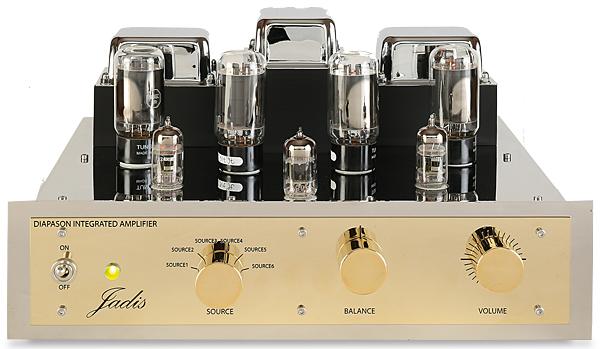
The result is something that sounds especially inviting, appealing and beguiling – far more so than you’d expect from most similarly priced solid-state designs. The Diapason Luxe goes about reproducing music in a completely different way to most mainstream amplifiers, one that’s strongly appealing to a certain type of listener and/or music fan. On the other hand, it has conspicuous limitations that mean it is not for all. Perplexingly however, it often makes the listener forget these, to the extent that even ardent valve critics may be left grumpily admitting that it sounds ‘rather gorgeous’.
Meze Audio Liric Review
December 31, 2021 Comments Off on Meze Audio Liric Review
https://www.whathifi.com/us/reviews/meze-audio-liric
These headphones improve quite a lot during the first few days of use. Our initial impressions were of a detailed but tonally bland presentation that offered little in the way of expression. Given time, though, things get more interesting, with large gains in articulation and finesse.
Once settled, these headphones sound impressively clean and clear. They have a wonderfully agile presentation that responds to changes in the signal effortlessly. We start with Nick Cave and Warren Ellis’s Carnage set and the Liric deliver Cave’s trademark gravelly tones with all the presence and grit they deserve. These headphones communicate the nuances superbly, leaving the listener in little doubt as to what the intended emotional impact of the music is meant to be. There’s a lovely consistency from the expressive midrange frequencies upwards, and a pleasing degree of focus to the sound. The lows are almost as good, but sound a little soft-edged in relative terms.

Magico M9 Loudspeaker Installation
December 30, 2021 Comments Off on Magico M9 Loudspeaker Installation
Acoustic Signature Montana NEO turntable $30,995 Review
December 30, 2021 Comments Off on Acoustic Signature Montana NEO turntable $30,995 Review
https://www.stereophile.com/content/acoustic-signature-montana-neo-turntable
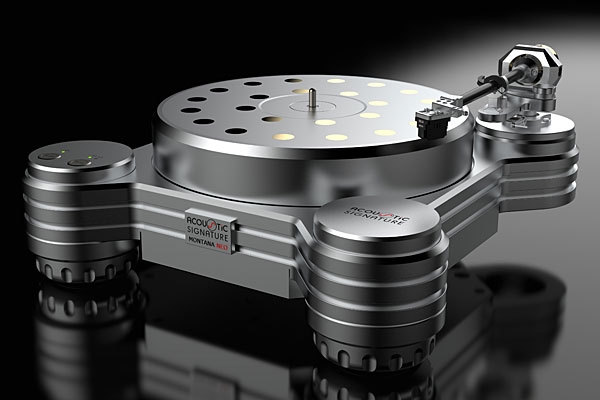
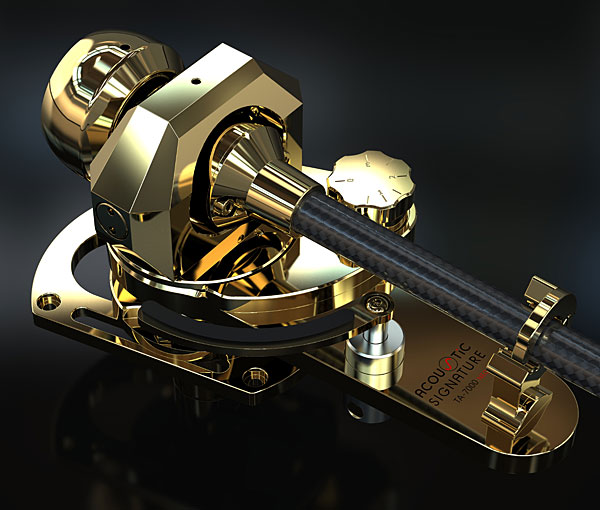
With the Etna, I heard more of the small, wide, not-particularly-deep West Hollywood 500 seater—I played there once!—than I heard through the A95. King and Taylor were reproduced with more three-dimensionality and solidity. The Etna put me in the first few rows in front of the stage. The comparison demonstrated that the Montana’s designers met their goal of producing a neutral, well-damped cartridge-carrier that lets through varied transducer personalities without limiting them in any way.
Conclusion
Though the arm/’table combo will set you back nearly $50,000, my experience was that every time I put a record on the platter, pressed “on”—even the push buttons delivered precise authority—and lowered the stylus into the lead-in groove, I had no doubt about where the money went, especially because, having set up the turntable myself, I hear the ‘table’s well-hidden, ingeniously designed, skillfully executed guts in every play.

 Audiophilepure
You must be logged in to post a comment.