Matrix Audio element X streaming MQA DAC, HP amp and pre-amp
April 25, 2020 Comments Off on Matrix Audio element X streaming MQA DAC, HP amp and pre-amp
SONUS FABER LILIUM FLOOR-STANDING SPEAKERS $75,000 REVIEW
April 24, 2020 Comments Off on SONUS FABER LILIUM FLOOR-STANDING SPEAKERS $75,000 REVIEW
“The impulse response also can be used to plot the step response, which shows when each driver becomes active in relation to the other driver(s) when the signal voltage is initially applied. Below is the step response of the Sonus faber Lilium. The first peak on the left side is the tweeter, followed 0.23 ms later by the midrange and woofers (the midrange and woofers are the same size – 7”, and their summed output is larger than the single tweeter peak). 2.3 ms after the midrange driver is the subwoofer driver, followed by 1.7 ms later by the passive radiator. So, between the tweeter and passive radiator, there is a 4.23 ms delay. This shows you cannot fight the laws of physics. The reason there is delay is that the cones for the larger drivers have more mass, and therefore, it takes more time to “get them moving” when the signal voltage is applied. However, even though the passive radiator cone is the same diameter (10″) as the subwoofer cone at 10”, the passive radiator has to respond to the subwoofer movement rather than the directly applied voltage. So, the voltage is applied to the subwoofer, it moves, causing air pressure to change in the enclosure, and that change in air pressure then causes the passive radiator cone to move. Frankly, I am surprised there is only 4.23 ms in between the tweeter and passive radiator. That is just 4.23 thousandths of a second.”

CAYIN IDAC-6 MK2 REVIEW
April 24, 2020 Comments Off on CAYIN IDAC-6 MK2 REVIEW
“We now have 2 coaxial inputs instead of one, with the second one being a BNC connector. For those with upsampling devices or streamers such as Cayin’s iDAP-6 or the Chord Hugo M Scaler, this will be a handy additional input.
Not least with the M Scaler’s excellent switchable upsampling which is capable of delivering a maximum 352kHz rate to the iDAC-6 MK2 from a 16BIT/44.1kHz source file using a single BNC connection. With the BNC coaxial via the iDAP-6, for example, you can also decode up to 24BIT/192kHz and DSD64 (DoP only), much like its RCA coaxial counterpart.”


”
Chord Mojo Review | High End Portable DAC/Headphone Amp
April 24, 2020 Comments Off on Chord Mojo Review | High End Portable DAC/Headphone Amp
MONOPRICE MONOLITH M570 PLANAR HEADPHONE $299 REVIEW
April 23, 2020 § 1 Comment
” I thoroughly enjoyed my time with the Monoprice Monolith M570 headphones. Their spacious and smooth sonic character melded with an above average (for inexpensive open-back cans) level of bass reproduction and some judicious tuning in the upper vocal and lower treble range make these a great go-to set of headphones for a wide variety of music. They quickly become an easy and enjoyable listening partner. Unless you are someone who is looking for a more neutral or extremely resolving set of headphones, I think these will find favor with a lot of people who are looking in this price range. While slightly heavy they are well built and exceedingly comfortable for long stretches of time. I recommend using an amplifier to get the best performance out of the M570 when on the go. They need just a bit more juice than what most phones or small DAPs can provide so it shouldn’t be too hard to find something suitable without breaking the bank. I know it’s been a while now, but for $299.00 it still amazes me that one can get planar magnetic headphones at that price. If you are in the market for some new cans and these fall within your budget, I strongly suggest that you seek out the Monolith M570 for a listen. Highly recommended.”

Audio Analogue Bellini/ Donizetti Anniversary Pre/Power Amplifier Review
April 23, 2020 Comments Off on Audio Analogue Bellini/ Donizetti Anniversary Pre/Power Amplifier Review
“Where the Audio Analogue duo definitely came out on top was with its handling of recordings that varied in their quality. The Corrs’ ‘Only When I Sleep’ from their 1997 album Talk On Corners [Atlantic Recordings 7567-83051-2] is something of a sonic mess, sounding steely at best and clearly mixed to make it radio-friendly. Yet never have I heard it sound better than when played via the Bellini and Donizetti Anniversary pre/power. The amps simply cut through the nastiness, managing to impart a sense of order to the proceedings and even bring a hint of purity to the ragged top end.
They repeated this trick again and again, with all sorts of sonic disasters. So if you’re seeking a pre/power pairing that is not only kind to less-than-well-produced recordings but also able to serve them up with sweetness and not a little polish, then look no further.”
Rogue Audio Atlas Magnum II Stereo Amplifier Review
April 22, 2020 Comments Off on Rogue Audio Atlas Magnum II Stereo Amplifier Review
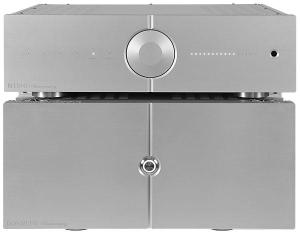
“The GM 50’s bass sounded more open, and seemed to reach deeper than the Atlas Magnum II’s, whether I was comparing them with or without the REL subwoofer connected. (REL claims that using the high-level inputs carries forward the sound of your amplifier, but as my system employs no high-pass filter, the difference with the sub could still be due, in whole or in part, to the differences in how each amplifier drove the main speakers.) For some specific examples, while the concert bass drum in the Bull violin concerto sounded big with the Atlas Magnum II, its fundamental pitch was more obviously lower in frequency with the GM 50. Likewise, it was easier to hear the fundamental pitch of the concert harp in the final movement of Mahler’s Symphony No.4, as performed by the Royal Concertgebouw Orchestra under Bernard Haitink, with soprano Christine Schäfer (SACD/CD, RCO Live RCO 07003). For a nonclassical example, Alan Anton’s bass in the Cowboy Junkies’ The Trinity Session (16/44.1 FLAC, RCA) sounded a bit tubbier with the Atlas Magnum II, a bit more linear with the GM 50. On the other hand, the kick drums in both The Trinity Session and Random Access Memories had noticeably more punch with the Atlas Magnum II — I felt as well as heard them.”
Audeze LCD-1 Review
April 21, 2020 Comments Off on Audeze LCD-1 Review
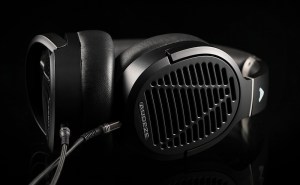
“While the Audeze LCD-1 attempts to tackle the lucrative, but competitive $500 mark for personal audio enthusiasts, the RAD-0 has a more bespoke approach to design and cost. For those familiar with both company’s RAD founder Alex Rosson started working at Audeze and was among the founding cast of the LA-OC based company. His first dip into the market appears at the higher end of the hobby, with most headphones costing around $2,600. A look at his product page gives you a better idea of the custom leanings he has chosen, no two headphones appear at first glance to be colored the same.”
JL Audio Fathom F113 V2 13.5” Subwoofer Review
April 21, 2020 Comments Off on JL Audio Fathom F113 V2 13.5” Subwoofer Review
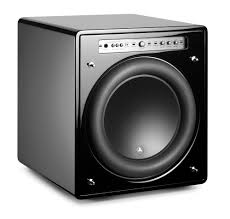
“Unsurprisingly perhaps, the big Fathom couldn’t quite match the speed and grip of my usual 10” VAF Veritas subs, or for that matter JL Audio’s smaller E-110. What is surprising is how little the bigger sub yielded in terms of speed to the smaller ones. Its speed ensures that it complements the extension of the main speakers, without overwhelming them. Able to fill the listening room with powerful, visceral bass, it has real ability to dig in to lower frequencies, making for an exciting listening experience.
Action films are what typically come to mind when evaluating subwoofers, yet a good one can add an extra layer of detail to even the subtlest of movie fare. Unusual for horror movies, Anabelle Comes Home has its share of ambient cues designed to unsettle the viewer, intermingled with the soundtrack and of course, more than a few jump-scares. Here it added welcome extension to the eerie Dolby Atmos soundtrack without getting in the way of the other speakers. More often than not, the extension was felt rather than heard, making for a more engaging and exciting – if somewhat terrifying – listening experience.”
 Audiophilepure
You must be logged in to post a comment.